
Property Types We Roof
Church Roofing in High Point, NC
Plan church roof inspections in High Point around worship schedules, sanctuary systems, fellowship spaces, drainage, and phased work with a documented closeout.
A church roof inspection starts with the rooms, gatherings, and services below it. We map the leak or deteriorated detail to a sanctuary, classroom, kitchen, or fellowship area identified by the congregation. The report records the roof condition, affected interior location, access limits, and whether the next step is repair, testing, or planned renewal.
The Downtown Main Market district centers on the original International Home Furnishings Center Main building. Nearby, Congdon Yards is a downtown campus with office, event, food, cultural, and prototyping uses. These central-city destinations can affect traffic and work timing around nearby properties.
Schedule around services and gatherings
The congregation confirms worship times, funerals, weddings, school or daycare hours, food programs, and events that affect roof access. We agree on a work window for each area and identify where parking, accessible entrances, deliveries, or emergency routes must stay available. If a leak is active, a temporary measure can protect the interior while a permanent repair is scoped.
A phased sequence can separate a sanctuary from a classroom wing or fellowship hall. Each phase states the work boundary, roof access, noise or odor limits, interior protection, and the end-of-day dry-in condition. A phased occupied-building plan can accommodate regular use when site conditions and the calendar allow. The congregation names the contact who approves an access change or room closure.
Some roof work can be completed from outside without entering occupied rooms. If interior access is needed to investigate a stain or confirm water travel, we arrange the appointment with the property representative. The condition record identifies which area was inspected and what remains outside the approved access window.
Inspect steeples, edges, and transitions
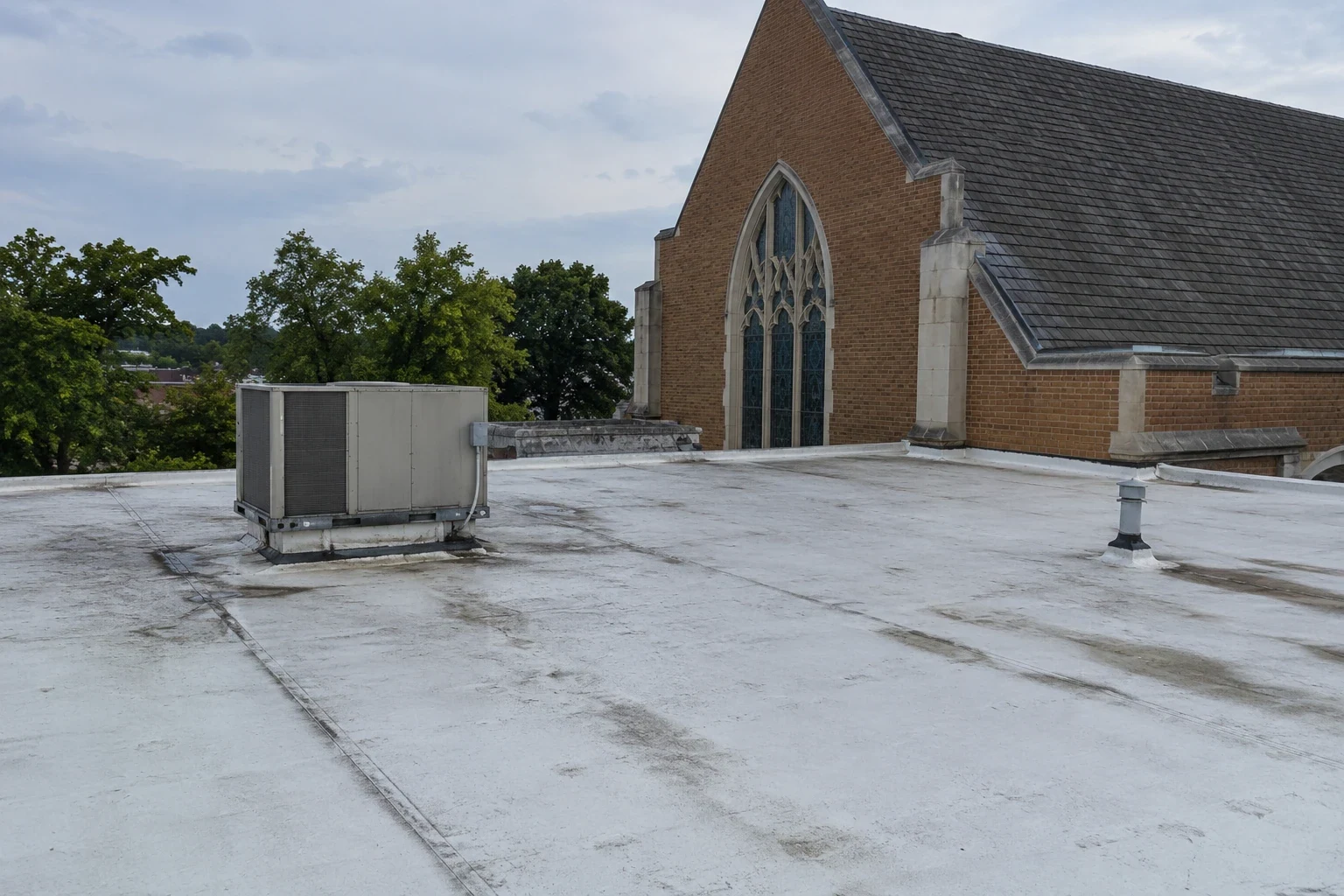
Church buildings may include steep or low-slope roof sections, steeples, towers, cupolas, skylights, HVAC equipment, and later additions. We inspect accessible transitions, flashing, fasteners, seams, parapets, gutters, and drainage details. Where roof geometry changes, the report records how water leaves one plane and meets another instead of treating the building as a single surface.
On a sloped roof, we check the condition of the fastening line, ridge and valley transitions, and any metal-to-membrane junction before choosing a repair. A tower or cupola may need lift access or a closer photograph than the surrounding roof field. The inspection records the access method and any area that could not be reached safely.
A sanctuary leak near a ceiling feature can have a roof entry point some distance away. We compare interior reports with the roof line, valley or wall transition, penetrations, and prior repairs. A gutter and edge review documents the perimeter; a steeple and penetration inspection records distinct roof openings when those features are present.
Where the building has several additions, the repair material and flashing detail are selected for the roof section involved. A lower roof draining against a taller wall can need a different transition than a continuous field seam. The map labels that joint, the wall, and the surface sending water toward it.
At drains and downspouts, we check debris, outlet connections, overflow paths, and discharge away from the building. A drainage assessment can separate routine cleaning from a slope, gutter, or deck concern that changes the repair scope.
Use Piedmont conditions in the work plan
High Point has four seasons and generally light winter snowfall. Greensboro (KGSO) normals average 7.1 inches of annual snow and 68.5 days with minimum temperatures at or below freezing. Those conditions make safe access, drainage, and application windows part of the schedule. A winter inspection records the surface that is visible, the areas still covered, and whether a return visit is needed before the roof can be evaluated fully.
Nearby Greensboro (KGSO) NOAA normals record 7.1 inches of annual snowfall and 68.5 days with minimum temperatures at or below freezing. The station is regional context, not a church roof reading. If a congregation reports a leak after a freeze or storm, we inspect the roof path and interior evidence at that property rather than assume the weather record explains the cause.
Before a roof section is opened, we identify what sits beneath it and how temporary protection will be checked. If weather shifts during the work, the crew has a specified closeout step and a contact for rescheduling the remaining area.
Choose a sound repair or renewal option
A localized repair may resolve a split seam, loose flashing, puncture, or failed edge when the surrounding assembly can accept the correction. We specify material compatibility, preparation, repair dimensions, and related details. If the same area leaks again, we compare the new photographs and prior work before repeating a patch.
For broader deterioration, we compare repair, recovery, and replacement using measured roof zones. A recover requires review of moisture, attachment, deck capacity, drainage, edge height, code, and manufacturer instructions. Replacement planning includes temporary dry-in, debris access, congregation notice, and how the sanctuary or other gathering areas remain protected. A standing-seam system or TPO assembly may be evaluated where the design and structure support it.
Cost and timing depend on roof area, height, access, roof layers, details, material lead time, and the approved calendar. We separate confirmed work from testing, interior protection, or owner decisions that could change quantities. Emergency containment and permanent repair remain separate work records.
Keep a maintenance record for the congregation
The closeout includes dated photographs, a roof map, completed details, material notes, and any open follow-up item. Building names or wing labels supplied by the congregation are carried into the record. If an area was not accessible, we note the route or appointment needed to finish the inspection.
A congregation may use different names for a sanctuary, classroom wing, kitchen, fellowship hall, and office. We keep those labels with the roof-zone map so a later leak call can be compared with the correct transition or drain. A maintenance visit can separate routine gutter clearing from flashing work or a test opening. Some churches also maintain a school building or care residence under a different schedule; each roof keeps its own access rules and condition history.
Arrange a roof walk when a sanctuary stain appears, water returns near a tower, or capital planning needs measured quantities. We document the source and scope basis, then provide a work sequence that respects the building calendar.
A worship property may include a sanctuary, education wing, offices, and later additions. Confirm the building areas and service schedule with the facility contact rather than assuming every roof section is used at the same time. Inspect transitions where additions meet, and document any high or inaccessible roof area. If work must avoid services or community events, note those windows in the scope. A repair or maintenance record can help volunteer and staff teams track decisions across leadership changes without turning an incomplete inspection into a whole-campus condition rating.
Related Roofing Work
Storm and Roof Damage Repair
Storms that reach the Triad can lift edges, open seams and crack flashing. Start here:
- Wind Damage Roof Inspection and RepairInspect High Point commercial roofs after high winds, document edge and flashing conditions, stabilize exposure, and define measured repair limits.See repair options
- Hail Damage Roof Inspection and RepairAssess High Point commercial roofs after hail, document impact evidence, select focused testing, and define measured repairs without assuming causation.See repair options
- Tornado Damage Roof Assessment and RepairAssess High Point commercial roofs after tornado damage with released access, roof-zone mapping, temporary stabilization, and staged repair records.See repair options
Roof Assessment
Schedule a congregation-aware roof inspection
Arrange a High Point church roof walk for a dated condition record, measured scope, and work window coordinated with services.
Questions About Church Roofing
Can roof repairs happen between worship services?
Often. We confirm service and event times with the congregation, then set a roof work area, access route, interior protection, and daily closeout point.
How do you inspect a leak near a steeple or tower?
We map the interior report, inspect the roof transitions and flashing that are accessible, and identify any lift or test opening needed to confirm the path.
Does an old sanctuary need a full roof replacement?
Age alone does not set the scope. We inspect the layers, transitions, moisture, and repair history, then compare a bounded repair with broader work.
What is included in the closeout?
A dated roof map, photographs, completed repairs, material notes, access limits, and follow-up items give the congregation a usable maintenance record.
More questions? Ask our roofing team or call 555-555-5555.
Request a Roof Assessment in High Point
Send the address, the roof concern and when the roof can be reached. We walk the roof, photograph what we find and explain the repair or replacement options.
Roof Assessment
Commercial Roofing in High Point
Call, email or send the building details. We set a time to walk the roof and look at the leak, the drains and the flashing.