
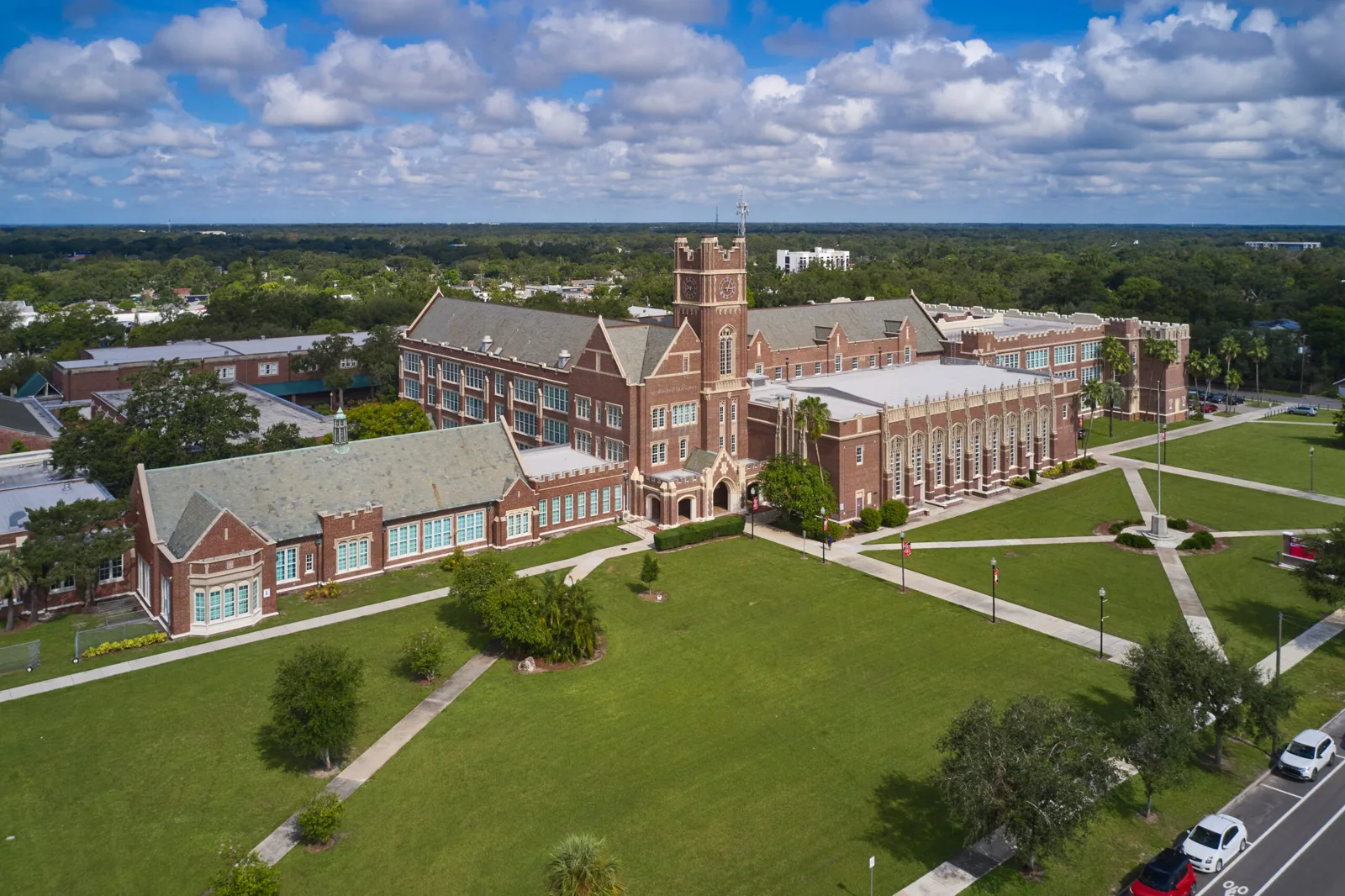
Property Types We Roof
School Roofing in High Point, NC
Plan school roof repairs in High Point around students, class schedules, equipment, drainage, and a documented building-by-building work sequence.
A school roof issue has to be located before a work area is scheduled. We map the leak or damaged detail, identify the rooms and circulation areas below it, and record what can be repaired during the academic calendar. The condition report separates urgent protection from planned maintenance and gives the district a measured repair boundary.
Guilford County Schools is among High Point’s largest employers in the City’s 2023 economic-development report. High Point University is also listed among the city’s major employers, making education part of the local institutional base. Those facts describe the market, not any school’s roof construction. We inspect the specific building and coordinate access, safety, and timing with its operator.
Fit work around the school calendar
We confirm class hours, summer or holiday access, testing periods, athletics, after-school programs, deliveries, and restricted areas before setting a work sequence. The district or school identifies drop-off routes, bus staging, playgrounds, and doors that must stay clear. Roof access and material hoisting are planned with the building lead so the work zone stays separated from students and staff.
The City maps Piedmont Corporate Park near Pegg Road and I-40/US 421, and Gallimore Industrial Center near Gallimore Dairy Road, I-40, and NC 68. That commercial network is useful when coordinating deliveries; we still verify each school’s exact route, loading area, and access rules with district staff. A phased plan can prioritize a leaking wing first and defer sound areas to a later window. Each phase has a marked roof boundary, daily dry-in requirement, noise or odor controls, and an agreed update point. A phased occupied-school sequence can keep limited work moving during classes when the approved controls allow it. For larger renewal, a replacement schedule separates each building and identifies when interior protection is needed.
School sites may include gyms, kitchens, classroom wings, libraries, and mechanical areas with different operating hours. We record which rooms sit below each roof section and which spaces need advance notice. The district can match that map to its own maintenance and room-use calendar.
Follow the leak through the roof assembly
A ceiling stain gives a starting point, not a roof diagnosis. Water can travel along a deck or beneath the membrane before appearing in a classroom. We compare the report date, wind or rain direction, roof slope, drains, curbs, and prior repairs. If a test opening is needed to confirm wet insulation or deck condition, that step is shown separately from visible repair work.
We inspect seams, parapet edges, skylights, vents, HVAC curbs, and roof-to-wall transitions. At drains, we check the outlet, strainer, overflow path, and slope to the low point. A drain inspection can distinguish debris from a geometry issue, while skylight and penetration flashing records separate roof openings. Findings are labeled by building wing or roof zone rather than left as an unlocated list.
Repeated leaks near a mechanical curb may involve flashing, equipment movement, or condensate. We inspect the roof side and coordinate any mechanical adjustment with the district’s facilities staff. A curb review defines the roof interface and indicates where another trade needs to participate.
Prepare for regional heat and winter exposure
High Point sits in the Piedmont, where seasonal heat, freeze periods, and light winter snow affect roof access and drainage. NOAA normals at nearby Greensboro (KGSO) report 7.1 inches of annual snowfall. That regional station figure does not estimate accumulation at a school. We inspect actual roof edges, drain paths, and low areas, then plan work for the conditions on the scheduled day.
After a severe-weather report, the inspection checks rooftop equipment, edge metal, flashing, and visible membrane for movement or openings. The National Weather Service documented a High Point tornado in March 2010 that damaged more than 600 structures. That historic record is not evidence of damage at a particular school. Current photographs and roof observations establish the condition for any repair or claim file.
Indoor protection is part of the work plan. Before removal begins, we identify the rooms below the repair zone, establish temporary dry-in, and confirm how staff will report new water. If insulation is exposed, the team records what was removed and verifies the substrate before closing the assembly.
Choose repair, recovery, or replacement
A localized repair is useful when a defect has a clear boundary and adjacent layers remain serviceable. We specify preparation, compatible material, repair dimensions, and any related flashing or edge work. If multiple leaks follow the same roof line or wet insulation extends beyond the visible opening, we map the broader condition before proposing repeated patches.
Recovery is considered only after the existing assembly, moisture, attachment, deck capacity, drainage, edge height, and product requirements have been reviewed. A TPO assembly or modified-bitumen system can be compared with the roof found onsite, using measured areas and consistent assumptions. Replacement planning identifies tear-off limits, temporary protection, and the order for work across buildings.
Cost and duration reflect the roof area, number of buildings, access, layers, equipment, material lead times, and calendar window. We state which quantities are confirmed and which rely on additional testing or owner decisions. The district can then compare immediate repairs with capital work without treating every maintenance item as an emergency.
Keep school roof findings traceable
The closeout record can include a roof map, dated photographs, completed repair locations, materials, test areas, and items left for follow-up. Each item is tied to a building and roof zone so staff can return to the same detail. If access prevented a complete inspection, the record names the area and the revisit needed.
A district portfolio may include a college facility or an residential building under separate ownership. We keep the school condition and operating calendar distinct from those assets. A baseline inspection can carry the school’s prior leak locations into future budget reviews and seasonal maintenance.
Arrange a roof walk when a classroom reports water, a drain repeatedly overflows, or a capital plan needs measured quantities. We coordinate with school staff, document the roof condition, and return a scoped next step aligned with the building calendar.
School work needs coordination with the facilities contact about occupied areas, seasonal calendars, security, and access procedures. Confirm which buildings are part of the request and who can approve work near students or staff. Document roof zones and protect interior rooms where the scope requires it. A summer schedule may be useful only when confirmed by the district; do not assume a school is vacant. The closeout should list tested areas, repairs, open items, and any work deferred to a later window.
When a district schedules work in a short break, confirm material delivery and weather contingency before committing to the dates. Include a fallback if a roof area cannot be closed because of rain or an unexpected substrate issue. The final file should identify which buildings were completed and which were deferred, enabling the facilities team to plan the next approved window.
Related Roofing Work
Storm and Roof Damage Repair
Storms that reach the Triad can lift edges, open seams and crack flashing. Start here:
- Wind Damage Roof Inspection and RepairInspect High Point commercial roofs after high winds, document edge and flashing conditions, stabilize exposure, and define measured repair limits.See repair options
- Hail Damage Roof Inspection and RepairAssess High Point commercial roofs after hail, document impact evidence, select focused testing, and define measured repairs without assuming causation.See repair options
- Tornado Damage Roof Assessment and RepairAssess High Point commercial roofs after tornado damage with released access, roof-zone mapping, temporary stabilization, and staged repair records.See repair options
Roof Assessment
Map the school roof and work window
Arrange a High Point school roof walk for building-level photographs, measured findings, and a calendar-aware repair plan.
Questions About School Roofing
Can roof work happen while school is in session?
It can when the district approves access, separation, hours, and protection. We phase roof areas and set daily dry-in and communication steps with the building lead.
How do you keep students away from roofing work?
The school identifies circulation and restricted zones. We coordinate staging, lift locations, entrances, and work boundaries with staff before materials arrive.
What should the district document after a leak?
The room, date, weather, and visible change help locate the issue. We pair that report with roof photographs, drainage, seams, and any prior repair record.
Does one wet classroom mean the whole roof needs replacement?
No. We inspect the assembly, map the moisture boundary, and compare a localized repair with broader work only when field evidence supports it.
More questions? Ask our roofing team or call 555-555-5555.
Request a Roof Assessment in High Point
Send the address, the roof concern and when the roof can be reached. We walk the roof, photograph what we find and explain the repair or replacement options.
Roof Assessment
Commercial Roofing in High Point
Call, email or send the building details. We set a time to walk the roof and look at the leak, the drains and the flashing.