
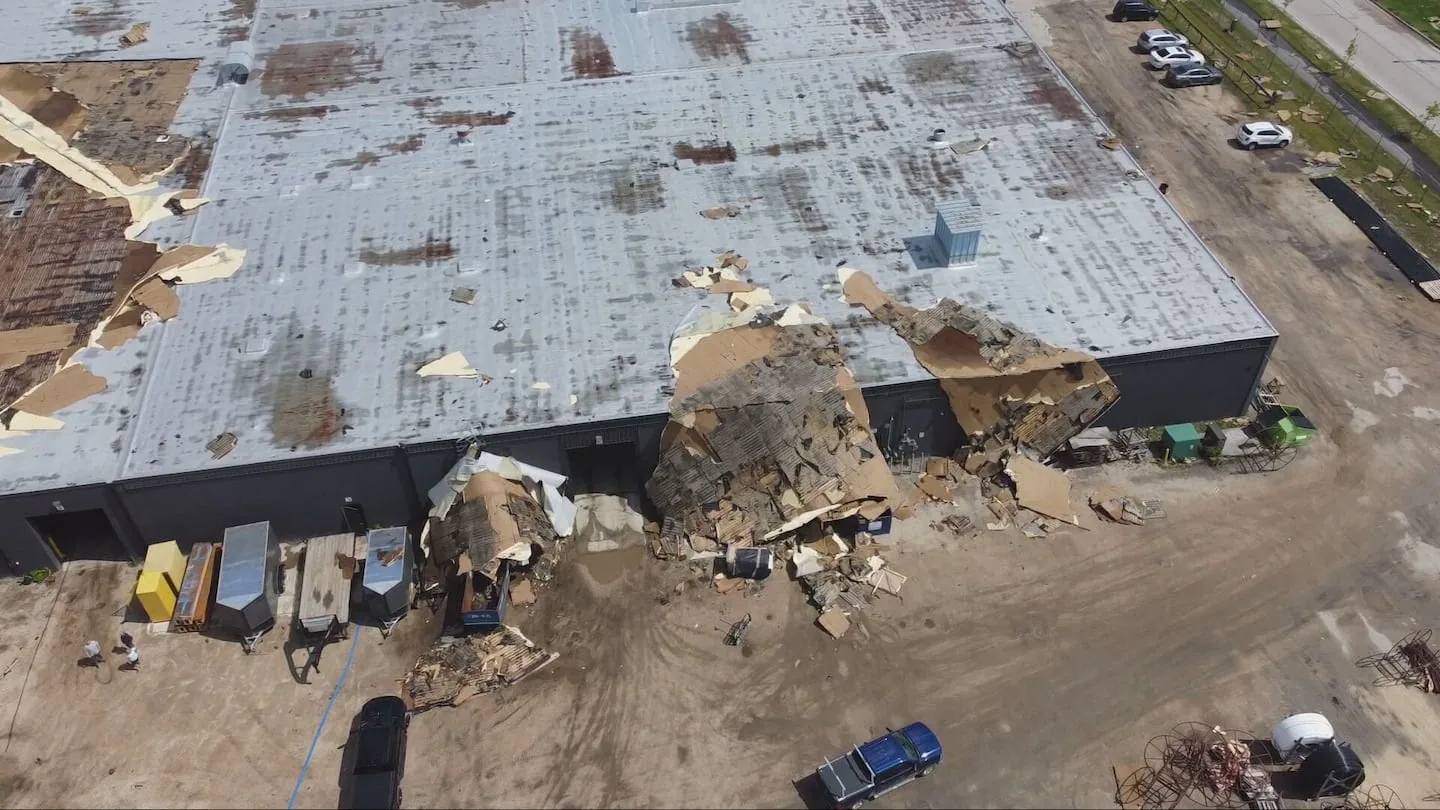
Roof Damage Repair
Commercial Tornado Damage Roof Assessment and Repair in High Point, NC
Assess High Point commercial roofs after tornado damage with released access, roof-zone mapping, temporary stabilization, and staged repair records.
A tornado can affect a commercial roof through uplift, debris impact, displaced equipment, and damage that extends into walls or the structural frame. Roof stabilization begins only after authorities and the property safety lead establish access. The inspection records visible conditions and the limits of the roofing scope; it does not determine structural safety, utility status, or insurance coverage.
The NWS historical summary records 40 homes destroyed and more than 600 structures damaged in the High Point EF-3 tornado of March 28, 2010. That historic event demonstrates regional exposure. It does not establish damage or causation at any current building. Each site requires its own inspection and records.
Apply those figures only as historical regional context.
Wait for official release and coordinate entry
Do not enter a damaged roof until the authority having jurisdiction and the owner's safety lead confirm the area is accessible. Hazards can include unstable deck, loose parapet, fallen lines, sharp debris, wet electrical equipment, and partially detached rooftop units. Confirm the work boundary, required protective equipment, escort, and emergency contact before climbing.
If a limited dry-in is approved, identify the area, materials, and monitoring responsibility. A temporary stabilization visit can address an exposed opening after safe access is established; it does not inspect or repair every affected part of the building. Keep the temporary measure distinct from permanent restoration and include a revisit trigger.
Where the roof remains unsafe or inaccessible, record that restriction and return after the release changes. A roof inspection documents only the areas reached under the approved plan.
Map damage by roof zone and component
Start with an overall roof plan, then locate edge metal, coping, membrane, seams, penetrations, skylights, curbs, drains, and rooftop equipment that show movement or impact. Photograph a broad view and the exact detail. Note debris direction only when it can be observed; do not infer wind speed, load, or structural capacity from an isolated displaced component.
Interior reports should identify the room or asset, time of observation, and any temporary protection already in place. Water may travel away from an opening, so correlate it with roof slope and known details. A leak assessment should state what source is confirmed and what remains a possibility.
If roof access is limited to one section, do not extend findings across adjoining wings. Each building, canopy, and connecting structure receives an access status and separate map reference.
After access is approved, make one pass to identify hazards and plan a second pass for detailed documentation. Loose metal, broken glazing, fallen equipment, and damaged penetrations may require different controls. Record whether a component is still attached, has shifted, or is absent. Use a scale reference only where safe, and preserve an overall view so the close-up can be tied to a roof section. If debris must be cleared before inspection, note the change and any photographs taken before removal.
Separate roofing work from structural recovery
Before permanent roof work, coordinate with structural, electrical, mechanical, fire-protection, and environmental professionals as appropriate. A roofer can document membrane and flashing conditions, but does not clear a damaged deck, certify equipment, or determine whether a building is safe to occupy. The owner sets the recovery sequence and assigns each professional responsibility.
Temporary covers must account for remaining weather exposure, attachment to sound structure, drainage, and access. Do not load loose debris or materials onto an area with unresolved structural concerns. The site safety lead determines where crews may work and what materials can be staged.
A replacement proposal should follow test results and access approval, with quantities for tear-off, deck allowances, membrane, edge details, and temporary protection. Unknown conditions should appear as decision items, not as a presumed scope.
Sequence test openings with the engineer or other reviewer when structural condition is uncertain. Do not cut into a deck to investigate below the surface until the owner confirms the location and qualified reviewers agree it is appropriate. If an opening is approved, define who watches the area, how it will be temporarily secured, and what decision follows the test result. This avoids exposing a building to additional water while responsibilities are unresolved.
Confirm that utilities and rooftop controls remain in the state approved by site safety staff before beginning work. Do not reconnect, move, or test equipment as part of a roofing visit unless that service is expressly assigned to a qualified trade. Mark any location where fallen lines, damaged ducts, or unstable support frames prevent a complete roof inspection.
Coordinate High Point facilities without transferring findings
City mapping identifies Piedmont Centre and Premier Center as separate business areas. These locations help orient service logistics, but do not indicate which buildings experienced the historic tornado or any current damage. Use the actual property address, building identifier, and authorized contact for every job record.
If the weather event affects several sites, record each visit date, released roof area, observed conditions, and open safety or test items separately. A nearby property may have a different roof assembly, owner, or damage pattern. Do not reuse photographs or damage descriptions across assets.
For facilities with metal edges displaced by wind, a focused wind damage review can address that observation. A fire damage assessment or hail damage assessment should be kept separate when those conditions are reported.
Create a staged, traceable closeout
Closeout should identify who released the site, inspection dates, roof sections accessed, photographs, materials, measured work, and any areas not entered. Keep emergency cover, debris removal, structural repair, and permanent roof replacement as distinct stages. A dated record helps later teams understand how conditions changed as the building became accessible.
For each test opening, attach the before-and-after image, location, result, and decision that followed. If the owner authorized extra work, retain the approval with the revised scope. Note remaining temporary protection and the person assigned to inspect it after weather.
Request a roofing assessment after a tornado only when access is authorized. We document roof-specific findings and coordinate the handoff to the other professionals responsible for recovery.
For a multi-day response, issue a short status after each visit listing site access, temporary measures, tested areas, and unresolved safety items. A later crew can then resume from the current condition instead of relying on verbal recollection. Preserve earlier versions of the roof plan as work limits evolve.
If the building returns to service in stages, record which roof sections were repaired and which await a later phase. The facilities team can then plan follow-up inspections against the current occupancy and access status.
Label each attachment with the property identifier and visit date. Record the name of the approved site contact receiving the documentation. Keep recommendations for future work separate from items completed during the emergency response.
Archive the final roof plan.
Keep the visit date visible.
Save it for reference.
Related Roofing Work
Storm and Roof Damage Repair
Storms that reach the Triad can lift edges, open seams and crack flashing. Start here:
- Wind Damage Roof Inspection and RepairInspect High Point commercial roofs after high winds, document edge and flashing conditions, stabilize exposure, and define measured repair limits.See repair options
- Hail Damage Roof Inspection and RepairAssess High Point commercial roofs after hail, document impact evidence, select focused testing, and define measured repairs without assuming causation.See repair options
- Tornado Damage Roof Assessment and RepairAssess High Point commercial roofs after tornado damage with released access, roof-zone mapping, temporary stabilization, and staged repair records.See repair options
Roof Assessment
Plan a safe tornado roof assessment
Arrange a High Point roof inspection after site release with documented access limits, measured conditions, and recovery handoffs.
Questions About Tornado Damage Roof Assessment and Repair
Can you inspect before emergency crews release the building?
No. The site authority and safety lead must establish access and hazards before a roof visit.
Does an EF-3 tornado report prove a property was damaged?
No. It is regional event context. Site-specific observations and records are needed for an individual building.
Can you determine if the roof deck is safe?
No. Structural capacity and occupancy decisions belong to qualified structural professionals and the authority responsible for the building.
Can you install a temporary cover before pricing replacement?
If access is approved and the owner authorizes it, limited stabilization may be completed while testing and permanent scope development proceed.
More questions? Ask our roofing team or call 555-555-5555.
Request a Roof Assessment in High Point
Send the address, the roof concern and when the roof can be reached. We walk the roof, photograph what we find and explain the repair or replacement options.
Roof Assessment
Commercial Roofing in High Point
Call, email or send the building details. We set a time to walk the roof and look at the leak, the drains and the flashing.