
Roof Damage Repair
Commercial Ponding Water Roof Repair in High Point, NC
Measure High Point commercial roof ponding, check drainage and nearby details, and define repairs based on verified site conditions.
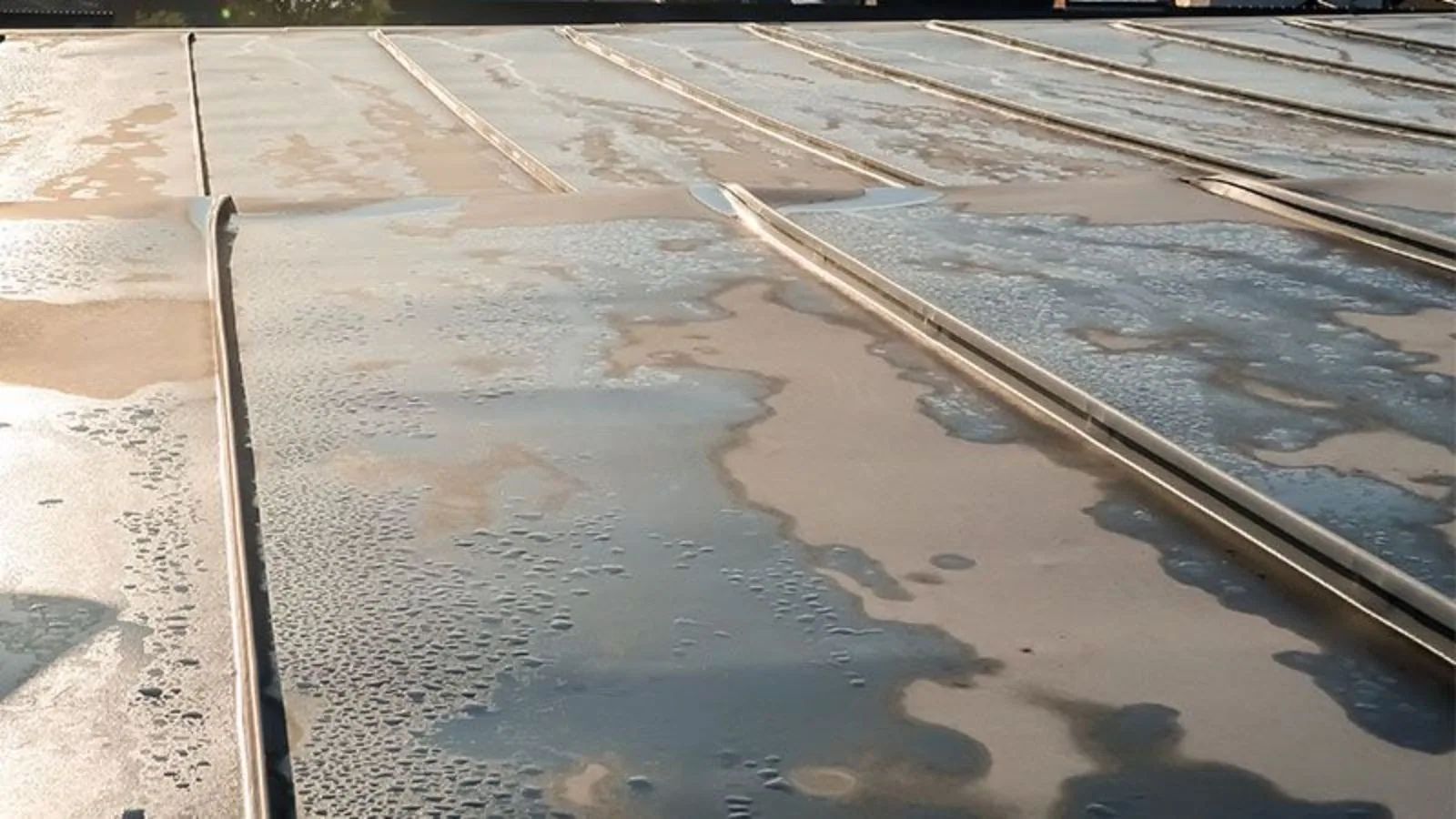
Standing water after rainfall is a condition to measure and investigate, not an automatic diagnosis of a failed roof. The assessment records where water remains, how long after precipitation it was observed, the approximate depth or limits, and nearby drains, seams, curbs, and roof transitions. We distinguish a drainage concern from membrane damage and from an observation made before the roof had time to dry.
High Point's climate record includes measurable winter snowfall and warm-season precipitation, but a regional normal does not establish the weather on a particular inspection date. We use the site visit conditions and any owner-provided maintenance logs to evaluate the observed ponding.
Map the water and its path
Mark the pond boundaries on a roof plan and note the inspection time, recent rain, slope direction, depth, and any drain inlet nearby. Photograph the area from a consistent angle. Check whether water lies at a low point, backs up at a blocked outlet, or spreads from an overflow or equipment discharge. Do not assume a flat-looking surface has no designed slope.
Inspect drain strainers, bowls, leaders where accessible, overflow scuppers, and surrounding membrane. A drainage inspection can identify visible obstructions or damaged flashing. Drain clearing should follow site safety and service rules; the roofer should not enter a drain line or claim underground flow is clear without appropriate testing.
If the pond is near a seam or penetration, inspect the nearby detail separately. Water depth does not reveal whether the membrane is punctured, and a membrane issue may exist even after the pond evaporates.
Assess consequences before choosing a fix
Repeated or prolonged water retention can warrant evaluation of the roof assembly, drainage capacity, deck behavior, and structural design. Note deflection, cracks, unusual movement, or expanding areas and refer structural questions to a qualified engineer. Roofing observations should not be presented as a load certification.
Interior reports help set urgency but do not prove the pond is the leak source. Compare water stains with the roof path, seams, drains, and previous repair locations. A roof inspection documents accessible evidence; a leak assessment defines a confirmed opening when one is found.
For an active leak, protect the interior under owner procedures and record any temporary roof measure. The immediate response and drainage correction are separate decisions, especially when water may have traveled beneath the membrane.
When water reaches electrical equipment, stored materials, or occupied space, the owner should follow its interior safety and protection process. The roofing report can identify the area and roof-side evidence but does not certify interior electrical safety or contents condition.
Choose a drainage correction from verified conditions
Possible work may include clearing accessible debris, restoring an outlet detail, repairing membrane at a drain bowl, or evaluating slope and drainage redesign. The correct option depends on measured elevations, outlet condition, system compatibility, and the roof's design. An added drain or tapered insulation should not be proposed as a universal fix without reviewing structure, code, overflow capacity, and discharge routing.
A repair proposal states the exact drain or pond area, work dimensions, materials, and limits. If an infrared survey or test opening is recommended, explain whether it will identify wet insulation, membrane separation, or another question. A repair scope should separate confirmed correction from a broader drainage improvement.
Where a roof has multiple low points, document each area independently. One corrected outlet may not address another pond behind a curb or at a separate roof elevation.
Roof drainage work may interact with overflow paths and parapet height, so note the existing configuration before altering an outlet. Photograph strainers and scuppers in place, and record whether debris appears to have accumulated recently or repeatedly. If an outlet is blocked, document the accessible clearing performed and recommend a separate plumbing or drainage-line test when below-roof flow cannot be verified.
Do not cover a drain or scupper with new materials while the water path is being evaluated. Protect the opening from construction debris and confirm that temporary controls will not create a new blockage. Work sequencing should keep a functioning outlet available whenever possible and document any temporary condition that remains.
For a roof with several drains, list the outlet identifier, service condition, and contributing roof area where plans make that relationship clear. Confirm whether the overflow route is visible and unobstructed. If the drain is below a grate or inaccessible cover, record that limitation rather than assuming it functions. A drainage contractor or plumbing specialist may need to trace concealed piping. Keep that recommendation distinct from membrane repair, especially if water has entered at a separate seam or penetration.
Plan inspection for local buildings
Piedmont Centre and Premier Center are distinct High Point business areas. They orient the assignment, while the actual address and building identifier guide the site plan. Confirm the facility's roof slope, drain location, and maintenance history before drawing findings.
For a portfolio across several properties, keep ponding maps and service records separate by asset. Note whether the visit occurred soon after rain and whether the roof had been maintained before inspection. This gives a later reviewer enough context to compare observations without treating a district or seasonal climate statement as site-level evidence.
Where the building has a critical drainage or structural concern, the owner may need design professional input. A condition record can preserve the observation and identify the additional review requested.
Track the condition after corrective work
After a drain or membrane repair, record the work date, materials, before-and-after images, outlet condition, and any limit such as a dry-weather inspection. If performance needs confirmation after rain, name the follow-up trigger and compare the new pond boundary and duration with the original observation.
Where wind has affected an outlet or edge, an inspection of wind-related roof damage can document that separate condition; openings receive a flashing failure review. Keep both findings distinct from the ponding map unless the water path connects them.
Request an inspection when water repeatedly remains at a low point, backs up around an outlet, or coincides with a leak report. We document measurements and recommend the next step tied to verified conditions. A follow-up after representative rainfall can show whether the correction changed drainage; if access or weather prevents that check, the record should say so.
When more than one low area remains, do not combine them into a single pass/fail note. Keep the outlet, measured boundary, and inspection date separate for each roof zone, then compare those observations during the next service visit. That makes a change in drainage visible in the record.
If inspection occurs before the roof dries, record that timing and return under comparable conditions when the duration of retained water matters to the decision.
After a correction, compare the same roof areas after representative rainfall. Record how long water remains and whether the outlet or low point changed; a dry-weather walk cannot answer that drainage question.
Related Roofing Work
Storm and Roof Damage Repair
Storms that reach the Triad can lift edges, open seams and crack flashing. Start here:
- Wind Damage Roof Inspection and RepairInspect High Point commercial roofs after high winds, document edge and flashing conditions, stabilize exposure, and define measured repair limits.See repair options
- Hail Damage Roof Inspection and RepairAssess High Point commercial roofs after hail, document impact evidence, select focused testing, and define measured repairs without assuming causation.See repair options
- Tornado Damage Roof Assessment and RepairAssess High Point commercial roofs after tornado damage with released access, roof-zone mapping, temporary stabilization, and staged repair records.See repair options
Roof Assessment
Measure roof ponding before selecting a fix
Arrange a High Point drainage and membrane assessment with a marked pond boundary, outlet review, and clear next step.
Questions About Ponding Water Roof Repair
Does standing water mean the roof is failing?
Not by itself. The inspection documents location, duration, drains, nearby details, and any membrane damage before recommending a repair.
Can you add a drain to stop ponding?
That may be an option after reviewing elevations, structure, code, overflow, and discharge routing. A design professional may need to evaluate the change.
Should ponding be measured right after rain?
The timing matters. We record recent weather and visit conditions so a later reviewer understands how long water may have remained.
Will drain clearing fix a leak?
Only if the obstruction is related to the leak path. Drainage and membrane conditions should be inspected as separate but potentially related issues.
More questions? Ask our roofing team or call 555-555-5555.
Request a Roof Assessment in High Point
Send the address, the roof concern and when the roof can be reached. We walk the roof, photograph what we find and explain the repair or replacement options.
Roof Assessment
Commercial Roofing in High Point
Call, email or send the building details. We set a time to walk the roof and look at the leak, the drains and the flashing.