Roof Systems
Commercial Standing-Seam Metal Roofing in High Point, NC
Inspect standing-seam metal roofs in High Point with panel movement, clips, seams, penetrations, drainage, and repair quantities recorded.
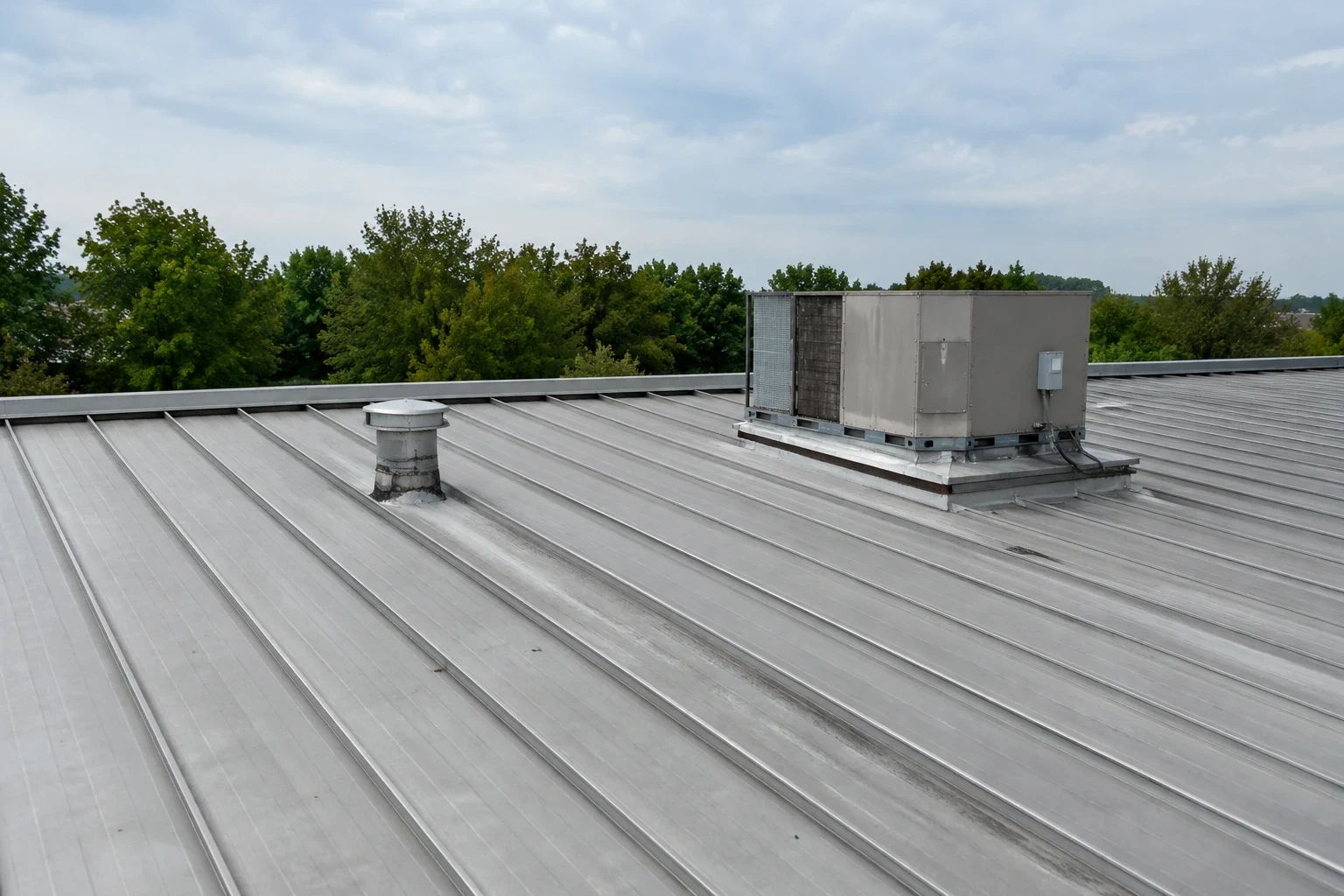
A standing-seam panel can shed water while a concealed clip or end lap begins to move. In High Point, NC, we inspect the panel profile, seam engagement, clips where accessible, fasteners, closures, flashing, and drainage points before specifying repair. The record marks affected elevations and panel runs, then distinguishes loose attachment from surface oxidation or a sealant-only issue. Metal panels need room to move while remaining secured to the structure.
High Point’s regional climate includes warm periods and recurring freeze exposure. Nearby Greensboro (KGSO) records repeated days with highs above 90°F and nights at or below freezing. Those are airport-station normals, not surface temperatures measured on a metal roof. We use the current weather, panel condition, attachment, and manufacturer requirements to set the inspection and work sequence.
Inspect panels, clips, and seam geometry
We check for oil-canning, distortion, open seams, loose clips, fastener back-out, corrosion, damaged paint, and movement at eaves and ridges. A standing seam can hide its clips beneath the panel joint, so the inspection records what is accessible and what requires removal or drawings to verify. We do not infer attachment spacing from appearance alone. A sample opening can answer a design or repair question when authorized.
Panel length and thermal movement affect fixed points and end conditions. We inspect where panels cross a building transition, terminate at a curb, or meet a gutter or wall. If panel movement has stressed the flashing, the scope identifies both the panel and transition work. A metal retrofit review may be appropriate when an existing assembly needs a broader evaluation than panel repair.
The City identifies Elon Park in eastern High Point near NC 62 and the I-85/I-74 network. It is a mapped development area, not confirmation of any roof type. We use local place information for orientation and verify the actual roof assembly, access, and building use during the walk.
Treat penetrations as custom transitions
Pipe supports, skylights, curbs, hatches, and conduit interrupt a metal panel and need a compatible transition. We inspect the panel cut, closure, curb flashing, sealant, and nearby seams. A boot or cover that works on one profile may not suit another. The written scope names the panel configuration and detail needed rather than using a generic caulk note.
At gutters and valleys, water volume and debris can reveal a problem at the panel edge. We look for backflow, blocked outlets, loose hangers, failed end dams, and water marks below seams. A perimeter metal inspection can cover fascia, coping, and gutter connections; a drainage review handles outlet paths. We keep those quantities separate when the metal roof and drainage work need different trades.
High Point North Industrial Center is a northwest development where a city report identifies a large first-phase building for Ecolab divisions. That project information does not specify a standing-seam roof or its details. For any large facility, we map each roof area and verify panel profile, support, and access rather than transferring assumptions from the building’s scale.
Repair the metal that is installed
Repair may involve re-engaging a seam, replacing a clip or fastener, closing an end condition, treating corrosion, replacing a panel, or rebuilding a penetration detail. We inspect adjacent panels to find whether the visible opening continues along the run. The repair boundary includes the material and connection needed for the proposed correction, while unrelated cosmetic wear is documented separately.
Sealant can protect a designed joint, but it cannot secure a loose panel or restore a failed clip. We identify the mechanical issue first and use compatible sealant only where the detail requires it. For coated surfaces, material selection follows the existing finish and manufacturer guidance. If the panel or substrate is too deteriorated for a local fix, we compare replacement or a retrofit assembly as a separate option.
Owners considering another roof layer should compare the structural and attachment basis, condensation control, drainage, edge height, and penetrations. A membrane alternative or TPO assembly changes the water-control surface and detail strategy. We use measured areas and project documents to explain the tradeoffs.
Plan access along the panel runs
Panel replacement and seam repair require safe access without damaging adjacent metal. We mark travel paths, identify tie-off points from project information, and protect skylights, gutters, and equipment. Material lengths, hoisting, roof pitch, and turning space can affect installation. The site plan lists staging and any need to isolate an area below.
High Point’s High Point North Industrial Center is a designated industrial area near major regional roads, but route maps do not provide building-specific crane or loading information. We confirm gate rules, delivery dimensions, lift setup, and available staging with the property contact. A phased work sequence can keep repair zones controlled where the facility stays in operation.
Cost follows panel profile, gauge and finish where known, run length, clip replacement, custom flashing, access, and substrate repair. Timing depends on fabrication, material lead time, weather, and the amount of roof that can be opened safely. We note field measurements and any custom component before order placement so the owner can review dimensions and delivery timing.
Track panel movement over time
Closeout photos show seams, panel ends, clips or fasteners repaired, penetrations, valleys, gutters, and transition details. We record the affected runs and note any metal that remains under observation. Repeat inspections can compare the same seams for movement, corrosion, and sealant condition. If a later roof-mounted installation changes a panel, the record gives facilities staff a clear point to revisit.
Maintenance should clear debris from valleys and gutters, check exposed fasteners where applicable, and inspect roof penetrations after service work. We avoid walking fragile or unsupported areas and follow the property’s access rules. A maintenance schedule can list those tasks by roof section and due date, with photos attached to the baseline.
Arrange a roof walk when seams lift, panels rattle, fasteners back out, or water appears near an eave or penetration. We document the panel system, define the repair boundary, and explain when broader retrofit or replacement review is needed.
Standing-seam panels move as temperatures change, so inspect clips, seams, penetrations, eaves, ridges, and transitions without treating a single fastener observation as a complete diagnosis. Confirm panel profile and attachment from records or field evidence before selecting a retrofit or repair. A proposed penetration needs coordinated curb and flashing details that preserve the roof's movement. Keep a roof plan showing panel runs and repairs. Future inspection can compare the same seam or clip line and identify whether movement, corrosion, or a new opening requires attention.
When evaluating a leak near a seam, compare adjacent panels and the roof's direction of drainage before proposing sealant. A repair should account for panel movement rather than locking the joint in place.
Related Roofing Work
Storm and Roof Damage Repair
Storms that reach the Triad can lift edges, open seams and crack flashing. Start here:
- Wind Damage Roof Inspection and RepairInspect High Point commercial roofs after high winds, document edge and flashing conditions, stabilize exposure, and define measured repair limits.See repair options
- Hail Damage Roof Inspection and RepairAssess High Point commercial roofs after hail, document impact evidence, select focused testing, and define measured repairs without assuming causation.See repair options
- Tornado Damage Roof Assessment and RepairAssess High Point commercial roofs after tornado damage with released access, roof-zone mapping, temporary stabilization, and staged repair records.See repair options
Roof Assessment
Map the metal panel condition
Arrange a High Point roof walk for seam checks, attachment findings, and measured metal repair options.
Questions About Standing-Seam Metal Roofing
Can a standing seam be repaired without replacing panels?
Often, when damage is localized and the adjacent seam, clip, and panel remain sound. We map the run and inspect attachment before recommending a repair.
Does sealant fix a loose metal roof panel?
Sealant does not replace a failed mechanical connection. We inspect clips, fasteners, seams, and flashing, then specify the connection work required.
How do roof penetrations affect standing-seam panels?
They interrupt the profile and need a transition suited to the panel geometry and movement. We inspect the cut, closure, flashing, and nearby seams.
What changes the cost of panel repair?
Panel profile, run length, access, replacement clips or fasteners, custom flashing, finish compatibility, and concealed substrate conditions all affect the scope.
More questions? Ask our roofing team or call 555-555-5555.
Request a Roof Assessment in High Point
Send the address, the roof concern and when the roof can be reached. We walk the roof, photograph what we find and explain the repair or replacement options.
Roof Assessment
Commercial Roofing in High Point
Call, email or send the building details. We set a time to walk the roof and look at the leak, the drains and the flashing.