
Roof Systems
Commercial TPO Roofing in High Point, NC
Install or repair commercial TPO roofing in High Point with seam testing, drainage review, compatible details, and a measured closeout record.
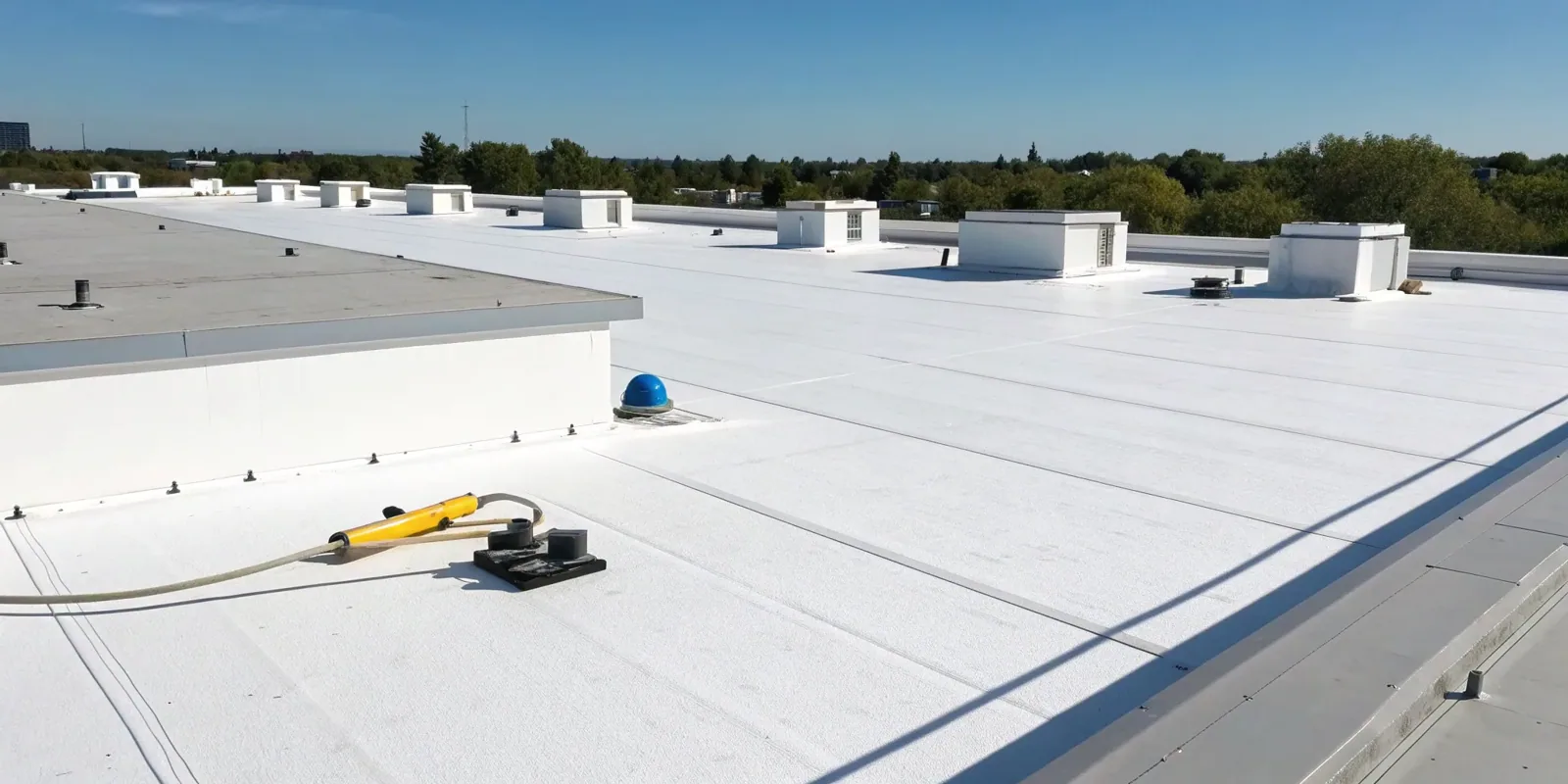
A TPO seam can look continuous from a ladder and still need a closer check at a curb or drain transition. In High Point, NC, we document the membrane surface, field seams, flashings, attachment where visible, and the details where water can reach the deck. The scope identifies repairs separately from replacement or recover options. A TPO system is a set of connected components, and its performance depends on the field sheet and the transitions around it.
High Point lies in the Piedmont, where the regional record includes warm-season heat and repeated winter freezing. NOAA normals at nearby Greensboro (KGSO) count 33.3 days annually with highs of at least 90°F and 68.5 freezing-minimum days. Those are airport-station statistics, not readings taken on each roof. We use current conditions and the roof assembly to set installation timing, seam checks, and maintenance priorities.
Specify the complete membrane assembly
A TPO assembly includes more than a white sheet. The deck, insulation, cover board, attachment method, membrane thickness, edge securement, flashing details, and penetrations all affect the result. We inspect or review available records for each layer and identify where field verification is needed. The written scope names what will be installed and how transitions will tie into drains, curbs, walls, and perimeter metal.
Attachment may be mechanical, adhered, or part of a project-specific assembly. Each method brings different deck, substrate, wind-design, and staging considerations. We follow the project documents and applicable manufacturer installation requirements, and we note assumptions that need confirmation before procurement. A cover-board and insulation scope can coordinate thickness, slope, and protection below the membrane. When the building or specification favors another single-ply material, we can compare PVC membrane requirements against the same deck and edge details.
High Point’s business-park map places East Piedmont Park in the north business-park group near NC 68 and Eastchester Drive. That location can help orient work planning, but it says nothing about a particular building’s roof deck or membrane. We verify the assembly onsite and use building-specific measurements rather than transferring a detail from another property.
Treat welded seams as inspection points
Hot-air welding joins the sheet at overlaps, but a finished appearance alone does not establish seam quality. We check representative welds with appropriate tools, look for fishmouths and contamination, and examine transitions where sheet direction changes. During repair, the surface must be prepared for a compatible weld. The record shows the location and extent of each repair so later inspections can revisit the same seam.
Field seams should connect consistently to flashing seams and termination details. At corners, curbs, and penetrations, prefabricated accessories or field-fabricated details may be used according to the system and approved scope. We inspect those points for gaps, wrinkles, stress, and movement. A poorly secured edge can allow wind or water to act on the membrane even when broad field areas remain sound.
At Premier Center, the City describes a 150-acre office park across NC 68 from Piedmont Centre. That is a local office-property context, not a statement about any roof system there. A facility with rooftop equipment, frequent service calls, or public access may need a different path plan than a warehouse, so we confirm the actual operations with the owner.
Resolve water paths before covering them
Drain bowls, scuppers, overflows, and roof slopes should be considered with the membrane layout. We identify low points, check that flashing transitions are compatible with the sheet, and document any standing water. A clogged outlet is different from a low area or deflected deck. If water remains, we measure it and establish whether a drain review, added testing, or structural investigation would change the scope.
High Point’s mapped commercial areas sit within a network of industrial and office parks. For example, the City map distinguishes northern and southern sections of Piedmont Centre. Those place boundaries can help a portfolio manager sort work orders, but drainage design remains specific to each roof. We label outlets and membrane areas by building rather than using a park-wide assumption. A drainage inspection can address the outlet as its own repair item.
If moisture may be trapped under the sheet, infrared readings or selective openings can help determine the extent. Instruments identify candidate areas, not the full repair by themselves. We compare readings with interior evidence, seam conditions, and drainage. A moisture survey can be authorized when concealed wet insulation would change replacement or recover decisions.
Repair by system condition
A puncture, open weld, failed flashing, or loose termination needs a repair compatible with the existing TPO surface. We confirm that the surrounding sheet can be cleaned and welded, define the repair boundary, and note any substrate condition that affects the tie-in. Coating or sealant is not substituted for a membrane repair without a system basis. If contamination or aging prevents a dependable weld, the scope identifies the alternative.
On a roof with repeated seam or flashing issues, we compare localized work with a broader assembly plan. We may inspect attachment, insulation, edge securement, and wet areas before determining which sections can remain. A TPO repair scope identifies material and quantity; a replacement comparison separates areas where the assembly no longer supports local repair. The owner can weigh disruption and remaining serviceability by roof zone. An EPDM alternative may also enter the comparison when the design basis calls for it.
High Point’s March 2010 NWS storm record includes a tornado touchdown that damaged hundreds of structures. After a severe-weather report, we inspect for impacts, displacement, open seams, and debris damage at the property itself. The historical event does not establish that any current TPO roof was affected. Current photographs and dated condition records govern the repair recommendation.
Sequence the work and closeout
Installation areas are limited to what can be secured and protected within the planned work period. We coordinate membrane deliveries, hoisting, staging, rooftop equipment, tenant access, and weather conditions. Open edges are closed at the end of a shift, and the daily record identifies completed work and any area that needs another inspection before cover. If removal uncovers a different assembly, we document it before changing the plan.
Cost depends on roof area, deck and insulation conditions, attachment, sheet thickness, edge metal, flashing complexity, access, and protection. Schedule depends on material availability, approved details, weather windows, and inspection points. The proposal lists those variables and the quantities used. An owner can compare the TPO scope with other systems using the same area labels and assumptions.
Closeout photographs show representative field seams, penetrations, perimeter transitions, drains, and repaired sections. We include system notes and approved field changes. A condition record can carry the installation baseline into future maintenance, while a maintenance plan tracks drains, seam movement, and rooftop traffic. Schedule a roof walk to document whether TPO repair or installation fits the current assembly.
Related Roofing Work
Storm and Roof Damage Repair
Storms that reach the Triad can lift edges, open seams and crack flashing. Start here:
- Wind Damage Roof Inspection and RepairInspect High Point commercial roofs after high winds, document edge and flashing conditions, stabilize exposure, and define measured repair limits.See repair options
- Hail Damage Roof Inspection and RepairAssess High Point commercial roofs after hail, document impact evidence, select focused testing, and define measured repairs without assuming causation.See repair options
- Tornado Damage Roof Assessment and RepairAssess High Point commercial roofs after tornado damage with released access, roof-zone mapping, temporary stabilization, and staged repair records.See repair options
Roof Assessment
Review the TPO assembly
Arrange a High Point roof walk for seam checks, drainage notes, and a measured TPO repair or installation scope.
Questions About TPO Roofing
How can you confirm a TPO seam is sound?
We inspect representative welds and details with suitable tools, then record locations that need repair or further investigation. A smooth surface alone is not a seam test.
Can a new TPO roof go over the existing membrane?
A recover depends on existing layers, moisture, attachment, deck condition, code limits, and the selected assembly. We document those factors before comparing the option.
Does TPO stop ponding water?
The membrane provides a water-control layer; it does not correct a low deck or blocked outlet. Drainage conditions are assessed and scoped separately.
What details are included in the closeout?
The record can include field seams, flashing and perimeter photographs, material notes, measured areas, owner-approved changes, and follow-up items.
More questions? Ask our roofing team or call 555-555-5555.
Request a Roof Assessment in High Point
Send the address, the roof concern and when the roof can be reached. We walk the roof, photograph what we find and explain the repair or replacement options.
Roof Assessment
Commercial Roofing in High Point
Call, email or send the building details. We set a time to walk the roof and look at the leak, the drains and the flashing.