Roof Systems
Commercial KEE Roofing in High Point, NC
Evaluate commercial KEE roofing in High Point with membrane identification, welded seams, chemical exposure, flashing, and a measured scope.
A membrane label does not tell an owner whether the roof can handle its actual use. In High Point, NC, we inspect the existing assembly, note rooftop discharge and traffic, and map the seams and penetrations before discussing KEE. The record identifies what material is present where it can be confirmed, and which details need testing. The selection follows the building’s requirements and the product documentation, not a general claim that one sheet fits every exposure.
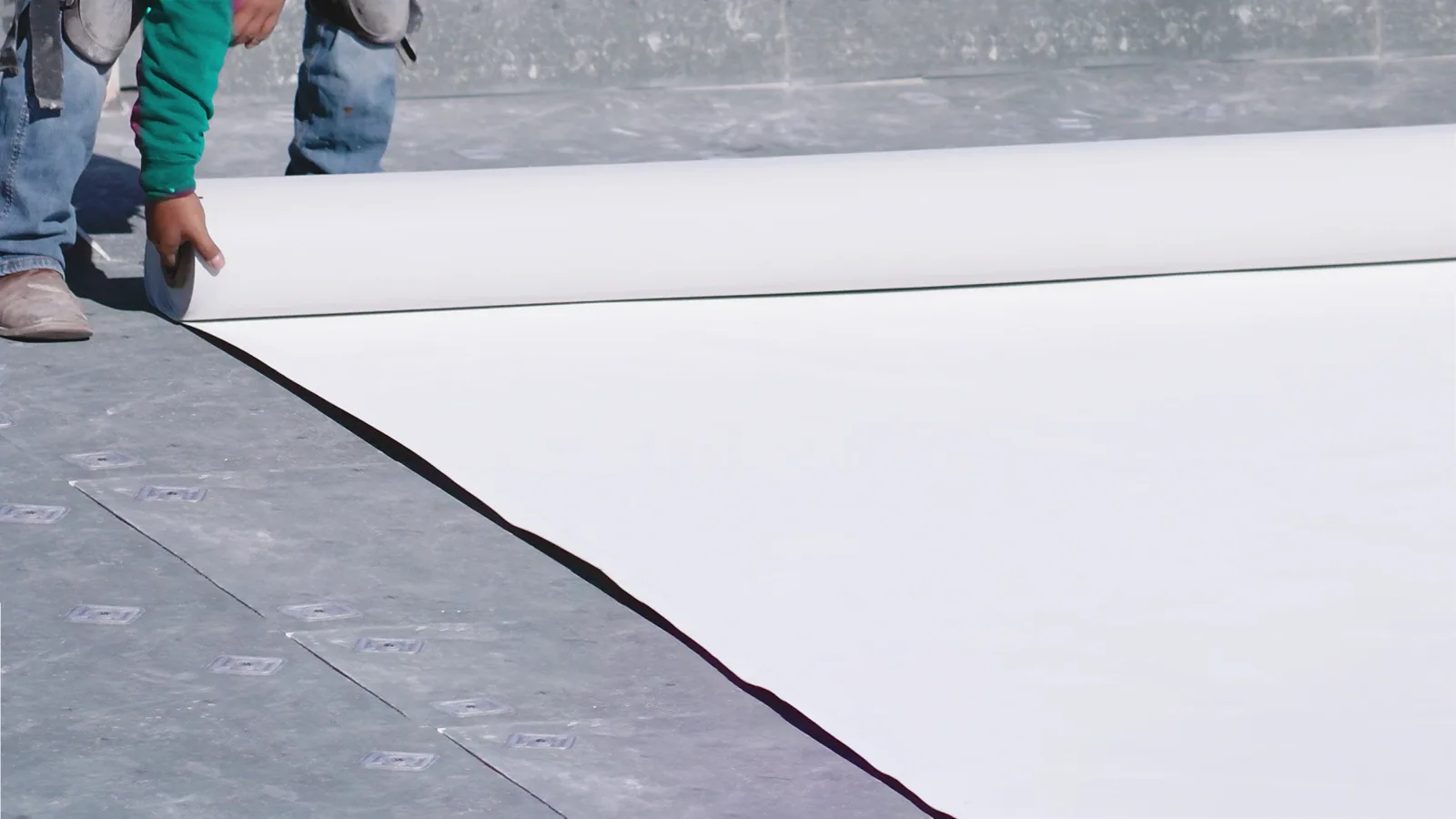
KEE is a thermoplastic membrane formulation that uses a ketone ethylene ester resin. KEE-based systems are heat-welded, but specific properties and compatibility depend on the product and assembly. We document membrane type, attachment, insulation, cover board, edges, and drainage as one system. If the existing material is unknown, we identify the test or records needed before pricing a repair.
Confirm the roof before choosing material
We review labels, project records, seam configuration, and visible sheet characteristics to identify the assembly. TPO, PVC, and KEE-based membranes can share a similar appearance; a repair cannot be selected from color alone. We note prior coatings, patches, and contaminants because they may affect surface preparation. If identification remains uncertain, the proposal states that limit and recommends a sample or qualified product record review.
Exposure review includes exhaust, grease, oils, cleaning agents, foot traffic, and rooftop service routes. The owner or facilities team can identify known substances and maintenance practices. We then compare them with the manufacturer’s product literature and any project specification. A facility’s industry or nearby business park does not establish chemical exposure at the roof. We note affected locations, frequency, and whether residue is visible. The owner can then share that record with the manufacturer or design professional if a substance requires a compatibility determination.
High Point’s downtown Congdon Yards campus combines office, event, food, cultural, and prototyping uses within a reused factory. That activity mix is verified, but it does not establish its membrane or roof exposure. We inspect the building itself and record the condition at each roof area before proposing KEE.
Inspect the heat-welded field
Weld integrity depends on clean surfaces, correct settings, pressure, overlap, and ambient conditions. We test representative seams and examine corners, patches, penetrations, and intersections where workmanship can vary. Open or contaminated welds are marked on the roof plan. Repair includes preparing sound membrane and tying into a compatible area, then checking the finished connection.
Field seams are only one component. We also inspect securement at perimeters, wall flashings, drains, curbs, hatches, and equipment supports. A loose edge can expose the membrane to movement, while a weak curb transition can direct water beneath the sheet. A perimeter detail inspection addresses metal transitions; drainage review maps the outlet path and overflow condition.
The City map identifies Mendenhall at Piedmont Centre as part of High Point’s north commercial area. That place helps ground service planning but says nothing about a specific facility’s membrane. We confirm the roof structure, drains, access, and installed material at the property rather than assuming it from the campus name.
Compare KEE with the full assembly
System selection includes the deck, insulation, cover board, attachment, membrane, edge securement, and flashing. We review how added layers affect roof height, drainage, curbs, and parapet transitions. If an existing roof may remain beneath a new assembly, moisture, attachment, code limitations, and manufacturer requirements need to support that recover. A visual walk does not confirm every concealed layer.
For comparison, a PVC assembly or TPO membrane can be reviewed against the same measured areas and documented exposure. We identify differences in product requirements, attachment, and detail compatibility rather than labeling one option universally better. Coating is considered only where the existing substrate and adhesion test support it.
High Point’s regional weather record includes warm-season heat and freeze exposure. NOAA normals from nearby Greensboro (KGSO) provide station context, while current conditions and manufacturer instructions govern welding and application. The record names the station when referring to those normals and avoids treating them as a reading from a building’s roof.
Control substrate, staging, and work windows
Before a new membrane is installed, the substrate is checked for dryness, fastening, smoothness, and debris. Insulation and cover board are laid out to maintain the selected attachment and drainage plan. Work zones are limited to areas that can be secured and protected. If removal exposes wet insulation or a different deck, we record measurements and seek owner direction before expanding the work.
High Point’s business-park map groups several sites near NC 68 and the I-40/US 421 network. That regional geography may support material access planning, but a facility’s gates, loading dock, lift location, and roof entry must be verified onsite. We set delivery windows and staging with the owner, including protection around HVAC openings and pedestrian areas.
Cost depends on membrane specification, substrate preparation, attachment, flashing quantity, tear-off, roof geometry, and access. Timing depends on approved submittals, material lead time, ambient conditions, and required seam checks. A phased reroof plan can define work zones when the building stays open. We list scope assumptions before procurement so changes in a concealed layer do not go unnoticed. A roof-area log notes where welding was interrupted or restarted, so later inspection can return to the same seam.
Preserve product and seam information
The closeout file records installed membrane and accessory materials, measured areas, seam and detail photographs, approved field changes, and excluded sections. Photos identify orientation and roof-area labels. If testing revealed a limitation, the report retains that note. Future inspectors can compare representative welds and transitions with the installation baseline.
Maintenance includes checking seams, patch edges, rooftop service damage, drains, and flashings. KEE membrane does not remove the need for inspections or compatible repairs. A maintenance schedule can record follow-up dates and note repairs after equipment work or severe weather. We keep the roof record focused on observed condition and owner decisions.
Arrange a roof walk when evaluating KEE for a new assembly, identifying an existing membrane, or repairing a welded seam. We document the material, examine roof details, review known exposures, and return a measured recommendation with defined assumptions.
For a KEE membrane proposal, verify the actual product and assembly through records or field details; color or surface appearance alone is not enough. Confirm substrate, attachment, seam method, flashing, edge treatment, and compatibility with adjoining materials. Any repair should use instructions applicable to the identified system and state how the completed seam will be checked. On a replacement, preserve approved submittals, installer documentation, test results, and closeout photographs. Those records support later evaluation without implying warranty coverage that has not been confirmed.
Where a roof connects to an adjacent membrane, note the transition as a separate detail and confirm the approved tie-in method before repair begins.
Related Roofing Work
Storm and Roof Damage Repair
Storms that reach the Triad can lift edges, open seams and crack flashing. Start here:
- Wind Damage Roof Inspection and RepairInspect High Point commercial roofs after high winds, document edge and flashing conditions, stabilize exposure, and define measured repair limits.See repair options
- Hail Damage Roof Inspection and RepairAssess High Point commercial roofs after hail, document impact evidence, select focused testing, and define measured repairs without assuming causation.See repair options
- Tornado Damage Roof Assessment and RepairAssess High Point commercial roofs after tornado damage with released access, roof-zone mapping, temporary stabilization, and staged repair records.See repair options
Roof Assessment
Review the membrane and exposure
Arrange a High Point roof walk for material identification, seam tests, and a measured KEE assembly scope.
Questions About KEE Roofing
What does KEE mean in roofing?
It refers to a thermoplastic membrane formulation that includes ketone ethylene ester resin. We confirm the actual product and system from project records or material identification.
Can you repair KEE with TPO material?
We do not treat the materials as interchangeable. The existing sheet and approved product instructions determine compatible repair components and preparation.
How do I judge a chemical exposure?
A product name alone does not establish compatibility with every substance. We compare the known exposure conditions with product documentation and project requirements.
What is checked before a KEE reroof?
We review the existing assembly, moisture, deck, attachment, drainage, edges, penetrations, and transitions. Concealed questions are identified for testing.
More questions? Ask our roofing team or call 555-555-5555.
Request a Roof Assessment in High Point
Send the address, the roof concern and when the roof can be reached. We walk the roof, photograph what we find and explain the repair or replacement options.
Roof Assessment
Commercial Roofing in High Point
Call, email or send the building details. We set a time to walk the roof and look at the leak, the drains and the flashing.