
Commercial Roofing Services
Commercial Skylight and Penetration Flashing in High Point, NC
Repair commercial skylight and penetration flashing in High Point with water-path tracing, curb measurements, compatible details, and dated closeout photos.
A stain beneath a skylight does not identify the failed part. Water may enter at the glazing, frame, curb, flashing, or a nearby seam, then travel before it reaches the ceiling. In High Point, NC, we inspect the assembly above and below, photograph each transition, and map the likely water path. The record separates a confirmed opening from a condition that needs testing, so a repair is aimed at the point of entry rather than the most visible interior mark.
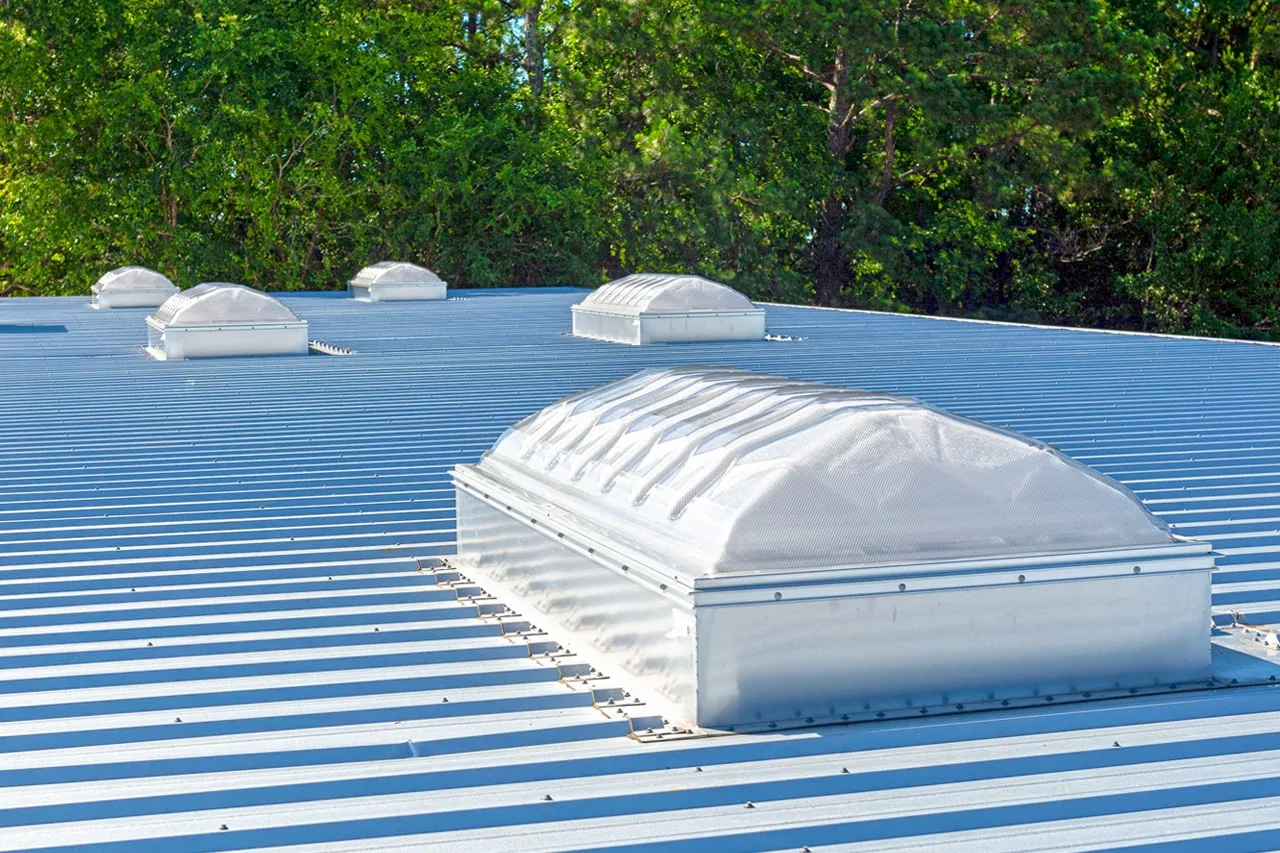
Penetrations interrupt the roof field and concentrate detail work. Skylights, pipes, vents, hatches, equipment curbs, and conduit supports each need a compatible transition. We note the roof system, curb dimensions, flashing height, sealant condition, and nearby drainage. The scope states which penetration is included and what surrounding area remains outside the repair boundary.
Trace the entry point to the curb
We inspect glazing panels for cracks or displacement, frame joints for movement, fasteners for looseness, and the curb for stable support. At the roof interface, we examine flashing laps, corners, termination bars, counterflashing, and the adjoining membrane. Interior reports and weather timing help narrow the path, but they do not replace the roof-side inspection. If the curb is concealed or unsafe to access, the report names that limit and the next step.
Skylight age or building use does not establish the condition of its glazing or flashing. We document what is present, including previous repairs and any visible condensation or water staining, without assuming a component has failed. Where the water path remains uncertain, controlled testing or a selective opening may be more useful than applying sealant across every joint.
High Point has a documented severe-weather history: the National Weather Service recorded an EF-3 tornado touchdown in 2010 and a tornado near the city in March 2021. These events support careful inspection after storms but do not show that any specific skylight was struck. Our post-storm roof record identifies visible impact and movement separately from pre-existing flashing wear.
Match the flashing to the assembly
Repair depends on the roof material and detail. A single-ply membrane may require compatible flashing membrane, welding, and reinforcement at corners. Modified bitumen needs a compatible flashing layer and properly prepared tie-in. Metal roofs require closures, panel movement allowance, and transitions suited to the panel profile. We inspect the existing assembly before choosing a repair material, especially where a prior coating or sealant obscures the original surface.
A curb that is too low, unstable, or deteriorated may require more than surface sealing. We record curb dimensions and the visible clearance above the roof surface, then explain whether the existing geometry supports a durable flashing transition. If the supporting structure or glazing system requires another trade, that boundary appears in the scope. A roof repair visit can address nearby membrane openings that are separate from the skylight detail.
High Point’s industrial geography includes Scannell Industrial Development, a warehouse/logistics-oriented project identified near Pegg and Gallimore Dairy roads. This local context can make work sequencing around deliveries relevant when a facility is in that area. It does not tell us whether a building has skylights, what shape they are, or how they are flashed. The inspection records those facts at the actual property.
Control water around multiple openings
Several penetrations may sit along one drainage path. We check whether water from an upslope curb is reaching a lower flashing detail or drain, and whether debris has built up between them. Each opening is numbered on the roof plan. That allows the owner to approve one repair at a time or authorize a coordinated group without confusing the quantities.
Nearby drains and scuppers are checked when they affect the penetration’s water path. The Greensboro (KGSO) NOAA record lists 68.5 annual days with freezing minimum temperatures and 7.1 inches of normal snowfall. That regional exposure makes open discharge paths and stable flashing worth reviewing during seasonal maintenance. It does not quantify snow loading at the property; the actual roof geometry and observed accumulation govern any site-specific review.
We can link penetration findings to a drainage review or a moisture survey if water appears to have moved beyond the visible curb. Instrument results are interpreted with the assembly and field observations. They do not by themselves prove a leak source or extent of wet insulation.
Sequence repairs on active buildings
Skylight work often happens above occupied offices, production, or storage. We coordinate roof access, interior protection, lift placement, and notification before opening a detail. If a skylight needs a temporary cover, the protection plan states how long it can remain and who will remove it. Work zones stay clear of required egress paths and active equipment unless the owner approves a defined restriction.
The City calls Piedmont Centre its largest business park. That scale makes building identifiers and access notes useful for a multi-property owner, but it does not mean facilities share an assembly. Each roof receives separate measurements and a photo sequence. A roof-area map keeps one curb’s repair order from being copied to another building by mistake.
Schedule depends on weather, glazing availability, detail fabrication, access, and whether the curb or supporting frame needs work. We identify those dependencies before mobilization. If concealed deterioration appears during repair, we stop at the approved boundary, document the condition, and present an owner decision while the opening remains protected.
Record each repaired transition
Closeout photographs show the finished curb corners, flashing laps, terminations, glazing or frame work included, and adjacent membrane. Notes identify material, measured curb or perimeter, and any excluded glazing or structural component. A later inspector can return to the same roof-area label and check whether the repair remains in place.
Cost follows the number and size of openings, curb height, assembly, access, glazing work, and any support repair or interior protection. If several similar openings are present, we still measure each and note differences; a combined price should not hide separate boundaries.
Arrange an inspection when water appears near a skylight, a seal separates, or visible impact changes the flashing. The scope should identify the unit, curb condition, glazing and frame observations, perimeter detail, and any interior symptom. We trace the water path, set a compatible repair boundary, and leave dated photographs for maintenance. If the frame or glazing needs a separate specialist, the handoff remains explicit.
At handoff, match every completed curb to its roof-plan identifier and confirm that the temporary protection has been removed or assigned to a named follow-up. Note whether the skylight was opened, tested, or left untouched so later maintenance does not mistake an unverified component for a repaired one.
Related Roofing Work
Storm and Roof Damage Repair
Storms that reach the Triad can lift edges, open seams and crack flashing. Start here:
- Wind Damage Roof Inspection and RepairInspect High Point commercial roofs after high winds, document edge and flashing conditions, stabilize exposure, and define measured repair limits.See repair options
- Hail Damage Roof Inspection and RepairAssess High Point commercial roofs after hail, document impact evidence, select focused testing, and define measured repairs without assuming causation.See repair options
- Tornado Damage Roof Assessment and RepairAssess High Point commercial roofs after tornado damage with released access, roof-zone mapping, temporary stabilization, and staged repair records.See repair options
Roof Assessment
Trace the skylight water path
Arrange a High Point roof inspection for curb measurements, flashing photographs, and a repair boundary.
Questions About Skylight and Penetration Flashing
Do you replace skylights or only repair flashing?
We inspect both the roof transition and visible skylight components. The scope identifies roof flashing work and any glazing or frame work that requires a separate component or trade.
Can sealant stop a skylight leak?
Only when the failed detail and substrate support that method. We locate the entry path and check the curb, flashing, glazing, and adjacent roof before selecting a repair.
Will you inspect nearby penetrations too?
We can include them when authorized. Each opening is identified and measured separately so the owner can compare its condition and repair scope.
What if the leak path is not clear?
We state what the inspection confirms and recommend controlled testing or selective opening if that evidence would change the repair.
More questions? Ask our roofing team or call 555-555-5555.
Request a Roof Assessment in High Point
Send the address, the roof concern and when the roof can be reached. We walk the roof, photograph what we find and explain the repair or replacement options.
Roof Assessment
Commercial Roofing in High Point
Call, email or send the building details. We set a time to walk the roof and look at the leak, the drains and the flashing.