
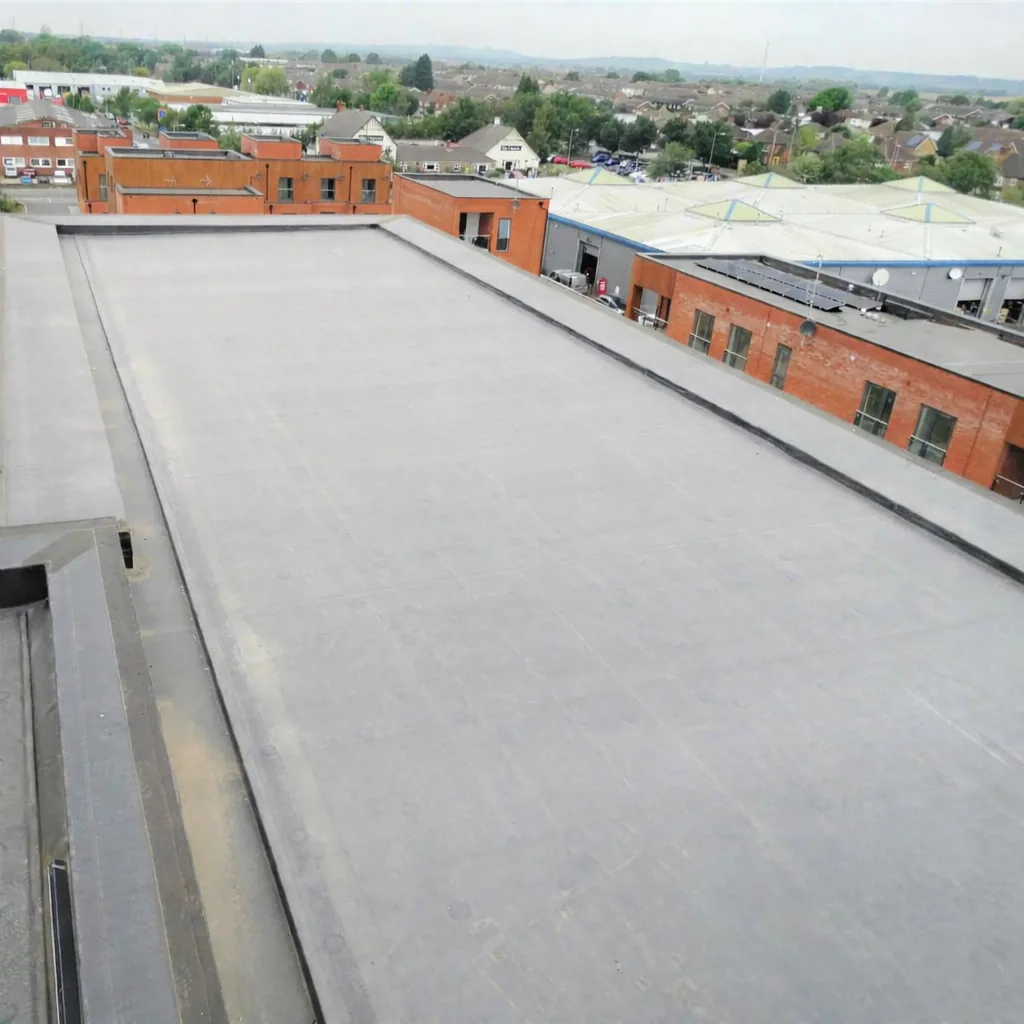
Roof Systems
Commercial EPDM Roofing in High Point, NC
Repair or replace commercial EPDM in High Point with seam, flashing, drainage, and attachment findings tied to a measured roof plan.
An EPDM repair begins with the rubber sheet and its seam method. In High Point, NC, we identify whether the field is adhered or mechanically attached, inspect splice tape and flashing, and record how the membrane meets drains, walls, curbs, and metal edges. Older repairs may use different materials, so we verify what is present before choosing a patch. The report marks the repair area and any condition that needs a test opening.
EPDM is a flexible synthetic rubber membrane used on low-slope roofs. Its performance depends on surface preparation, seam assembly, secure edges, flashing, and drainage. We document those elements as a connected roof system. A membrane that appears intact at the field can still have an opening at a termination or penetration, so the inspection follows the details as well as the open area.
Identify the sheet and seam approach
We check membrane thickness where records allow, surface condition, sheet layout, attachment, splice tape, primer, cover strip, and existing coating. If the system’s identity is uncertain, we do not assume a new repair product will bond to it. A sample or documentation review may be needed before finalizing the material. The scope records test limits and identifies what remains unverified.
At seams, we look for edge lifting, fishmouths, wrinkles, contamination, and separation at corners. Repairs use compatible EPDM components and proper cleaning and preparation. A patch must reach sound material and account for movement. We record the patch dimensions and nearby details so a future inspector can see whether the repair boundary changed.
The City maps South Road Industrial Park in southern High Point near the I-85 and I-74 network. That local industrial location helps orient regional planning, yet gives no information about an individual building’s roof membrane or loading. We verify roof access and operating needs at the actual address.
Inspect edges, drains, and penetrations
EPDM terminations need secure attachment at perimeters, parapets, expansion joints, and roof-to-wall transitions. We inspect metal edging, termination bars, counterflashing, sealant, and corners for movement or gaps. Around drains, the membrane connection and clamping components must remain secure. At equipment curbs, the flashing height and substrate determine whether a repair can be made without opening a larger area.
Standing water deserves a separate look. We check whether debris blocks an outlet, whether the drain body is damaged, and whether the roof plane directs water to the low point. If water remains after drainage clears, we measure the area and recommend the next step. A drain inspection can distinguish outlet service from slope or deck work; a curb review addresses a separate equipment transition.
High Point’s Piedmont climate includes regional freeze exposure. Nearby Greensboro (KGSO) records a normal 7.1 inches of annual snowfall and 68.5 days per year at or below freezing. The station’s snowfall figure is not a property measurement. We use these normals as seasonal context and inspect the roof’s actual discharge path, edge details, and conditions after cold-weather periods.
Repair the EPDM that is present
When the surrounding sheet is cleanable and stable, a localized patch may correct a puncture or open lap. We define cleaning, primer, splice tape or flashing material, pressure application, cover strip, and final inspection as applicable to the assembly. The procedure follows manufacturer requirements for the materials selected. If the membrane is brittle, coated, contaminated, or poorly attached, the proposal explains why another repair method may be needed.
Recurring failures may indicate a wider seam or attachment issue. We compare the location of leaks, prior repairs, interior observations, and moisture findings. For a broader comparison, we can weigh a TPO assembly or modified-bitumen system against the verified repair quantities and existing deck. The owner can compare each option by roof zone. Replacement remains a separate option when wet insulation or extensive deterioration changes the repair decision.
The original International Home Furnishings Center Main building sits at the center of High Point’s Downtown Main Market district. A showroom setting differs from an industrial property, but it does not establish a specific roof type or condition. We keep recommendations tied to the assembly found onsite.
Plan material handling and protection
EPDM rolls, adhesives, cleaners, and flashing materials need a dry staging area and a workable path to the roof. We coordinate loading, hoisting, protection for HVAC and other equipment, and any restriction on odor or solvent use. Work zones are planned around the product’s application requirements and the building schedule. Open areas are closed at the end of the shift, with temporary protection recorded separately.
Cost follows the number of repairs, surface preparation, membrane condition, access, attachment, edge work, and whether insulation or deck repairs are included. Timing depends on material availability, surface conditions, weather, drying time, and property access. A site with separate roof elevations may require distinct mobilizations. The proposal states these drivers and the limits of the measured scope.
For occupied properties, roof work may need to avoid customer hours, production, or deliveries. We confirm those restrictions directly; the name of a business district does not establish a site schedule. A phased work plan can divide repairs by roof section and protect operations below. We document roof access and any equipment shutdown requirement before the crew arrives.
Keep the repair history usable
The closeout record includes before-and-after images, repaired seam or penetration locations, material notes, and any area excluded from the work. We label the roof plan so the owner can return to the same detail later. If a moisture concern remains, it receives a status and follow-up recommendation rather than disappearing in a general completion note.
Routine inspections can track seam edges, flashing, drains, perimeter securement, and rooftop traffic. EPDM can be repaired, but cuts, service damage, chemical contact, and movement still need attention. We compare new photos with the dated baseline and record changes by location. That gives facility staff a more reliable history than a repair ticket without roof-area references.
Arrange a roof walk when an EPDM lap separates, a patch lifts, water appears at a perimeter, or replacement is under review. We identify the material, map the water path, and provide a repair or assembly scope grounded in the roof’s present condition. A condition record can hold the installation or repair history for later decisions.
For EPDM work, identify the membrane condition at seams, penetrations, terminations, and prior patches, then verify which compatible materials and preparation steps are required. Adhesion and substrate condition matter at each tie-in. Document the repair boundary and any transition to a different roof material. If recover is being considered, establish the number of existing layers, moisture status, attachment, and edge height first. Save product identification and repair photographs together so a future technician can distinguish an EPDM patch from adjacent assemblies.
Related Roofing Work
Storm and Roof Damage Repair
Storms that reach the Triad can lift edges, open seams and crack flashing. Start here:
- Wind Damage Roof Inspection and RepairInspect High Point commercial roofs after high winds, document edge and flashing conditions, stabilize exposure, and define measured repair limits.See repair options
- Hail Damage Roof Inspection and RepairAssess High Point commercial roofs after hail, document impact evidence, select focused testing, and define measured repairs without assuming causation.See repair options
- Tornado Damage Roof Assessment and RepairAssess High Point commercial roofs after tornado damage with released access, roof-zone mapping, temporary stabilization, and staged repair records.See repair options
Roof Assessment
Inspect an EPDM assembly
Arrange a High Point roof walk for seam checks, detail photographs, and a measured repair or replacement scope.
Questions About EPDM Roofing
How do you identify an EPDM roof?
We review available records and inspect the sheet, seams, flashing, and prior repairs. If the material remains uncertain, we state the limitation and recommend a sample or documentation check.
Can EPDM be patched with a generic roof sealant?
A durable repair needs materials compatible with the membrane and the right preparation. We identify the surface and select a repair method for the assembly.
Does EPDM handle standing water?
The membrane’s presence does not resolve a drainage problem. We inspect outlets and roof geometry, then scope drain, slope, or deck findings separately.
When does a repair become a replacement decision?
Repeated failures, widespread moisture, poor attachment, or an unsound deck can change the scope. We document those findings and compare options by roof area.
More questions? Ask our roofing team or call 555-555-5555.
Request a Roof Assessment in High Point
Send the address, the roof concern and when the roof can be reached. We walk the roof, photograph what we find and explain the repair or replacement options.
Roof Assessment
Commercial Roofing in High Point
Call, email or send the building details. We set a time to walk the roof and look at the leak, the drains and the flashing.