
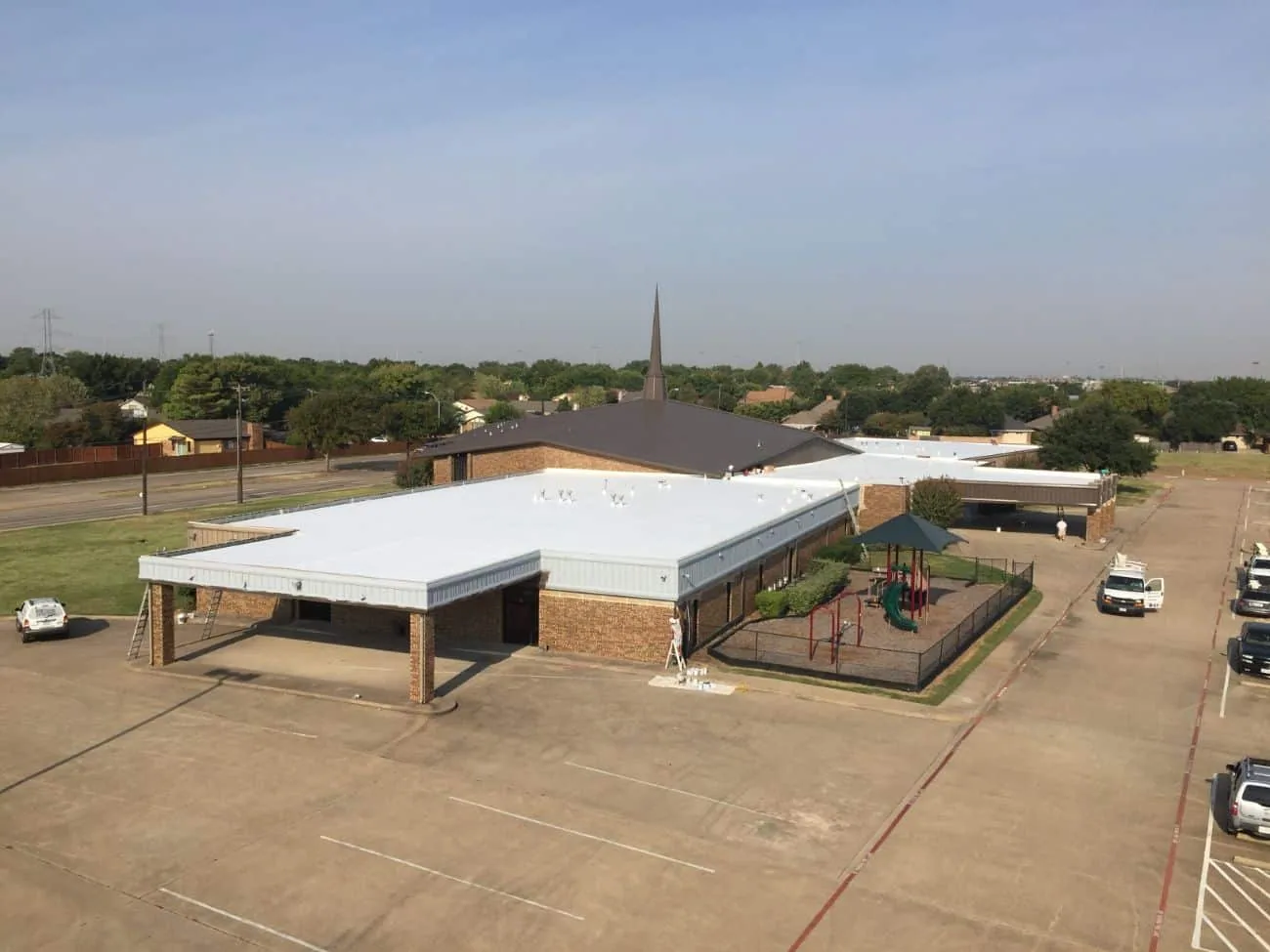
Roof Damage Repair
Commercial Wind Damage Roof Inspection and Repair in High Point, NC
Inspect High Point commercial roofs after high winds, document edge and flashing conditions, stabilize exposure, and define measured repair limits.
After strong wind, a commercial roof can show damage at edges, corners, seams, rooftop equipment, or debris impact points. A missing piece of metal does not explain every interior leak, and an intact-looking field membrane does not rule out a loosened transition. The assessment records what is visible, which areas were reached, and the next test or repair needed before a cause is assigned.
The National Weather Service documented a tornado near High Point on March 18, 2021. That event provides regional weather context, not proof that a specific building suffered wind damage. For a current inspection, we record the reported event date and compare it with the roof evidence and prior maintenance history.
Stabilize exposure and control access
Before anyone approaches a roof, the property representative should confirm that access is safe and that debris, overhead lines, or unstable edge conditions do not create a hazard. If a section appears detached or the deck may be compromised, isolate the area and arrange qualified review. Do not pull loose material or disturb a suspected impact point before documenting it.
When water is entering, protect interior contents under the owner's procedures and identify a limited temporary roof measure. A commercial emergency response can address immediate exposure, with location, material, and follow-up date recorded. Emergency work is not the same as a complete assessment of the remaining roof.
Note who authorized roof access, when stabilization occurred, and whether a later inspection needs a second trade. A condition inspection can map the damage after the site is safe.
Inspect transitions instead of only the open field
Wind loads can act differently at perimeters, corners, parapets, equipment curbs, and rooftop screens. Check termination bars, coping, edge metal, fasteners, membrane seams, flashing laps, and penetrations. Record the direction of displacement and whether the detail remains attached. Photograph each observation with an orientation reference and the roof-zone identifier.
Interior leaks may originate up-slope from the stain. Compare reported timing and location with roof slope, drains, seams, and previous repairs. A leak assessment should distinguish the confirmed opening from areas that remain untested. If wind moved debris or equipment, the responsible site team should document those objects separately from the roofing condition.
For metal systems, inspect panel clips, seams, ridge and eave transitions, and accessory attachment without assuming every panel movement is storm-created. Compare with available prior photographs or maintenance records.
For a low-slope assembly, review membrane attachment patterns and perimeter terminations as separate observations. A loose edge may affect a limited run, while a lifted seam can continue beyond the visible opening. Mark each observed limit and avoid extrapolating a repair quantity from a single photograph. If safe access does not permit a full perimeter walk, list that gap as an inspection limitation.
Set the repair boundary from evidence
A wind-related roof scope should describe the affected area, material when verified, dimensions, preparation, fastening or flashing detail, and adjacent work included. If damage is limited to a transition, avoid proposing a broad field replacement without evidence. If several roof zones show related movement, document each one and the basis for a larger scope.
Where an assembly is concealed or attachment cannot be verified, recommend a test opening or suitable review and state what decision the result will support. A repair may require deck or structural input outside the roofing trade. A measured repair proposal should separate confirmed work from allowances for concealed conditions.
Recovery or replacement should be considered only after moisture, attachment, deck, drainage, edge geometry, code, and system approval are assessed. Keep alternate scopes separate so the owner can compare like-for-like quantities.
Where fasteners, clips, or edge components are missing, retain representative photographs and count only the components confirmed in the agreed scope. If the replacement part needs matching, collect profile and dimensions before ordering. The estimate should say whether color or finish match is based on available samples or a manufacturer reference, because weathering can make adjacent metal appear different.
For buildings with exposed roof equipment, check whether screens, supports, or service walks changed the wind path or blocked inspection. Record observed displacement separately from components that could not be reached. If the owner has pre-event photos or maintenance records, compare them by roof zone and note the date of each source. A comparison can help identify a changed condition, but it should not replace a current inspection or establish causation by itself. Identify any test or specialist review needed before a broad restoration scope is priced.
Use local context without assuming site damage
High Point's City business mapping identifies Piedmont Centre and Premier Center as separate business areas. Those place references can help dispatch and asset teams orient a local response, but they do not identify a building's occupant or roof condition. Confirm the exact address and owner-supplied facility name before recording findings.
Where an event affected multiple properties, keep each inspection file separate and tie photographs to its roof map. Do not transfer a finding from one facility to another based on proximity or a shared weather report. Compare event reports, site observations, and service records for the individual structure.
If damage appears consistent with a tornado, an appropriately qualified evaluator may be needed for broader building review. A tornado damage assessment should focus on observable roof conditions and clear handoffs.
Document temporary and permanent work distinctly
Closeout records include the inspection date, reported event, marked roof zone, dated photographs, material used, measured repair, and any limitation that affected access. If temporary protection remains, identify its location and the condition that should trigger a follow-up. If no roof source was confirmed, say so rather than treating a dry-in as proof.
For future comparison, retain before-and-after views from the same angle and describe the detail repaired. List open areas, recommended test openings, and any structural, electrical, or mechanical review still needed. A separate impact assessment may be appropriate where hail indicators are reported, but the cause should be documented independently. Before additional material is removed, confirm the authorized work boundary and who will approve a change if concealed damage extends beyond the measured repair. Record that decision with the dated photos and revised scope.
Request an inspection after visible edge movement, displaced flashing, or a new leak following high winds. We return a scoped next step based on what the site evidence supports.
When weather is still unsettled, identify how the owner should monitor the temporary area and which contact to call if water resumes. Record the follow-up window and the condition that would require earlier attention.
Attach the owner-approved scope and event report to the closeout. Label comparison photographs by roof zone, orientation, and capture date so a later inspection can distinguish a changed condition from an earlier observation.
Related Roofing Work
Storm and Roof Damage Repair
Storms that reach the Triad can lift edges, open seams and crack flashing. Start here:
- Wind Damage Roof Inspection and RepairInspect High Point commercial roofs after high winds, document edge and flashing conditions, stabilize exposure, and define measured repair limits.See repair options
- Hail Damage Roof Inspection and RepairAssess High Point commercial roofs after hail, document impact evidence, select focused testing, and define measured repairs without assuming causation.See repair options
- Tornado Damage Roof Assessment and RepairAssess High Point commercial roofs after tornado damage with released access, roof-zone mapping, temporary stabilization, and staged repair records.See repair options
Roof Assessment
Document roof conditions after high winds
Arrange a High Point wind-damage roof inspection with safe access, marked findings, and a defined repair or test recommendation.
Questions About Wind Damage Roof Inspection and Repair
Does a wind event prove the roof damage was storm-caused?
No. The event report supplies context. The inspection records physical conditions and limitations; cause should be assigned only when evidence supports it.
Can you cover a roof before completing the full inspection?
A limited temporary measure may be possible after access is safe and authorized. Its location and follow-up needs are recorded separately from permanent repairs.
Which roof areas need close attention after strong wind?
Perimeters, corners, coping, edge metal, seams, penetrations, equipment curbs, and any area with reported debris or displacement are common inspection points.
Can a leak appear away from wind damage?
Yes. Water can travel across or beneath roof layers. Compare interior reports with slope, seams, drains, and adjacent transitions before defining the repair area.
More questions? Ask our roofing team or call 555-555-5555.
Request a Roof Assessment in High Point
Send the address, the roof concern and when the roof can be reached. We walk the roof, photograph what we find and explain the repair or replacement options.
Roof Assessment
Commercial Roofing in High Point
Call, email or send the building details. We set a time to walk the roof and look at the leak, the drains and the flashing.