
Commercial Roofing Services
Commercial Roof Edge Metal, Coping, and Gutter Service in High Point, NC
Inspect commercial roof edges in High Point with measured coping, gutter, fastening, and membrane-transition findings for repair planning.
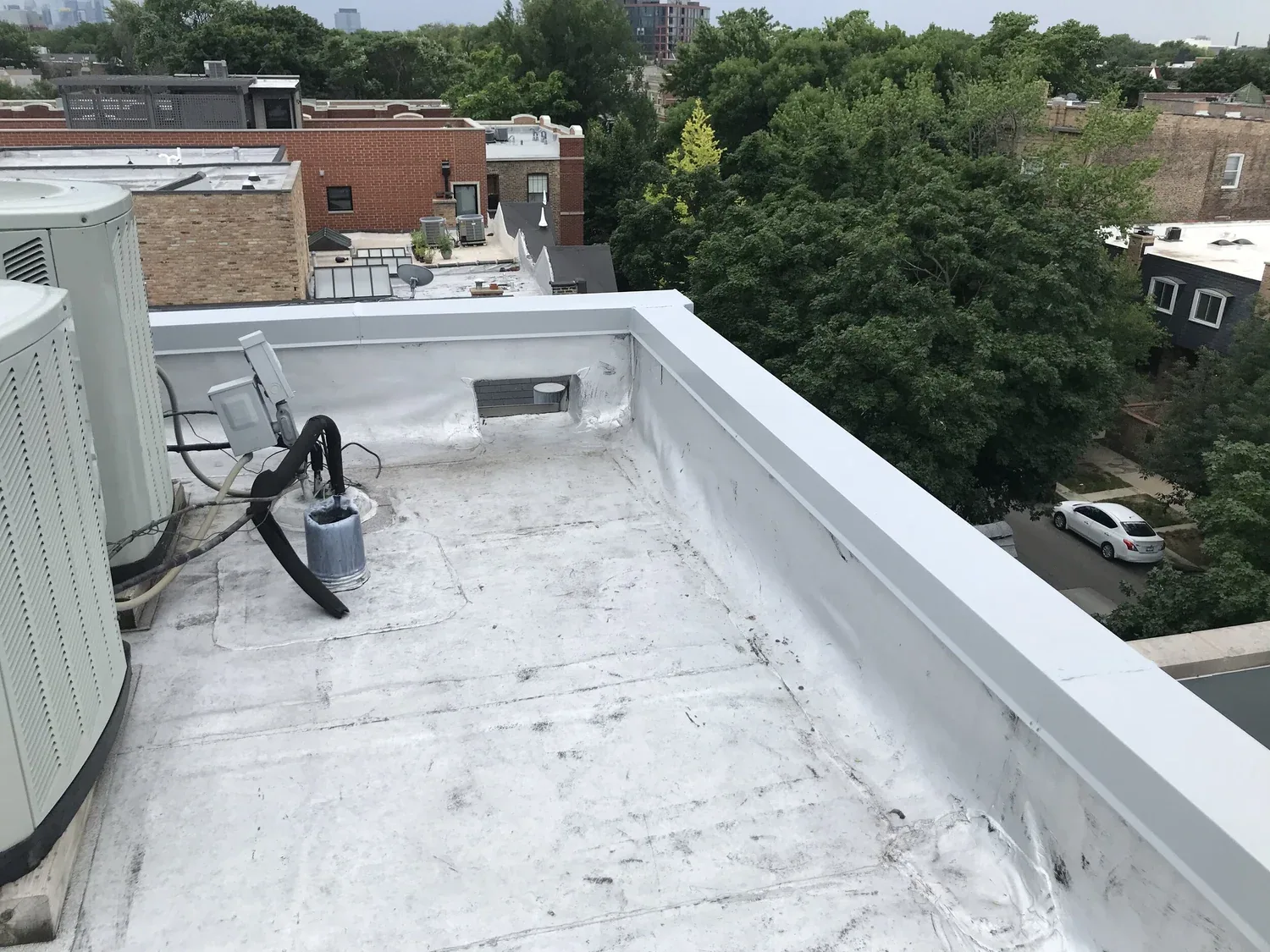
A coping joint that has opened by a fraction of an inch can leave the perimeter vulnerable long before an interior leak appears. On a High Point, NC roof, we record the joint, cleat, fastener pattern, corner condition, and membrane termination as one edge assembly. Photographs show the location and direction of the detail, and measurements define the repair area. That lets an owner compare a localized correction with broader perimeter work without treating every edge as identical.
The city has a documented history of severe wind events, including an EF-3 tornado touchdown in March 2010. That record makes edge inspection practical after severe weather, but it does not identify damage at a specific building. We distinguish fresh displacement or impact from corrosion, loose fasteners, open laps, and earlier repairs by examining the physical detail and comparing any available baseline.
Read the perimeter as a system
The edge condition includes metal profile, cleats, attachment, joints, corners, wall transitions, and the membrane or underlayment tie-in. We look for movement, distortion, open seams, rust, sealant failure, loose fasteners, and signs that water has traveled behind the assembly. A surface bead of sealant may hide a loose or poorly lapped joint; we identify whether the underlying metal remains secure before recommending a repair.
Parapet coping and fascia edges face different exposure than a gutter or drip edge. We note the profile, support condition, discharge path, and tie-in to the roof surface. On metal roofs, panel movement and closures also affect perimeter performance. A standing-seam roof review can identify panel and edge interactions before fastening or sealant work is specified.
High Point’s map locates Gallimore Industrial Center along Gallimore Dairy Road near I-40 and NC 68 in the airport submarket. That corridor identifies a local commercial area, not the edge detail of any individual building. We confirm actual exposure, roof height, windward faces, access, and assembly onsite before writing a repair boundary.
Inspect after wind and hail
After a storm, we photograph displaced coping, bent edge metal, open laps, pulled fasteners, damaged gutters, and torn membrane terminations. We also inspect adjacent roof field and wall transitions to see whether the impact continues beyond the visible edge. Any temporary stabilization is recorded separately from permanent work. If a detail is unsafe to approach, the report states the restriction and the next access step.
High Point’s 2010 NWS summary documents a severe storm sequence that included large hail before a supercell dissipated and another storm tracking toward High Point. Hail impacts and wind movement can coexist, but a roof inspection must identify the observed marks and component movement instead of presuming one mechanism. A post-weather roof review can document the wider assembly, and a wind damage assessment can keep uplift findings distinct from surface wear.
When a baseline exists, we compare the same corners and joints. Without one, the current condition is documented as found, with no unsupported date attribution. That distinction matters for a property owner deciding whether to repair one loose section, secure a longer run, or open the assembly for inspection.
Select the repair boundary
Repair may involve re-securing metal, replacing a section, rebuilding a corner, renewing a membrane tie-in, or correcting a gutter transition. The scope describes the substrate, metal profile, fastening approach, laps, sealant where appropriate, and adjacent surfaces to be protected. Where custom fabrication or concealed support repair may change the quantity, the proposal identifies how the field condition will be verified.
Gutters need attention at hangers, seams, outlets, end caps, and the connection to downspouts. A leak at the gutter is different from water behind the roof edge. We map both paths and specify the work on each side of the transition. A drain and scupper inspection can confirm where the outlet leads, while a roof membrane repair handles openings beyond the metal assembly.
For an occupied property, repairs can be phased by elevation or roof area. The City describes Piedmont Centre as a large campus with varied companies, including distribution and manufacturing. A Piedmont Centre property still requires its own access and work-zone plan. We coordinate lifts, pedestrian controls, tenant notices, and material staging with the site contact rather than relying on district-level assumptions.
Track movement and water discharge
Perimeter inspections should revisit the same joints, corners, and transitions. We photograph them from repeatable angles and note whether gaps, fasteners, corrosion, or sealant have changed. Gutters are checked for sagging, standing debris, failed hangers, and discharge that returns water toward the building. A maintenance record helps staff distinguish recurring movement from a new impact.
High Point experiences warm-season heat and recurring winter freezes in the regional station record from Greensboro (KGSO). Those broad conditions may influence metal movement and seasonal access, but the actual material, fastening method, and observed detail decide the repair. We attribute NOAA values to KGSO rather than presenting them as measurements at a High Point site. After freezes, a visual check can reveal gutter separation or ice-related movement that needs measured follow-up.
A preventive roof maintenance visit can include perimeter joints with drains and penetrations. The condition report marks repairs completed, locations still under observation, and areas needing access equipment. If water has reached the wall or interior, we trace that path separately instead of assuming the visible gutter is the only source.
Close with photographs and measurements
After work, the closeout record shows replaced or re-secured components, completed laps, corner transitions, and the membrane tie-in. Photos use the original roof-area labels, and measurements indicate how much perimeter was addressed. Excluded sections and any recommendation for follow-up inspection remain visible to the owner.
Cost follows linear footage, metal profile, custom fabrication, access, substrate repair, and the number of corners or transitions. Schedule depends on material lead time, weather, lift placement, and site access. A budget that omits those factors may not describe the actual work. We state the basis and assumptions so a property manager can compare options without confusing a short sealant touch-up with a rebuilt edge assembly.
Arrange a roof walk when coping moves, gutters leak, fasteners loosen, or a storm leaves visible perimeter changes. We document the edge condition, propose a defined repair, and provide a closeout record suitable for the next maintenance visit.
At parapets and roof edges, map corners, joints, fasteners, seams, gutter outlets, and transitions to adjacent materials. Record whether movement or water discharge is visible, then distinguish an observed opening from a suspected path. When repair is proposed, identify how the metal will be prepared and connected to the membrane or wall assembly. A replacement detail should account for the roof's termination and drainage rather than treating coping as an isolated trim piece. Photograph lengths and corners for future comparison.
Related Roofing Work
Storm and Roof Damage Repair
Storms that reach the Triad can lift edges, open seams and crack flashing. Start here:
- Wind Damage Roof Inspection and RepairInspect High Point commercial roofs after high winds, document edge and flashing conditions, stabilize exposure, and define measured repair limits.See repair options
- Hail Damage Roof Inspection and RepairAssess High Point commercial roofs after hail, document impact evidence, select focused testing, and define measured repairs without assuming causation.See repair options
- Tornado Damage Roof Assessment and RepairAssess High Point commercial roofs after tornado damage with released access, roof-zone mapping, temporary stabilization, and staged repair records.See repair options
Roof Assessment
Map the roof perimeter
Arrange a High Point edge inspection for photographs, measured repair limits, and a scoped next step.
Questions About Roof Edge Metal, Coping, and Gutter Service
Can you seal an open coping joint?
We first inspect the joint, cleat, attachment, and adjacent membrane. Sealant is included only when the underlying detail supports that repair method.
Do you replace gutters as part of edge work?
We can scope gutters, outlets, hangers, and roof-edge transitions together or as separate line items. The proposal names the components included.
What should be checked after strong wind?
We inspect corners, coping joints, edge metal, fasteners, membrane terminations, gutters, and adjacent roof surfaces for movement or impact.
How is the perimeter repair quantity measured?
We identify roof elevations and segments, then measure the affected run and list corners, transitions, and custom details separately.
More questions? Ask our roofing team or call 555-555-5555.
Request a Roof Assessment in High Point
Send the address, the roof concern and when the roof can be reached. We walk the roof, photograph what we find and explain the repair or replacement options.
Roof Assessment
Commercial Roofing in High Point
Call, email or send the building details. We set a time to walk the roof and look at the leak, the drains and the flashing.