
Commercial Roofing Services
Commercial Rooftop Equipment Curbs and Supports in High Point, NC
Inspect rooftop equipment curbs in High Point with flashing, support, drainage, and access findings documented for a bounded repair scope.
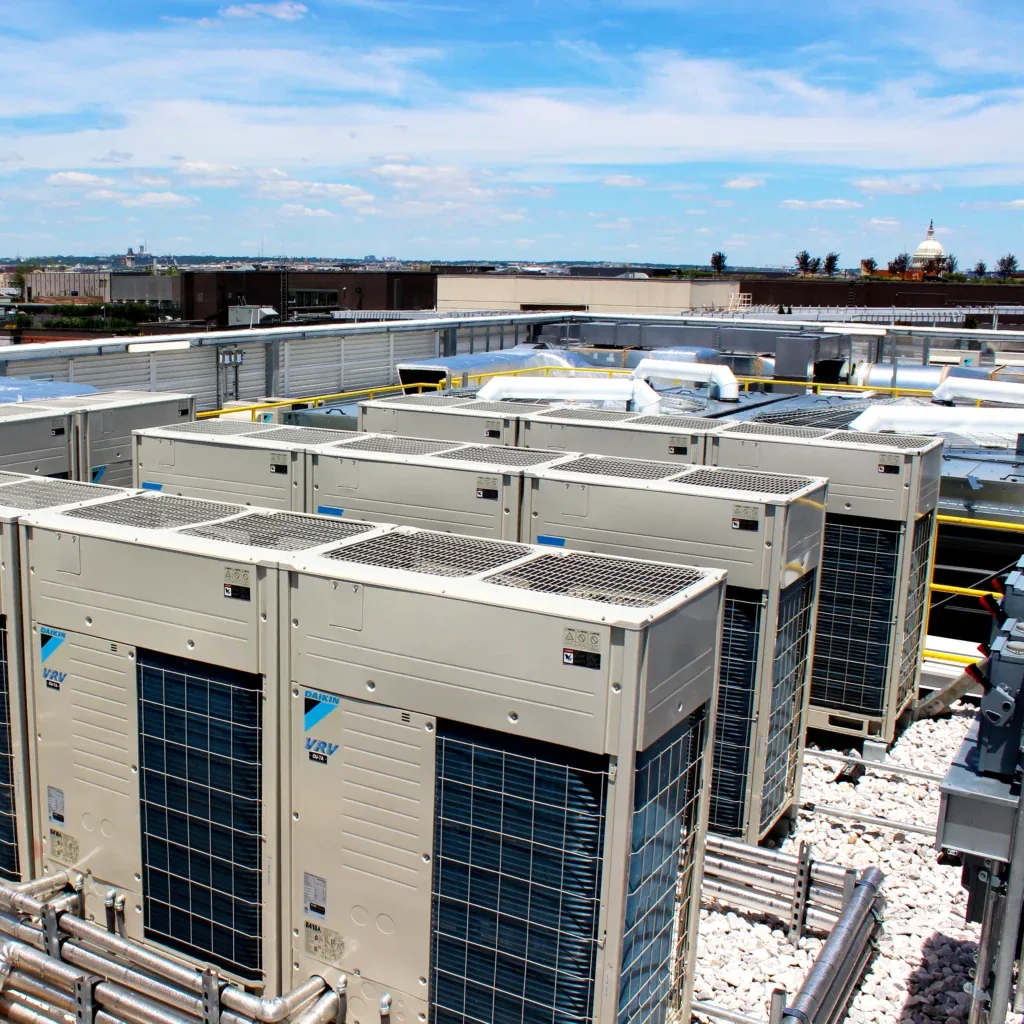
A curb that rocks under equipment can strain both the support and the flashing that keeps water out. In High Point, NC, we photograph the curb, attachment, membrane transition, nearby walk path, and any visible movement before recommending work. The inspection identifies which condition belongs to the roofing scope and which may require an equipment or structural trade. A measured repair boundary helps keep the work tied to the actual opening rather than the equipment name alone.
Each penetration interrupts the roof assembly. The curb height, framing, fasteners, vibration, and water path affect how it performs. We record the visible configuration, identify any access or shutdown restrictions, and state what could not be confirmed without opening the assembly. The resulting scope gives the facilities manager a clear basis for repair, investigation, or monitoring.
Check the whole equipment transition
We inspect curb corners, base flashing, membrane laps, counterflashing, pitch pockets, pipe supports, conduit stands, and adjacent roof seams. Fastener pullout, cracked sealant, rust, displacement, membrane tenting, and standing water are recorded separately. A loose curb may transfer movement to the flashing; a sound curb can still have a failed membrane tie-in. We do not combine those conditions under a generic leak label.
The equipment itself can influence the roof detail. Vibration may fatigue connections, service visits can leave punctures, and condensate or exhaust can affect nearby surfaces. We note visible evidence and ask the owner about operating cycles or recent service activity when it changes the inspection plan. A penetration flashing inspection follows the same water-path logic for roof openings with different components.
Atrium Health Wake Forest Baptist High Point Medical Center is among High Point’s large employers. When a medical facility requests roof work, its facilities contact defines the equipment shutdown, escort, and access rules; the roof inspection establishes the curb and flashing scope.
Separate roof support from equipment work
The roofing scope can repair membrane and flashing around a stable curb, but it should not imply that the curb framing can support equipment if that has not been checked. We identify loose connections or visible deformation and recommend the trade review needed before proceeding. If equipment must be lifted or disconnected, the owner coordinates that work with the responsible mechanical contractor. Our proposal states the handoff and the protection required while the curb is open.
Where a support has shifted, we inspect adjacent seams and fasteners for transferred stress. If a new support or curb is proposed, its footprint, height, and attachment need to coordinate with insulation, slope, membrane, and access paths. A roof insulation plan may alter curb clearances and transition heights during reroof work. We document those dimensions before material orders are released.
Greensboro (KGSO) normals include days above 90°F and days at or below freezing. Temperature movement and equipment vibration are separate forces; inspect the joint and support condition before assigning a cause or repair.
Define a compatible flashing repair
Repair starts with the existing roof system and material. A single-ply membrane may need a compatible flashing sheet and welded corners. Asphaltic systems require the right reinforcing and tie-in. Metal roofs need an interface that allows panel movement and sheds water correctly. We record preparation, fasteners, flashing height, reinforcement, and any condition that prevents a reliable bond. A surface bead of sealant alone is not specified if the underlying detail is loose.
Drainage around a curb matters. We look for water trapped upslope, debris at the low side, and a curb that interrupts the intended flow. If the roof plane remains wet, the repair may need a drain or slope evaluation in addition to flashing work. A drainage inspection can establish whether the water path is blocked at an outlet or shaped by the roof geometry. If the membrane itself is punctured, a separate repair scope defines that area.
Each curb receives an identifier and before-and-after photo. Where several units are similar, we still verify dimensions and condition individually. This prevents a repair detail from being repeated on a different roof system by assumption. The closeout record notes materials, work limits, and any access or service restriction that remains.
Coordinate rooftop service access
A manufacturing facility may also need roof work coordinated with its plant operating plan. The owner identifies equipment that cannot be shut down and any route that must remain available.
Material delivery planning starts with the building’s loading area and access geometry. A mechanical contractor may need a lift to reach a curb, while hatch dimensions and rooftop staging determine how components move. We confirm lifting plans, loading locations, escorts, and equipment isolation with the facility contact before scheduling. A phased occupied-building sequence can coordinate multiple curbs with work zones that keep the facility operating.
High Point’s airport submarket includes the Gallimore Dairy Road and NC 68 commercial corridor. Use the actual property entrance and approved staging area when planning a lift or moving curb materials; those details do not establish a roof condition at any site.
Gallimore Industrial Center sits in High Point’s airport submarket near Gallimore Dairy Road and NC 68. For equipment work at a medical property, hospital roof coordination also depends on the facility’s actual shutdown, access, and escort requirements.
A Piedmont Centre property needs its own rooftop equipment map and service-contact approval. Campus-wide operating context cannot determine a particular curb condition, shutdown requirement, or safe lift path.
Record the repair for the next visit
Closeout images show the curb corners, flashing, support interface, adjacent membrane, and drainage condition. We record repair material, measured limits, and any component excluded from roofing work. If another contractor changes the support later, the owner can compare that alteration with the baseline and schedule a flashing check.
Cost and timing depend on curb size, roof type, number of corners, access, equipment coordination, height adjustment, and whether support work is needed. We identify dependencies on mechanical or structural trades before mobilization. If concealed conditions emerge, we photograph and measure them before requesting a scope adjustment.
Arrange a roof walk when a curb moves, flashing separates, water appears near a unit, or equipment work changes the penetration. We provide dated findings and a scoped repair boundary. Emergency response is available for active water entry; permanent curb work follows when equipment and roof details can be coordinated safely.
At closeout, record the equipment identification if available, curb dimensions, support condition, flashing, and surrounding membrane. Confirm who can authorize a shutdown or lift and who owns the equipment-side connection. For a planned replacement, coordinate support, curb height, drainage, electrical access, and roof-system detail before an opening is made. The record should show the finished transition and name the party responsible for future servicing.
Related Roofing Work
Storm and Roof Damage Repair
Storms that reach the Triad can lift edges, open seams and crack flashing. Start here:
- Wind Damage Roof Inspection and RepairInspect High Point commercial roofs after high winds, document edge and flashing conditions, stabilize exposure, and define measured repair limits.See repair options
- Hail Damage Roof Inspection and RepairAssess High Point commercial roofs after hail, document impact evidence, select focused testing, and define measured repairs without assuming causation.See repair options
- Tornado Damage Roof Assessment and RepairAssess High Point commercial roofs after tornado damage with released access, roof-zone mapping, temporary stabilization, and staged repair records.See repair options
Roof Assessment
Inspect a roof penetration
Arrange a High Point roof walk for curb measurements, flashing photographs, and a coordinated repair boundary.
Questions About Rooftop Equipment Curbs and Supports
Do you repair equipment curbs or the equipment itself?
Our roofing scope addresses the curb-to-roof transition and related membrane details. Mechanical or structural work is identified for coordination with the responsible trade.
Can equipment stay running during curb repairs?
That depends on the specific unit, work method, and access. We identify any shutdown or protection need before scheduling with the facility contact.
How do you handle a curb that has shifted?
We document the movement and inspect adjacent flashing and membrane. If support stability is uncertain, we define the needed structural or equipment review before rebuilding the roof transition.
Will added insulation change curb flashing?
It can change the height and clearance at the transition. We measure curb geometry and include compatible flashing extensions or other detail work in the reroof plan.
More questions? Ask our roofing team or call 555-555-5555.
Request a Roof Assessment in High Point
Send the address, the roof concern and when the roof can be reached. We walk the roof, photograph what we find and explain the repair or replacement options.
Roof Assessment
Commercial Roofing in High Point
Call, email or send the building details. We set a time to walk the roof and look at the leak, the drains and the flashing.