
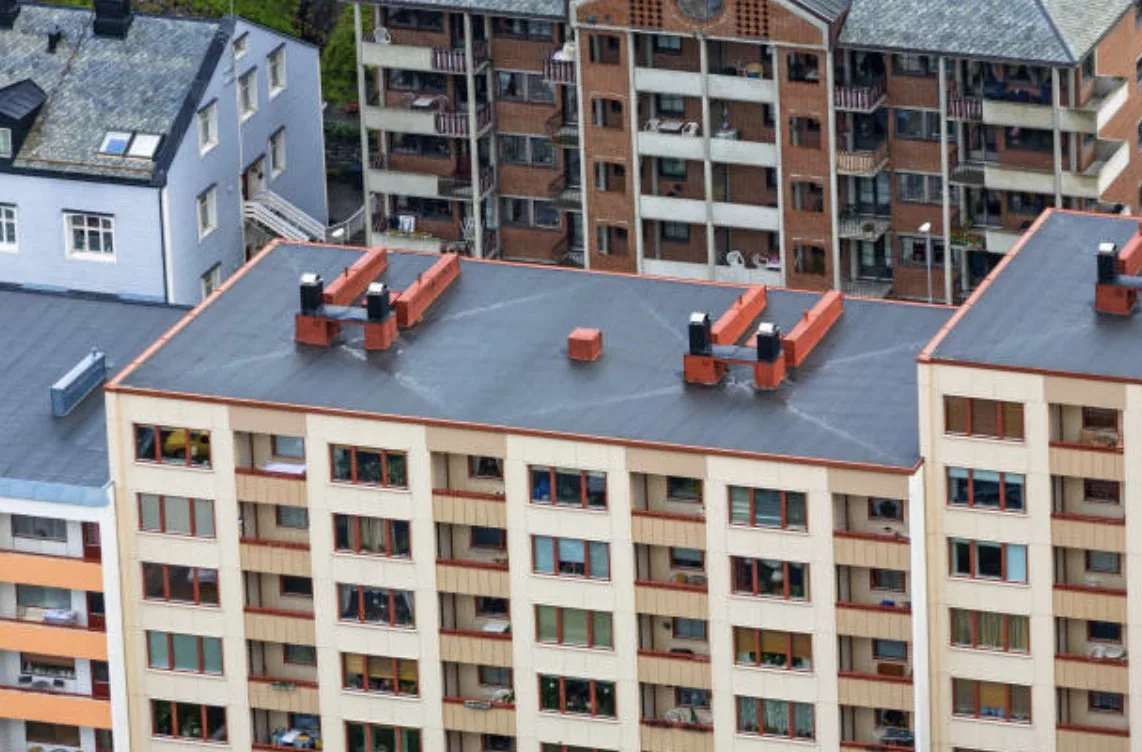
Property Types We Roof
Apartment Building Roofing in High Point, NC
Coordinate apartment roof inspections and repairs in High Point around residents, shared spaces, equipment, drainage, and a measured building-by-building plan.
On a multi-building apartment property, a leak report is a location record first. We identify the building, unit or shared space, roof area, and likely water path before setting the repair boundary. The inspection separates an active leak from a maintenance item and records what residents or property staff need to know about access and timing.
High Point’s commercial setting ranges from the City’s large Piedmont Centre business park to mixed-use downtown campuses such as Congdon Yards, which includes private offices, meeting and event rooms, food, cultural, and prototyping uses. These local examples show varied building operations, not apartment roof conditions. We inspect each residential building and document its actual system, repair history, and access limits.
Coordinate resident access and notice
Property management confirms resident-notice rules, roof hatch access, parking, loading, pet or amenity restrictions, and any quiet hours before work is scheduled. We map roof access and material staging so a lift or delivery does not block an entry or emergency lane. The work plan identifies who posts notices, who answers resident reports, and how an active leak is escalated.
A roof replacement can be divided by building or elevation. Each phase sets a work area, temporary protection, start and finish check, and update point for property staff. A phased occupied-building plan can limit the number of units below open work at one time. If water is active, around-the-clock emergency response is available; the temporary containment and permanent repair remain separate work records.
When a resident reports a ceiling change, management can capture the unit, room, time, and whether the condition grew after rain. We compare that report with the roof plan and schedule an inspection that does not require entry into a unit unless the owner approves it. If interior access is needed, the appointment and responsible contact are stated before the visit.
Some properties have separate owners or maintenance vendors for different buildings. We verify who approves access, who controls rooftop equipment, and how shared areas are handled. The scope keeps each building’s findings and work authorization distinct, even when the roofs look similar.
Inspect the roof above each building
We check the field membrane or metal panels, seams, insulation, attachment, parapets, roof edges, drains, skylights, exhausts, and HVAC curbs. Apartment buildings may have different roof heights or additions; the report records each area separately. We also note interior reports by unit or common room without assuming that a ceiling stain identifies the roof entry point. Where roof sections cross an expansion joint or change elevation, we mark that transition so water paths and repair boundaries remain tied to the right building wing.
Water can travel along a deck or below a roof layer before appearing inside. We compare the report date, rainfall or wind, roof slope, drains, and prior repairs, then state whether the source is confirmed. A drain inspection records the outlet, overflow, and slope conditions. A leak repair scope records the confirmed opening and any test still needed.
At rooftop equipment, we inspect curb flashing, supports, and adjacent seams while property engineering controls the unit. A curb review documents the roof-side detail and identifies any separate mechanical service needed.
Plan for High Point seasonal exposure
High Point’s Piedmont climate brings repeated temperature changes and seasonal precipitation. NOAA’s nearby Greensboro (KGSO) station records a normal annual mean temperature of 59.6°F and 7.1 inches of snowfall. Those measurements belong to the station, not an individual apartment roof. We use them as regional context and inspect the actual surface, drain path, edge detail, and material condition onsite.
Freeze periods can affect water at drains, scuppers, and low areas, while warm weather changes the work window for certain roof materials. We check the forecast and roof condition on the scheduled day. Where water remains after an outlet clears, the report distinguishes routine drain maintenance from a slope or deck issue that needs a separate evaluation.
For a portfolio, the work map identifies which elevations face repeated exposure or have recurring leak history. We do not infer that all buildings have the same condition from one inspection. Photos and measurements stay attached to the structure and roof section where they were recorded.
Compare a building repair with portfolio renewal
A localized repair may resolve a puncture, open seam, or failed flashing when the surrounding assembly remains sound. We record compatible repair material, preparation, dimensions, and nearby details. If the same building has recurring leaks or moisture across several areas, we compare those findings with other roofs in the property before recommending a larger phase.
A recover can be evaluated after we verify wet areas, attachment, roof weight, outlet elevations, parapet height, local code, and the selected manufacturer’s instructions. Replacement planning includes resident notice, staging, temporary dry-in, penetrations, and the order for each building. A TPO assembly may be one option where the design basis supports it. The scope compares complete assemblies and identifies what testing is still needed.
Cost and timing depend on roof count, area, height, access equipment, existing layers, unit density, weather, and material lead time. We separate confirmed repair quantities from items that depend on test openings or owner decisions. A senior-living property or hotel may have different access and occupancy controls; each building plan stays specific to its operator.
Maintain a property-level roof history
Closeout includes a marked roof plan, dated photographs, repaired locations, materials, building identity, and any unresolved finding. If access was limited, the record lists the area for a return visit. If a resident reported a ceiling condition, the report notes its location and relation to the roof inspection without overstating the source.
For multiple structures, a roof asset record can carry repair history and follow-up dates by building. The next inspection returns to prior drains, seams, penetrations, and perimeter details. That baseline helps management prioritize work without treating every building as a single roof asset.
Arrange a roof walk when water appears in a unit, a drain backs up, or a capital review needs measured quantities. We coordinate notices and access, document the roof condition, and provide a scoped next step for each building.
For a multi-building residential property, identify which structure, stair core, and occupied units are connected to the reported condition. Water observed in one apartment may have traveled through a wall or ceiling assembly, so compare the unit location with roof details before setting a repair area. Coordinate notices and access with management, and document any unit that could not be entered. A portfolio report should show each building's roof map and unresolved work separately so a reserve decision can be tied to the right asset.
Related Roofing Work
Storm and Roof Damage Repair
Storms that reach the Triad can lift edges, open seams and crack flashing. Start here:
- Wind Damage Roof Inspection and RepairInspect High Point commercial roofs after high winds, document edge and flashing conditions, stabilize exposure, and define measured repair limits.See repair options
- Hail Damage Roof Inspection and RepairAssess High Point commercial roofs after hail, document impact evidence, select focused testing, and define measured repairs without assuming causation.See repair options
- Tornado Damage Roof Assessment and RepairAssess High Point commercial roofs after tornado damage with released access, roof-zone mapping, temporary stabilization, and staged repair records.See repair options
Roof Assessment
Document each apartment roof separately
Arrange a High Point roof walk for building-specific photographs, measured repair areas, and resident-aware work sequencing.
Questions About Apartment Building Roofing
Can roof repairs happen while residents remain in their apartments?
Often, with an approved access and protection plan. We coordinate notice, work zones, parking, noise, temporary dry-in, and building contacts with property management.
How do you handle leaks reported from several units?
Each report is tied to its unit and building, then compared with roof slope, drains, seams, and prior repair locations. We identify confirmed sources separately from open questions.
Do all buildings in an apartment property need the same roof work?
No. We inspect each roof area, note different layers and conditions, and create separate repair or renewal quantities by building.
What should be in the roof repair record?
The building, roof zone, dated photos, repair material, included boundary, resident area below, and follow-up item make the history useful.
More questions? Ask our roofing team or call 555-555-5555.
Request a Roof Assessment in High Point
Send the address, the roof concern and when the roof can be reached. We walk the roof, photograph what we find and explain the repair or replacement options.
Roof Assessment
Commercial Roofing in High Point
Call, email or send the building details. We set a time to walk the roof and look at the leak, the drains and the flashing.