Property Types We Roof
Restaurant Roofing in High Point, NC
Coordinate restaurant roof repair in High Point around kitchen exhaust, HVAC, deliveries, customer hours, drainage, and a clear daily dry-in plan.
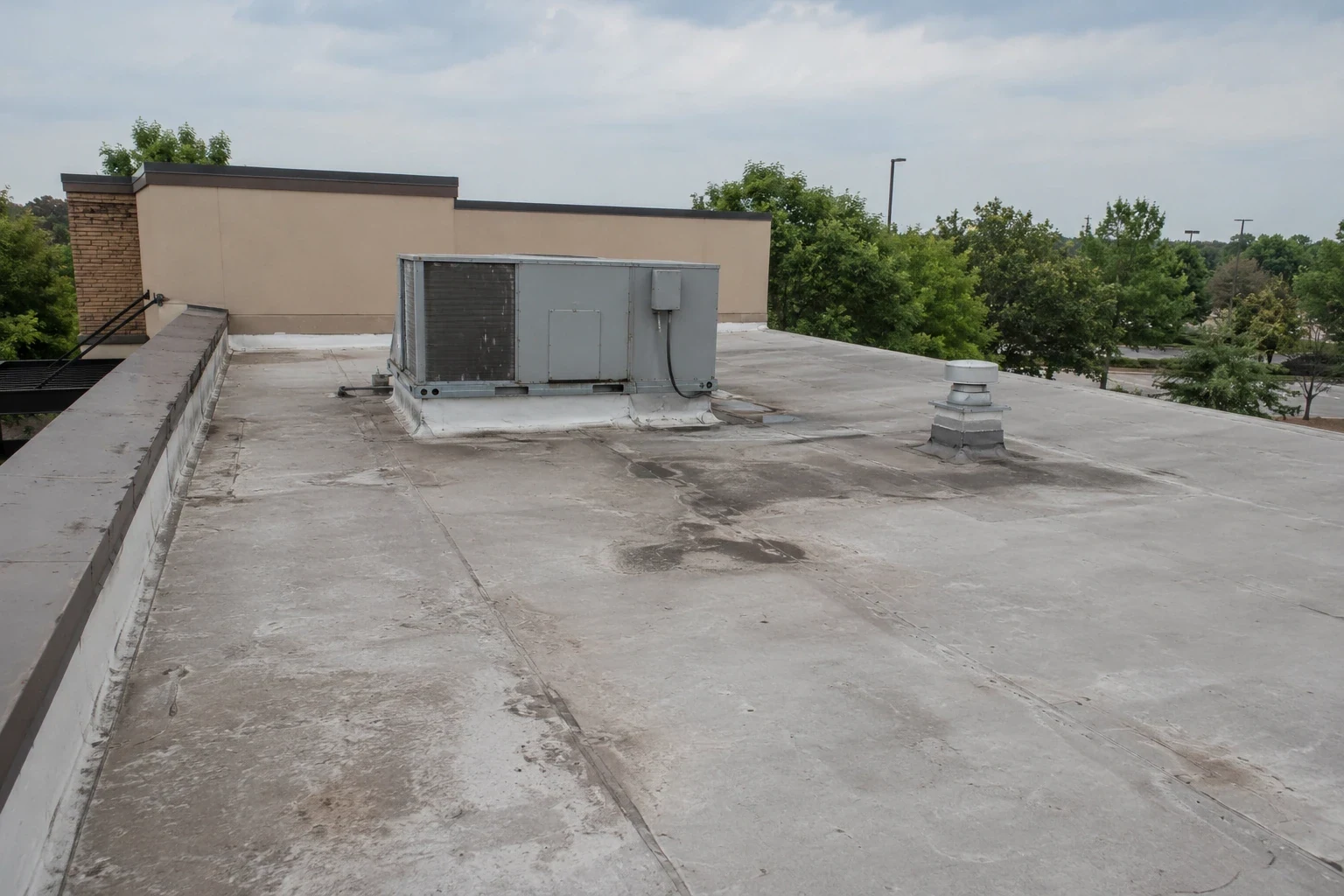
A restaurant roof has openings and equipment that follow the kitchen and dining layout below. We inspect exhaust curbs, HVAC transitions, drains, roof seams, and the water path above the affected room, then mark what the repair includes. The work plan identifies odor and noise limits, access windows, customer routes, and how each roof opening will be secured at close of shift.
High Point’s North Elm Market neighborhood includes Stock + Grain Assembly food hall, while Congdon Yards has food and beverage uses alongside offices, event rooms, and cultural spaces. These are local examples of commercial dining in different settings, not evidence of a restaurant’s roof system. We base the scope on the property’s actual assembly, equipment, and operating schedule.
Inspect exhausts and kitchen transitions
Kitchen exhaust fans, grease ducts, make-up air, and refrigeration lines pass through or sit above the roof. We inspect curbs, flashing, support, nearby membrane, and any surface contamination that can affect repair preparation. The kitchen or mechanical team confirms which fans must run and whether shutdown windows are available. Roofing work does not include cleaning or servicing kitchen equipment unless the owner assigns that separate task.
Repeated moisture near an exhaust can come from a roof opening, condensation, or another building system. We compare the roof detail with interior location and operating timing before assigning a cause. A curb and equipment review records the roof interface. If an opening needs new flashing, we define the compatible material and preparation rather than covering the issue with a surface sealant.
Dining rooms, storage, and kitchen spaces may have different protection needs. We confirm what sits below the planned repair area, whether food or equipment must be moved, and who approves access. Each work zone is identified with its start and end point so an open roof is not left without a clear closeout check.
Trace drainage and leak paths
A ceiling stain can appear beyond the roof opening that admitted water. We compare the affected room, timing, weather, slope, seams, drains, and previous repairs. At a low-slope roof, we inspect strainers, drain bowls, clamping details, scuppers, overflows, and the surface feeding each outlet. A drain review distinguishes debris or outlet trouble from a low area that requires a broader correction.
Water near a walk-in cooler, cooking line, or electrical room is mapped separately from roof conditions. We inspect the roof above and around the reported location, then report what is confirmed and what still needs a test opening. Moisture detection may guide that test, but readings alone do not determine the removal boundary.
Parapets, expansion joints, rooftop signs, and canopies create additional transitions. We photograph each condition by roof zone and note whether the proposed repair reaches sound material. A leak repair scope records the measured opening and any related flashing or drain work without adding unrelated maintenance items.
Schedule around customer service
Restaurant hours may change by day, season, events, and delivery schedules. We confirm a roof access period with management and identify whether loading or customer parking must remain open. Material staging, lift placement, waste removal, and interior protection are laid out before the crew arrives. The plan also sets the time for daily dry-in and the contact who checks the work zone at close.
Some repairs can be handled in a short roof window; larger replacement may require work in sections. We map the active area and keep temporary protection over any exposed insulation or deck. A phased restaurant work sequence can limit disruption, while a replacement plan identifies longer duration, removal, tie-ins, and equipment coordination.
Where the building shares a parcel with other tenants, we coordinate the roof boundary and access rights with the property manager. A shopping center or grocery property may involve common-area and refrigeration needs beyond a stand-alone restaurant. Those operating limits are documented by site.
Use local weather as a planning input
The City describes High Point as a four-season Piedmont community with generally light winter snowfall. Seasonal precipitation and temperature shifts can change roof access and product application windows. We inspect the actual surface condition and follow the selected material’s requirements on the work date; city climate context does not establish how one restaurant roof has performed.
A 2021 regional severe-weather log includes tornado activity in the High Point area. It does not indicate that a restaurant was affected. After a current wind or hail report, we photograph the roof field, perimeter, equipment, and interior observations at the property, separating new findings from prior wear.
Heat, wind, hail, and standing water can affect dissimilar roof materials in different ways. Our inspection notes visible conditions by material and location, then assigns a follow-up test if impact or moisture is not conclusive. This makes the repair decision traceable to the building record rather than a broad weather assumption.
Set a repair boundary or renewal phase
A small split, open flashing, or puncture can be repaired locally when the material around it remains stable. We document cleaning, preparation, compatible materials, dimensions, and any related curb or edge detail. If repeated water reports follow one roof line, the inspection checks upstream drains and transitions before another patch is proposed.
When the roof has widespread moisture, poor attachment, or repeated failures, the owner may compare repair with recovery or replacement. Recovery depends on moisture, deck capacity, attachment, edge height, drainage, code requirements, and manufacturer instructions. The proposal identifies the test or record that supports each decision. Cost and duration depend on access, roof layers, exhaust equipment, work window, material lead time, and the restaurant’s operating calendar.
For a stand-alone restaurant or a food tenant within North Elm Market District, access and events may vary by location. The Congdon Yards campus is another downtown mixed-use setting that includes food and beverage uses. We verify the route, service access, and roof conditions at the restaurant itself.
Close the job with roof and room locations
The closeout record includes a dated roof map, repair photos, materials, work boundary, and any unresolved item. We tie interior reports to the roof zone inspected and identify who received each update. If the leak source remains unconfirmed, that status stays visible with the next test or inspection date.
Future maintenance can check the repaired curb, drain, seam, and perimeter using the same roof labels. A baseline avoids treating a new ceiling report as automatically related to an old repair. The restaurant’s manager can share the map with facilities staff and the property owner.
Arrange a roof walk after a recurring kitchen leak, blocked drain, or planned equipment change. We inspect the roof detail, coordinate the operating window, and return a measured work scope with the daily dry-in step defined.
Related Roofing Work
Storm and Roof Damage Repair
Storms that reach the Triad can lift edges, open seams and crack flashing. Start here:
- Wind Damage Roof Inspection and RepairInspect High Point commercial roofs after high winds, document edge and flashing conditions, stabilize exposure, and define measured repair limits.See repair options
- Hail Damage Roof Inspection and RepairAssess High Point commercial roofs after hail, document impact evidence, select focused testing, and define measured repairs without assuming causation.See repair options
- Tornado Damage Roof Assessment and RepairAssess High Point commercial roofs after tornado damage with released access, roof-zone mapping, temporary stabilization, and staged repair records.See repair options
Roof Assessment
Plan roof work around restaurant hours
Arrange a High Point restaurant roof walk for a documented leak path, kitchen-aware access, and a clear repair sequence.
Questions About Restaurant Roofing
Can roof repairs be scheduled before restaurant opening?
Often. We confirm the access window, material preparation, kitchen equipment limits, delivery route, and time needed to secure the work area before service begins.
How do you inspect a roof leak near a kitchen exhaust?
We check the curb, flashing, adjacent membrane, interior report, and operating timing. The scope separates roof repair from exhaust or mechanical work.
What if the restaurant shares a roof with other tenants?
We mark the roof area and access rights for the property, coordinate with management, and keep work and closeout records tied to the correct suite or common area.
How do you keep water out during replacement?
The plan defines the daily work boundary, temporary dry-in, weather checks, and the condition required before the crew leaves the roof.
More questions? Ask our roofing team or call 555-555-5555.
Request a Roof Assessment in High Point
Send the address, the roof concern and when the roof can be reached. We walk the roof, photograph what we find and explain the repair or replacement options.
Roof Assessment
Commercial Roofing in High Point
Call, email or send the building details. We set a time to walk the roof and look at the leak, the drains and the flashing.