
Property Types We Roof
Shopping Center Roofing in High Point, NC
Plan shopping center roof repairs in High Point around tenant access, loading, rooftop equipment, drainage, and a documented phased work schedule.
A shopping center roof project has to account for tenants, shared access, deliveries, and water paths that may cross multiple suites. We inspect the roof by section, map active leaks and drainage, and identify the tenant or common area below each work zone. The report separates immediate containment from permanent repair and records where follow-up testing is needed.
High Point has a substantial showroom and commercial district. Commerce Concourse is its central arrival neighborhood and includes the five-wing, 11-story International Home Furnishings Center. Nearby showroom buildings and event uses create varied property operations, distinct from a retail shopping center roof. We verify the actual building, tenant schedule, and roof assembly before proposing work.
Coordinate tenants and shared areas
Property management identifies delivery hours, loading zones, customer entrances, parking restrictions, fire lanes, and any tenant that needs advance notice. We map material staging and roof access so lifts, dumpsters, and crews do not block critical routes. Where a roof is divided among different owners or leases, the contact list names who approves access and who receives updates.
Work can be phased around tenant operations. A repair above an unoccupied suite may have a different schedule than a food tenant or a center with evening traffic. We agree on noise and odor limits, interior protection, daily dry-in, and how a store reports new water. A phased center work plan can separate the roof into manageable zones while shared areas remain open.
Before removal, the building team confirms whether the ceiling grid, inventory, food preparation area, or customer space below needs additional protection. The closeout identifies which portion of the center was complete and which remains scheduled, preventing a site-wide status from obscuring an open roof section.
Trace drainage across connected suites
Water can enter at a roof seam or curb and travel before appearing in a shop, corridor, or stockroom. We compare each tenant report with the roof plan, low points, drains, parapets, and previous repairs. If multiple reports cluster along one roof line, we inspect the entire path before assigning separate repair quantities.
At drains, scuppers, and overflow points, we check the outlet, strainer, clamping connection, and slope leading into the drain. A drain and scupper inspection can distinguish cleaning from a slope or deck concern. We also review roof-to-wall conditions and expansion joints where adjoining suites or building sections meet.
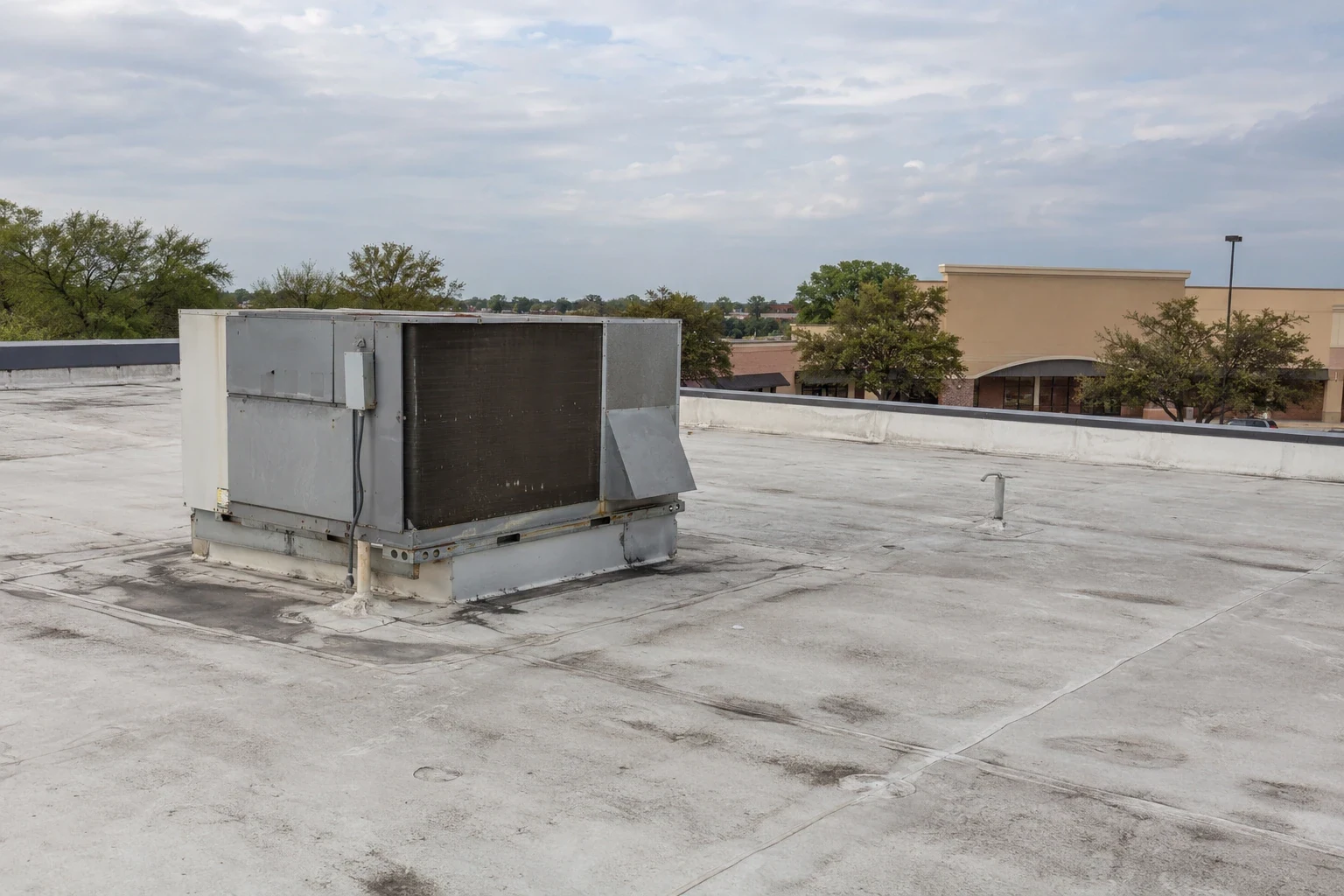
HVAC units, exhaust fans, signage, and piping create separate roof openings. We inspect the curb and flashing and identify when another trade must confirm equipment movement or condensate routing. A curb review records the roof interface; a leak scope identifies the repair boundary tied to the tenant report.
Review the whole retail roof assembly
The visible membrane is only one layer of the system. We inspect the deck, insulation, cover board, attachment, seams, edge securement, penetrations, and transitions between roof elevations. If the center has several addition dates, the report separates the roof areas rather than assuming the same assembly continues across the property.
At a membrane roof, we check welds, laps, patches, and flashing; at metal, we inspect panels, clips, fasteners, and closures. A TPO roof plan or a metal retrofit review is compared with the assembly actually present. The proposal identifies any test cut required to confirm moisture or substrate condition before replacement quantities are finalized.
High Point lies in the Piedmont, where four seasons and generally light winter snowfall make seasonal roof-access and drainage checks useful. We still measure the site’s current ponding, outlet condition, and edge details rather than infer a property condition from a climate description.
Separate storm findings from prior maintenance
After a reported storm, we photograph roof zones, edges, rooftop units, seams, and interior observations by location. After a wind or hail report, we compare the affected roof area with its photographs and prior repair history. A visible dent, open lap, or displaced edge component is logged by location, and inaccessible areas receive a return-inspection note rather than an assumed condition.
Hail, wind, and debris can affect different materials in different ways. We distinguish impact marks from weathering, loose edge components from older repairs, and active openings from cosmetic surface changes. A storm damage review records the observed area and the conditions needing a second visit if they were not accessible at the first inspection.
For a center with multiple tenant reports, we keep each claim or maintenance item tied to a suite or roof zone. This avoids merging separate interior symptoms into a single roof cause before the paths have been checked.
Compare repair with center renewal
A localized repair is appropriate when the defect is clear and surrounding layers remain stable. We specify compatible materials, surface preparation, repair dimensions, and the suite or common area included. If wet insulation, repeated leaks, or failing attachment appear in several areas, we compare the repair program with a broader project by measured roof section.
Recovery requires review of moisture, deck capacity, attachment, drainage, edge height, code requirements, and manufacturer instructions. Replacement planning lists tear-off limits, temporary dry-in, material movement, parking or loading changes, and the work order for each roof area. A center may have to keep some loading or customer paths active during construction, so we record owner-provided constraints as part of the schedule.
Cost and timing depend on the roof layers, size and count of repairs, unit density, access equipment, tenant hours, and material lead times. The proposal separates confirmed work from test-dependent quantities. A big-box property or grocery tenant may impose a different operating window, so those property records remain specific.
Close each area with a dated record
Closeout documents the roof section, repair locations, materials, photographs, and any unresolved observation. A marked plan helps property staff connect a future tenant call to prior work. If a suite was protected but its source was not confirmed, the record says so and names the follow-up test.
For centers that sit within a broader portfolio, condition reports can track active items and maintenance by building. The next baseline inspection checks the same drains, joints, curbs, and edges so the owner can see what has changed. We keep tenant operations and roof conditions separate but linked by location.
Arrange a roof walk when a tenant reports water, ponding persists, or the center needs a renewal budget. We coordinate access, measure the roof area, and return a scope that explains the repair boundary and work sequence.
A shopping center may have a shared roof above multiple tenants, but ownership and maintenance responsibility should be confirmed for each section. Map tenant reports to suite locations and roof zones, then identify who may approve access or scope changes. For a project above active storefronts, coordinate deliveries, pedestrian protections, and notices with center management. Keep repair boundaries clear around shared walls and additions. This helps avoid attributing a neighboring tenant's condition or responsibility to the wrong part of the property.
Related Roofing Work
Storm and Roof Damage Repair
Storms that reach the Triad can lift edges, open seams and crack flashing. Start here:
- Wind Damage Roof Inspection and RepairInspect High Point commercial roofs after high winds, document edge and flashing conditions, stabilize exposure, and define measured repair limits.See repair options
- Hail Damage Roof Inspection and RepairAssess High Point commercial roofs after hail, document impact evidence, select focused testing, and define measured repairs without assuming causation.See repair options
- Tornado Damage Roof Assessment and RepairAssess High Point commercial roofs after tornado damage with released access, roof-zone mapping, temporary stabilization, and staged repair records.See repair options
Roof Assessment
Map the center roof by tenant area
Arrange a High Point shopping center roof walk for tenant-aware access, documented drainage, and a measured repair or renewal scope.
Questions About Shopping Center Roofing
Can roof repairs happen while stores remain open?
Often, with an approved route and defined work area. We coordinate tenant hours, deliveries, staging, noise, odor, daily dry-in, and interior protection with property management.
How do you investigate leaks reported by several tenants?
We map each room or suite, compare timing and roof position, then inspect drainage and details along the water path before assigning a cause.
Can you replace only one section of a shopping center roof?
Yes, when the measured boundary and surrounding assembly support phased work. We document transitions and leave a plan showing what remains for a later phase.
What belongs in a shopping center roof closeout?
The marked roof zone, dates, repair materials, photographs, tenant areas below, and open follow-up items let management coordinate future reports.
More questions? Ask our roofing team or call 555-555-5555.
Request a Roof Assessment in High Point
Send the address, the roof concern and when the roof can be reached. We walk the roof, photograph what we find and explain the repair or replacement options.
Roof Assessment
Commercial Roofing in High Point
Call, email or send the building details. We set a time to walk the roof and look at the leak, the drains and the flashing.