
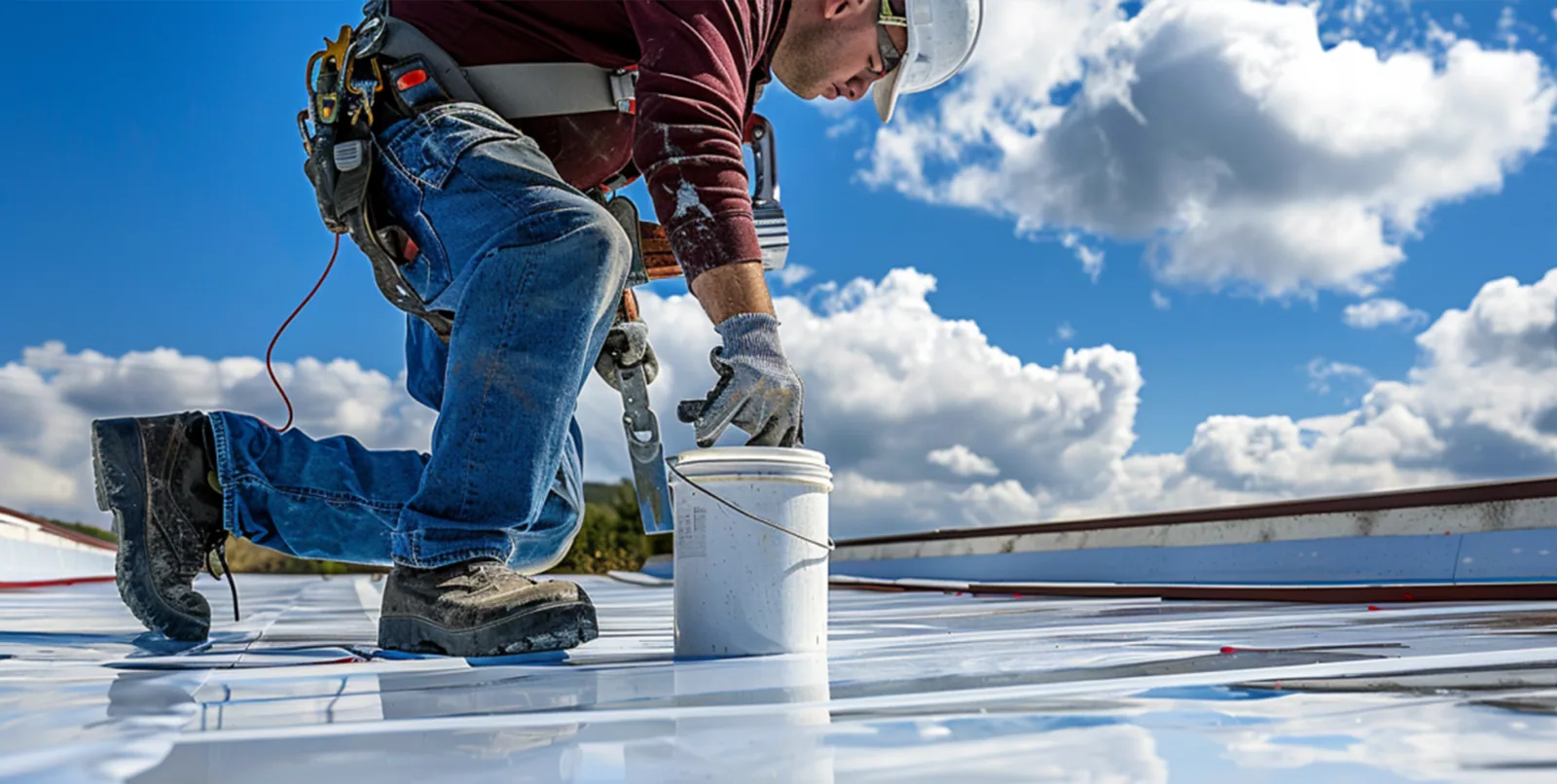
Commercial Roofing Services
Commercial Roof Coating and Restoration in High Point, NC
Evaluate commercial roof coating in High Point with substrate testing, moisture mapping, repair boundaries, and a documented restoration scope.
A coating should begin with an adhesion result, not a color choice. On a High Point, NC roof, we inspect the existing membrane or metal, map repairs, check for trapped moisture, and define test areas before recommending a restoration system. The record shows which surface was tested, how it was prepared, and what the result supports. If the substrate is wet, loose, or incompatible, coating over it can hide the condition without correcting the cause.
Restoration can extend useful service when the assembly remains sound enough to receive a new surface and the details can be repaired. It is not a shortcut around replacement when insulation is saturated, attachment has failed, or the deck needs work. Our assessment separates eligible roof areas from sections that need another solution, then gives the owner a scope basis for comparing cost, disruption, and expected maintenance.
Confirm the roof can receive a coating
We identify the roof system, existing coatings, repairs, contaminants, and surface condition before selecting a product family. Representative adhesion tests reveal whether preparation can produce a reliable bond. We also look for blisters, open seams, loose flashings, corrosion, ponding, and areas where prior patch materials may interfere. Test results are recorded by roof section, since one building can contain more than one surface history.
Moisture requires separate attention. Infrared or other diagnostic work may help locate suspect areas, but readings need confirmation against drainage, interior evidence, and assembly details. A moisture survey can help prioritize selective openings when concealed wet insulation would change the plan. Coating does not dry a trapped layer or restore a weakened deck. We state the limits of the test and identify the next action if the evidence is inconclusive.
High Point lies in a Piedmont climate with repeated seasonal freezes and warm-season heat. NOAA values cited for nearby Greensboro (KGSO) show 68.5 annual days with freezing minimums and 33.3 days reaching 90°F; these are station normals, not site readings. Temperature cycling can matter to surface preparation and cure windows, but product selection still follows the roof material, manufacturer instructions, and project conditions. We plan the work around the observed substrate rather than a calendar assumption.
Repair first, then prepare
Before coating, we close active leaks, secure loose details, and correct conditions that would compromise continuity. The repair map covers seams, penetrations, edge transitions, drains, scuppers, and roof-to-wall connections. Each location includes the proposed preparation and repair method. The owner sees which items are included in the coating scope and which require a separate deck, drainage, or replacement decision.
At metal roofs, preparation may involve removing unstable material, addressing corrosion, tightening or replacing fasteners, and reinforcing seams and transitions. On single-ply roofs, the existing membrane and repair chemistry govern compatibility. Asphaltic assemblies have their own surface and primer requirements. We do not treat one coating as suitable for every roof, and we do not coat over an unverified surface merely because it appears dry from above.
The City map identifies Piedmont Corporate Park near Pegg Road and the I-40/US 421 corridor, with a mix of office, light-manufacturing, and distribution uses. That context reinforces the need to plan staging and occupied operations carefully; it says nothing about a particular tenant's roof assembly. We verify access, equipment, and operating constraints at the property itself. Where an active leak remains, a separate repair scope may be required before coating work can proceed.
Choose the system by exposure
Silicone and acrylic coatings behave differently and carry different limits. We compare the roof slope, drainage, ponding history, surface condition, climate exposure, and maintenance expectations before setting a system basis. The written recommendation identifies the coating family, primer, reinforcement at details, target application, and exclusions. No coating eliminates the need to clear drains, inspect terminations, and record future damage.
High Point's documented severe-weather record includes the March 2010 EF-3 tornado, and the National Weather Service also documents a tornado near the city during the March 2021 event. These records support post-event roof checks, not a claim that a named building was struck. After a storm, we photograph displaced metal, punctures, seam openings, and debris impacts before coating decisions resume. A storm damage inspection keeps event-related work distinct from pre-existing surface wear.
At a large commercial campus such as Piedmont Centre, the City lists many companies and diverse business activity. For any multi-building owner, we label each roof area independently and do not assume a uniform assembly. A test result from one roof does not approve coating at a neighboring building. Each surface receives its own documented preparation, application, and closeout record.
Application and closeout controls
Work begins with protection of drains, equipment, walls, and adjacent surfaces. The crew follows the product's preparation and environmental requirements, then tracks application by measured area and field condition. We record substrate temperature and weather information when required by the selected system. Work pauses when moisture, temperature, or wind conditions fall outside the specified window. These controls help make the installed film consistent with the written scope.
Occupied facilities need staging and communication plans. We coordinate roof access, deliveries, noise-sensitive work, and any temporary restriction around exhaust intakes or pedestrian areas. High Point's commercial districts connect to I-40, I-73, I-74, I-85 and state routes on the City map, but the actual entrance, loading point, and lift location must be confirmed with the site contact. A phased occupied-building plan can be adapted when broader work has to proceed while the facility remains open.
At completion, photographs show representative field coverage, repaired details, transitions, drains, and terminations. The closeout record lists material and application notes, the measured area, excluded sections, and any follow-up findings. A dated condition report can preserve that baseline for later inspections. If the coating fails to meet the agreed scope at a detail, we record the correction before turnover rather than relying on a general completion note.
When restoration is not the right call
Replacement or selective removal may be more appropriate when moisture extends beyond repairable areas, the deck is unsound, the roof has too many incompatible layers, or existing attachment cannot support the proposed work. The decision should reflect test results and the repair map, not the fact that a coating system is available. We identify the evidence that would change the recommendation and price those investigations separately where possible.
Restoration cost follows cleaning, repair quantity, surface profile, primers, reinforcement, access, protection, and the number of separate roof zones. Timing depends on approved tests, procurement, weather windows, tenant coordination, and how long each area must remain dry before the next step. A coating proposal should state these assumptions. It should also describe future inspection tasks, including drain clearing and prompt repair of cuts or impact damage.
Owners can compare the coating plan with a replacement scope or recover evaluation using common roof-area labels. That makes it easier to assess initial work, disruption, and future access without treating either restoration or replacement as automatic. We provide a photo record and measured next step for each condition that drives the recommendation.
Related Roofing Work
Storm and Roof Damage Repair
Storms that reach the Triad can lift edges, open seams and crack flashing. Start here:
- Wind Damage Roof Inspection and RepairInspect High Point commercial roofs after high winds, document edge and flashing conditions, stabilize exposure, and define measured repair limits.See repair options
- Hail Damage Roof Inspection and RepairAssess High Point commercial roofs after hail, document impact evidence, select focused testing, and define measured repairs without assuming causation.See repair options
- Tornado Damage Roof Assessment and RepairAssess High Point commercial roofs after tornado damage with released access, roof-zone mapping, temporary stabilization, and staged repair records.See repair options
Roof Assessment
Test the restoration option
Arrange a High Point roof walk for adhesion testing, moisture review, and a measured coating scope.
Questions About Roof Coating and Restoration
How do you know whether my roof is a coating candidate?
We inspect the assembly, map repairs, check moisture indicators, and run adhesion tests on representative areas. The report states which roof zones passed and which need another approach.
Can a coating fix an active leak?
We locate and repair the opening and related details first. A coating is a restoration layer, not a substitute for correcting a drain, flashing, seam, or substrate failure.
Will every roof area receive the same coating?
Only when each area has compatible substrate and test results. Different roof sections may need separate preparation, products, or exclusions.
What should be in the closeout package?
It should show measured work areas, preparation and material notes, detail photographs, excluded sections, and follow-up recommendations tied to roof locations.
More questions? Ask our roofing team or call 555-555-5555.
Request a Roof Assessment in High Point
Send the address, the roof concern and when the roof can be reached. We walk the roof, photograph what we find and explain the repair or replacement options.
Roof Assessment
Commercial Roofing in High Point
Call, email or send the building details. We set a time to walk the roof and look at the leak, the drains and the flashing.