Commercial Roofing Services
Commercial Cool Roof Installation in High Point, NC
Evaluate a commercial cool roof in High Point with reflectance, assembly, drainage, and maintenance requirements documented for the property.
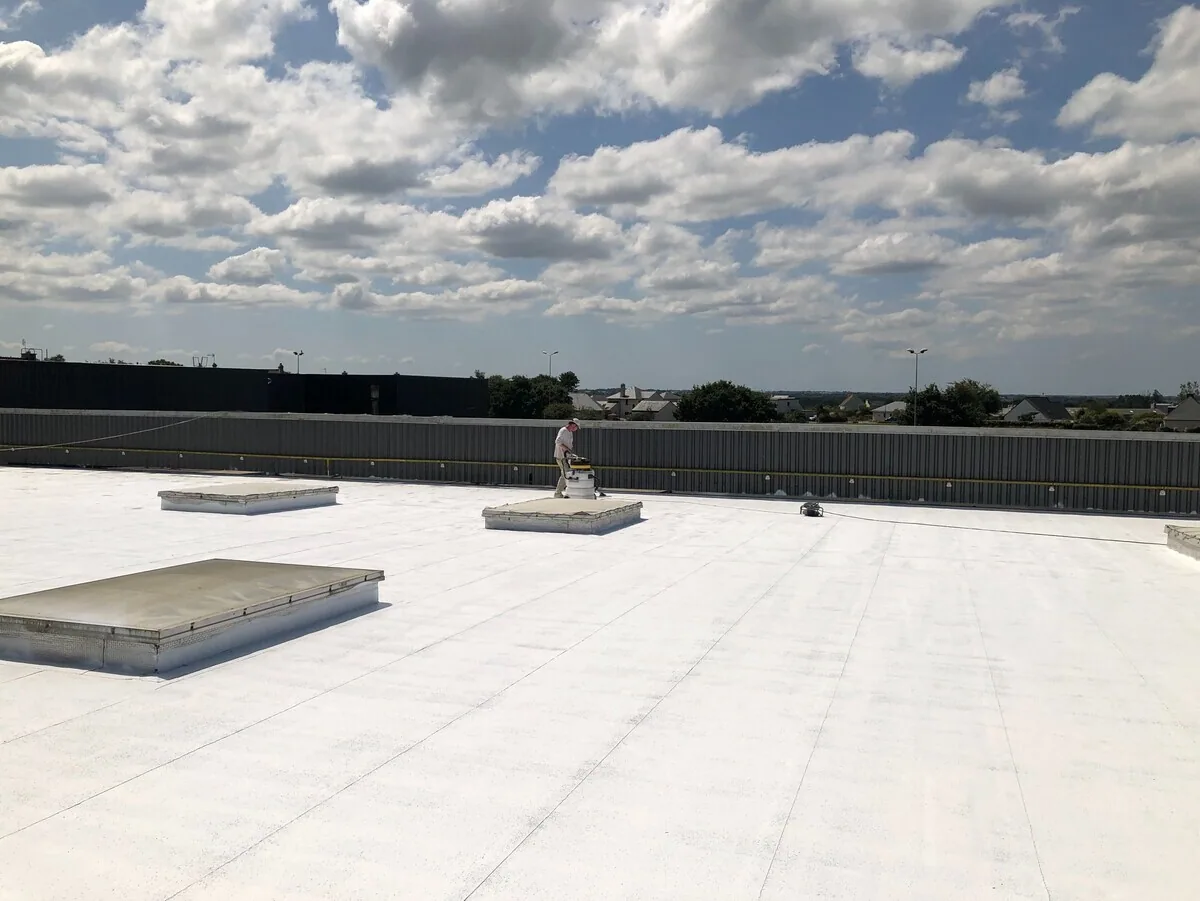
A reflective roof is a system choice, not a paint color. In High Point, NC, we inspect the existing membrane or metal, map repairs, check drainage, and compare candidate materials with the building’s use and maintenance plan. The scope identifies the roof areas to receive work and the conditions that must be corrected first. A surface that reflects more sunlight still needs reliable seams, flashing, drainage, and attachment.
NOAA normals at nearby Greensboro (KGSO) show 33.3 days per year with highs at or above 90°F. That is regional station information, not a temperature log from a High Point building. It helps frame seasonal exposure, while the measured assembly and product requirements govern selection. We document the actual roof condition and explain what a reflective system can and cannot address.
Set a measurable performance basis
We compare the existing roof, proposed surface, insulation, slope, drainage, and expected maintenance. Reflectance and emittance values belong to the product data, so the selection record should name the material and tested characteristics. We do not promise a specific utility saving from a material value alone. Building operation, insulation, HVAC condition, shading, air leakage, and weather all affect energy use and comfort.
For an asset manager, the useful question is what assembly will be installed, how it will be measured, and how its condition will be maintained. We photograph representative roof areas and record the substrate, repairs, and tie-ins. If the existing assembly cannot support the proposed application, the report says which test or removal step would clarify the decision. A roof inspection provides that baseline before material selection.
High Point’s growth sectors include manufacturing, logistics, life sciences, and furniture and design. These uses can involve distinct occupancy and equipment patterns, but a business category does not reveal a building’s roof composition or energy profile. We confirm operating hours, rooftop units, exhaust locations, and shutdown requirements with the property team before setting the sequence.
Compare coating and membrane approaches
A reflective membrane can be appropriate in a new assembly or reroof, while a coating may suit an existing substrate only after preparation and adhesion testing. We compare both paths with any needed repairs, insulation changes, and perimeter modifications. Each option identifies its surface requirements and limits. A coating should not be used to conceal wet insulation or unstable seams, and a new membrane does not eliminate maintenance at drains and penetrations.
On a metal roof, the proposal may focus on panel condition, fasteners, seams, and a compatible reflective finish. On a low-slope system, membrane and attachment selection shape the detailing. We coordinate with the existing roof’s movement and the building’s drainage plan. A coating restoration assessment can compare preparation and test results, while a TPO assembly option may be evaluated for a full membrane scope.
The City describes Piedmont Centre as High Point’s largest business park, with more than 170 companies. The campus scale illustrates how portfolio owners may need comparable records, but each roof requires its own assembly and product decision. One successful application does not establish suitability for a different facility in the same area.
Check drainage, edges, and equipment
Reflective surface work must continue through details. We check drains, scuppers, parapets, edge metal, curbs, expansion joints, skylights, and equipment supports. Added material can change elevations at an outlet or reduce clearance at a flashing. The roof plan identifies those transitions and records where new components, extensions, or separate repairs are required.
High Point’s regional weather includes freeze exposure as well as summer heat. NOAA normals at KGSO record 68.5 days with minimum temperatures at or below freezing. That station context supports checking that drainage remains open through cold periods; it does not predict conditions on a particular roof. Where water holds, we measure and investigate the roof plane rather than attributing ponding to the reflective surface alone. A drainage scope can isolate outlet work from membrane restoration.
The work plan accounts for the roof’s operations: rooftop equipment, exhaust, tenant access, deliveries, staging, and any areas that need temporary protection. Phased occupied-building work can keep zones protected while a facility stays in operation, subject to the property’s safety and scheduling rules.
Document preparation and installation
Before installation, we record the substrate and complete the repairs required by the approved scope. Surface cleaning, primers, attachment, seam treatment, and cure conditions follow the chosen system. We note the measured area and keep the work within weather conditions permitted by the product. If field testing or an opened area reveals a different assembly, we stop at the authorized boundary and request direction before changing the design.
A High Point EDC report describes Piedmont Corporate Park as a mixed office, light-manufacturing, and distribution campus, and names Tenn-Tex Plastics among its tenants. That local mix may call for staging plans that account for active work, but it does not tell us the condition of any roof there. Delivery timing, roof hatch access, and material staging are written into the site plan. The record should explain how the owner’s operations stay protected while roof work proceeds.
Photos capture the substrate before it is concealed, representative field areas after installation, and each completed termination. These images are labeled to match the plan. A condition report can preserve product details, repair history, and follow-up findings so future inspections compare the same roof areas.
Compare cost, timing, and upkeep
Cost depends on the existing surface, repairs, preparation, product selection, insulation changes, edge work, access, and the number of roof zones. Timing reflects tests, procurement, cure or welding windows, weather, staging, and facility restrictions. A useful proposal states these assumptions and separates base scope from optional work. We can compare the reflective system against repair, recover, and replacement using the same measured areas.
A cool roof still needs drain clearing, detail inspections, and prompt repair of cuts or impact damage. Owners can schedule periodic reviews and preserve photographs by roof section. If the surface becomes dirty, damaged, or ponded, its performance and water tightness need inspection. Product reflectance data do not substitute for a condition record.
Arrange an assessment when a reroof or restoration creates an opportunity to review roof reflectance, insulation, and drainage together. We document the existing surface, candidate materials, tests, and the work boundary. The result is a scoped decision that reflects the facility and its local exposure, not a generalized savings promise.
A cool-roof proposal should distinguish the selected product's tested properties from the building's actual energy use. Confirm substrate, drainage, attachment, and edge details before installation, then record the approved product and surface preparation. If the owner wants to compare operating costs, gather utility and occupancy data separately; a roof finish alone does not establish projected savings. The closeout can preserve product data and inspection results so facilities staff can evaluate future maintenance against the installed assembly.
Related Roofing Work
Storm and Roof Damage Repair
Storms that reach the Triad can lift edges, open seams and crack flashing. Start here:
- Wind Damage Roof Inspection and RepairInspect High Point commercial roofs after high winds, document edge and flashing conditions, stabilize exposure, and define measured repair limits.See repair options
- Hail Damage Roof Inspection and RepairAssess High Point commercial roofs after hail, document impact evidence, select focused testing, and define measured repairs without assuming causation.See repair options
- Tornado Damage Roof Assessment and RepairAssess High Point commercial roofs after tornado damage with released access, roof-zone mapping, temporary stabilization, and staged repair records.See repair options
Roof Assessment
Evaluate a reflective assembly
Arrange a High Point roof walk to compare reflective options, repairs, and drainage details.
Questions About Cool Roof Installation
Will a cool roof lower my utility bill by a set amount?
We do not estimate a fixed saving from reflectance alone. Product properties, insulation, HVAC operation, building use, and weather all affect energy performance.
Can a reflective coating go over my existing roof?
Only after inspection, moisture review, repair mapping, and any needed adhesion tests support that surface. Wet or unstable areas require another response.
Does reflective roofing change drainage details?
Added layers can affect drain, scupper, edge, and curb elevations. We measure those transitions before finalizing the assembly.
What should the owner receive after installation?
A measured area plan, product and application notes, photographs of the substrate and completed details, exclusions, and follow-up recommendations.
More questions? Ask our roofing team or call 555-555-5555.
Request a Roof Assessment in High Point
Send the address, the roof concern and when the roof can be reached. We walk the roof, photograph what we find and explain the repair or replacement options.
Roof Assessment
Commercial Roofing in High Point
Call, email or send the building details. We set a time to walk the roof and look at the leak, the drains and the flashing.