
Industries We Serve
Commercial Roofing Documentation for Insurance Restoration in High Point, NC
Document High Point roof damage with dated observations, measured scopes, mitigation records, and clear boundaries for insurance and restoration review.
Insurance and restoration work often begins with an urgent report, but a useful roof record still has to separate observed conditions, temporary protection, and a proposed permanent repair. We document the building, roof zone, access conditions, visible damage, measurements, and unanswered questions. This creates a factual basis for the property owner and their claim professionals to review without representing a coverage decision.
High Point's commercial places include Piedmont Centre and the Market Square & Elm district. These place facts help locate a regional assignment but do not establish the insured, carrier, cause of loss, policy terms, or roof condition. The site contact supplies the verified property address and any incident information available for inspection.
Separate the loss report from roof findings
At intake, record when water or damage was first observed, what weather event or work preceded it, which rooms or assets are affected, and what temporary action has already occurred. Keep statements attributed to the person who supplied them. An interior stain, a contractor's preliminary note, and a confirmed roof opening are different evidence types.
Inspect accessible membrane, seams, flashings, drains, curbs, edges, and rooftop equipment. A roof inspection record should identify date, weather, roof areas reached, photos, and limitations. Do not infer storm causation from the fact that a storm occurred; document physical evidence and note where testing or another trade may be needed.
If active water requires a rapid visit, a temporary stabilization should identify materials, location, and monitoring recommendation. Record permanent repair separately so claim reviewers can distinguish mitigation from restoration.
Measure and describe damaged conditions
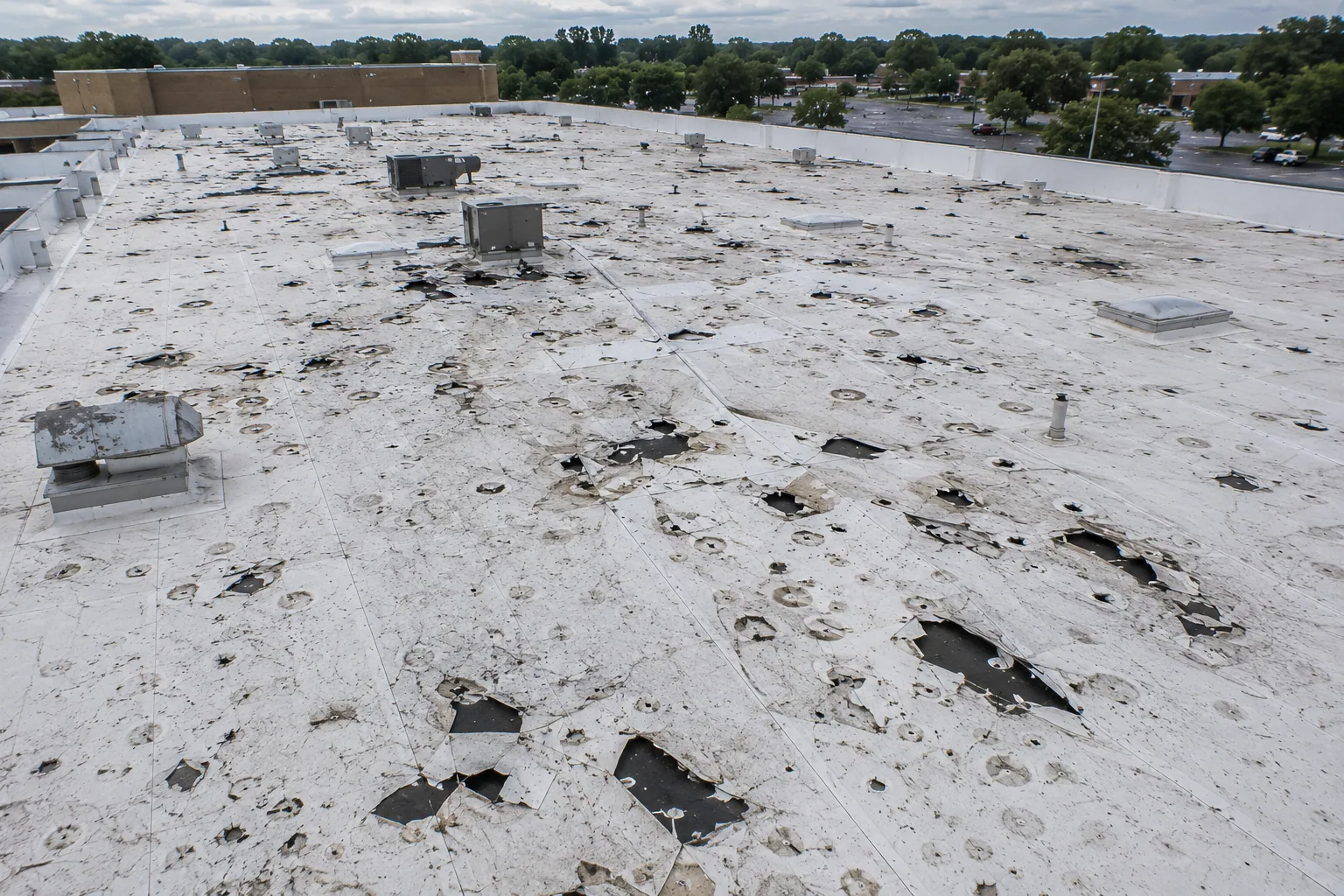
Photograph the overall roof zone and then close views that show the specific condition with a scale where appropriate. Note whether the evidence is puncture, displaced flashing, seam separation, debris impact, membrane blistering, or another observed feature. Avoid calling a condition storm-created, pre-existing, or code-related unless the available evidence supports that characterization.
A repair scope should give dimensions, material, preparation, and included details. A leak-repair assessment can record a water-entry detail; it should not automatically include unrelated interior restoration. Where moisture is suspected below the surface, propose a test that answers a defined question and document the boundary before removal.
When several areas are involved, maintain a roof plan keyed to each photo. That lets the owner, adjuster, and contractor discuss the same physical location instead of comparing unlabeled image groups.
Keep estimates and conclusions within their roles
A roofing estimate describes the work needed to address the observed condition and the assumptions behind the price. It should separate labor, materials, access, temporary protection, and any allowance for concealed conditions. A replacement option should explain why localized repair may not address the broader system concern, using measured observations rather than a generic age claim.
Coverage interpretation, causation determinations, depreciation, and claim settlement belong to the relevant policy professionals and decision-makers. Our records can support their review, but they do not promise reimbursement or declare coverage. If an owner asks for an alternate scope, present it as a construction option with clear assumptions.
When storm damage is suspected, distinguish visible impact from existing wear, prior patching, and areas not reached. If cause remains uncertain, say so and recommend the next inspection or testing step. Evidence becomes more useful when uncertainty is explicit.
For an estimate with alternatives, use the same measured boundary when comparing patch, repair, and replacement options. Identify whether roof access, mechanical coordination, and temporary dry-in are included in each price. If a hidden condition changes the work, document the location, photographs, quantity basis, and approval before proceeding beyond the original authorization. This gives the owner and claim professionals a clearer record of the construction decision.
Do not use a broad roof-age statement as a substitute for condition evidence. Note the locations inspected, observable deterioration, prior repairs, and areas not reached. A reviewer can then ask for the specific additional information needed rather than interpreting an unsupported conclusion.
Coordinate mitigation and restoration
Before temporary protection, identify who can authorize work, who accepts access, and who will preserve removed materials or samples if requested. The owner or claim representative may have evidence-handling preferences; confirm them before material is removed. Record the temporary measure, date, location, and monitoring recommendation separately from permanent restoration work.
For assignments near Piedmont Centre or Market Square & Elm, place the verified property address in the job file. A district name helps orient the assignment but is not an insured location or proof of business occupancy. Keep the inspection record tied to the actual building and roof zone.
When access or tenant coordination affects the inspection, the property manager can confirm building access and authorization, while a hospitality operator may identify room or operating impacts for the claim file. Record each statement with its source and keep it separate from roof observations.
Create a dated, traceable claim file
Closeout should include the inspection date, roof plan, labeled photographs, measured work, materials, invoices or estimates when requested, limitations, and remaining recommendations. Preserve notes that distinguish what was observed from what was reported by others. If the first visit could not access a roof area, mark that limitation rather than implying the whole roof was reviewed.
When temporary protection remains, state its location and recommended follow-up. If a permanent repair was completed, identify the repaired detail and any nearby condition outside the scope. A future inspection can compare the same area and update the record based on new evidence.
Request a site review after a leak, visible impact, or disputed repair boundary. We provide a factual roofing scope and documentation that the owner and their claim professionals can use in their own review.
Organize attachments chronologically and retain the source for each reported fact. Label photographs by building, elevation or roof zone, and date; keep original-resolution files when possible. If a third-party report is provided, cite its author and date rather than blending its conclusions into the roofing inspection. The file should make the evidence trail straightforward for someone who did not attend the site visit.
Retain a copy of the owner-approved scope with the completed work record.
Keep future recommendations separate from completed work.
For a file with multiple site visits, preserve the chronology: initial report, temporary mitigation, follow-up inspection, test results, estimate revision, authorization, and completed work. Label each item by date and author. When a property representative describes the event, attribute the statement rather than converting it into a roofing conclusion. If a later test changes the suspected boundary, explain what evidence changed and update the marked plan. A clean chronology helps reviewers understand why the recommended scope changed without implying that coverage or cause has been determined. Keep estimates distinct from final invoices.
If a claim file includes multiple estimates, label each version and state what changed from the prior scope. Preserve the owner’s authorization alongside the work order and final billing. This keeps construction documents traceable while leaving coverage interpretation with the authorized claim parties.
Related Roofing Work
Storm and Roof Damage Repair
Storms that reach the Triad can lift edges, open seams and crack flashing. Start here:
- Wind Damage Roof Inspection and RepairInspect High Point commercial roofs after high winds, document edge and flashing conditions, stabilize exposure, and define measured repair limits.See repair options
- Hail Damage Roof Inspection and RepairAssess High Point commercial roofs after hail, document impact evidence, select focused testing, and define measured repairs without assuming causation.See repair options
- Tornado Damage Roof Assessment and RepairAssess High Point commercial roofs after tornado damage with released access, roof-zone mapping, temporary stabilization, and staged repair records.See repair options
Roof Assessment
Document roof conditions and next steps
Arrange a High Point roof inspection with labeled evidence, measured work boundaries, and a dated record for the owner’s review.
Questions About Roofing Documentation for Insurance Restoration
Can your report determine whether insurance will cover a roof repair?
No. We document roofing conditions and describe construction scope. Coverage and settlement decisions are made by the insurer and other authorized claim professionals.
Do you respond before an adjuster visits?
We can document accessible conditions and perform authorized temporary stabilization. The property should clarify any evidence-preservation instructions before material is removed.
Can you separate storm-related damage from wear?
We describe visible evidence and limitations. If available evidence does not establish cause, the report says so and identifies testing or further review that may help.
Will the estimate include interior restoration?
Only if that work is expressly included and properly scoped. Roofing, contents handling, drying, and interior rebuilding often involve separate responsible trades.
More questions? Ask our roofing team or call 555-555-5555.
Request a Roof Assessment in High Point
Send the address, the roof concern and when the roof can be reached. We walk the roof, photograph what we find and explain the repair or replacement options.
Roof Assessment
Commercial Roofing in High Point
Call, email or send the building details. We set a time to walk the roof and look at the leak, the drains and the flashing.