Service Areas
Commercial Roofing in Market Square & Elm, High Point, NC
Commercial roofing inspections, leak response, preventive maintenance, and capital planning for Market Square & Elm properties in High Point, NC.
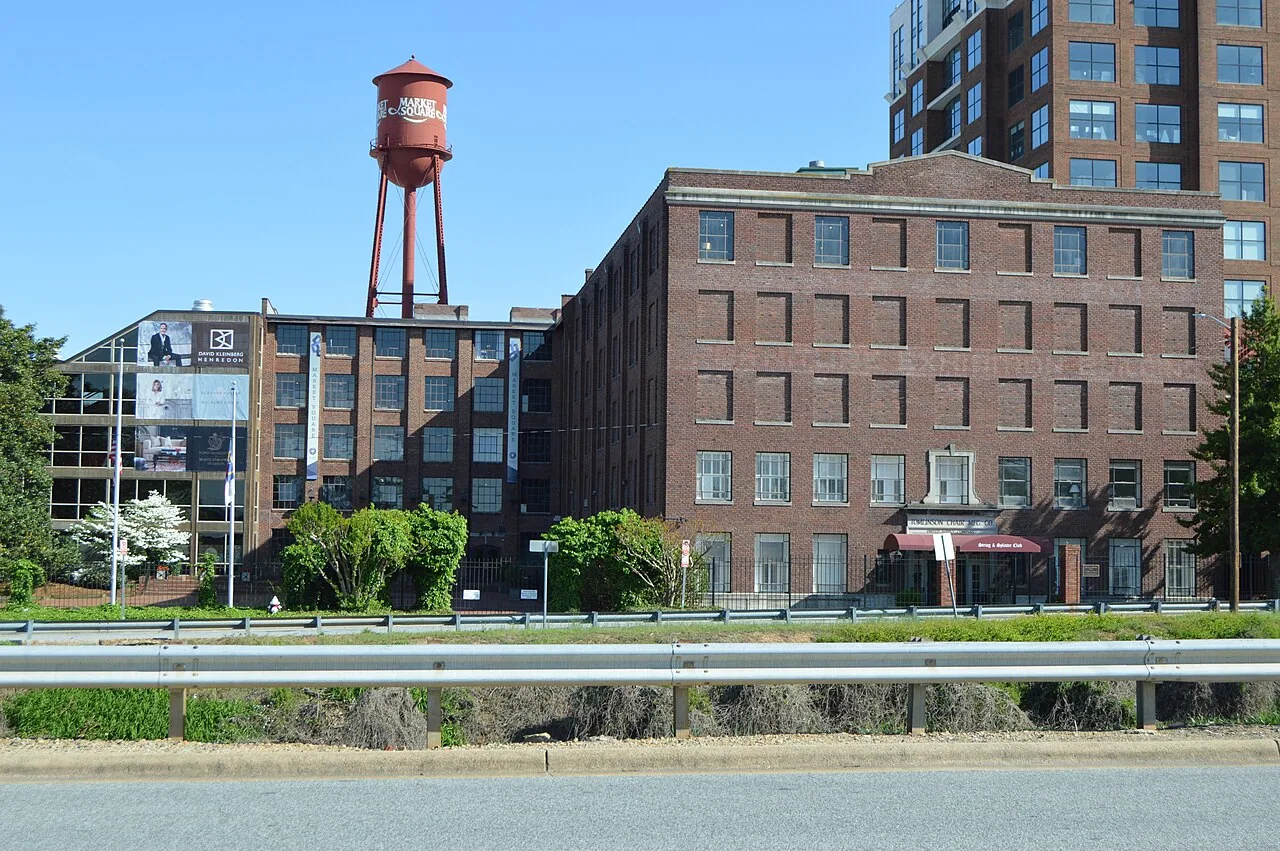
High Point Market groups stand-alone showrooms with the Suites at Market Square, a venue used for Shoppe Object and temporary display programs. The district also includes the Antique & Design Center and Commerce & Design building. Market Square Tower houses rug, lighting, fabric, and furniture brands, and both Green and Red Market shuttles serve the area. Those references help explain the district's commercial pattern; they do not establish the roof system or condition at a specific address.
A roofing request should name the property, suite or building contact, and authorized access point. Temporary showroom occupancy can mean that service coordination changes between visits, so confirm current management and access instructions rather than relying on a prior tenant contact. The work may concern a leak, inspection, maintenance plan, storm review, or capital project. We inspect the defined property and report what the roof evidence supports.
Verify current occupancy before setting the work window
A listing of temporary showroom occupancy describes how space may be used, not whether a particular suite is occupied today. Before dispatch, confirm the active property contact, loading rules, roof-entry authorization, delivery and freight access, photo limits, and any visitor hours. Ask whether any furniture, fabric, lighting, or display materials require special protection below the work area. These details affect sequencing, but should be established with management rather than inferred from the district's tenants.
For a reroof or substantial repair, define which zone can be opened, how the interior will be protected, and the time at which the crew must leave it weather-tight. An occupied-building reroof plan can state notice requirements, delivery routes, daily limits, and the contact who can approve a changed sequence. If a short-term showroom turnover affects access, update the work order before materials arrive.
Separate the tower, suites, and stand-alone properties
Market Square Tower and the Suites at Market Square are named district properties, but those references do not define a single roof asset or shared maintenance record. For an inspection, identify the building and roof sections involved. If a structure has multiple elevations or additions, label each separately. Note the access route, drains, curbs, roof edges, and any area hidden by equipment. Do not transfer a finding from a tower roof to a neighboring stand-alone showroom.
A commercial roof survey should include dated images linked to a roof plan or field sketch. If current drawings or repair records are missing, list them as needed documents. A visible roof surface may not reveal concealed insulation, deck condition, or attachment. If these facts affect a recover or replacement decision, propose a defined test. This keeps the inspection useful without presenting an unverified assembly as established fact.
Trace interior reports to a specific roof detail
For a leak, record the room or suite, date, conditions when it appeared, and any temporary protection already in place. Compare that report with accessible drains, seams, penetrations, wall transitions, and perimeter details. In a multi-level or connected building, water may travel before reaching the visible ceiling. Mark the suspected path as provisional until inspection evidence confirms it. This is especially useful when a suite changes hands and the next contact has only a short service history.
Emergency service can respond at any hour, including weekends and holidays, when active water entry needs prompt control. A permanent repair scope should define preparation, materials, layers or details addressed, tie-in boundary, and the verification method. If moisture may extend beyond that boundary, identify the test before broadening the repair. The report should distinguish temporary measures from completed permanent work so the owner has a clear closeout record.
Use local weather records as context only
High Point has regional seasonal heat, freezing, and storm exposure, but nearby station normals are not measurements at Market Square & Elm. A service report should capture the actual visit date, observed weather, access conditions, and roof findings. For installation, follow the selected system's current substrate and temperature requirements. Do not use a regional snow or heat statistic to conclude that a given showroom roof has ponding, membrane failure, or storm damage.
If a property manager requests a post-event inspection, photograph the details associated with the concern and identify inaccessible sections. A storm-damage review should tie any recommendation to an observed condition or test. Planned maintenance can create a baseline for drains, perimeter metal, seams, and penetrations before a later report. Retaining dates and images helps new suite contacts understand the property's roof history.
Keep nearby Market assets in their own service files
The Antique & Design Center, Commerce & Design building, and Market Square Tower are different properties or named facilities within the district. Their presence is useful to describe the commercial setting, not to establish that one building's roof has the same conditions as another's. Confirm the requested address and the party authorized to approve access. If an owner requests multiple inspections, use separate work orders and record findings by building.
The property team can also request a separate Commerce Concourse assessment or Downtown Main Market District visit. A roof asset record can summarize dates and open actions across the portfolio while keeping each property's photos and measurements intact. This makes scheduling more efficient without flattening differences in age, assembly, use, or repair history.
Compare options with equivalent project assumptions
Before recommending a recover, establish the existing layers, moisture status, attachment, deck condition, drainage, edge height, and code considerations. A recover evaluation should identify what has been confirmed and what would require a core, infrared review, or record search. A system label does not establish compatibility. If a test result could change the scope, complete or price that decision step before comparing construction totals.
A replacement option should state tear-off, disposal, insulation, selected assembly, perimeter and penetration work, staging, protection, inspection points, and closeout. A replacement plan should account for current tenant access and any temporary occupancy changes. Compare alternatives with the same roof areas and assumptions, then separate measured work from allowances. That gives the owner a clear view of construction disruption as well as cost and technical scope.
Provide a record that survives suite turnover
Closeout should include roof plans, dated photos, repair boundaries, product information, test results, approved changes, warranties, and unresolved items. Identify the address, building section, and property contact who accepted the work. If a temporary showroom or suite contact is replaced, route the roof history to the managing agent rather than leaving it only with the prior occupant. The next inspection should be able to locate the same drain, seam, or edge detail without starting from scratch.
Before a turnover, the managing agent should retain any roof-access plan, approved work record, and unresolved repair item with the building file. A new occupant can then report a concern against a known location rather than restarting from an undocumented service history.
Market Square & Elm's varied showroom properties make current access coordination important, while each recommendation still comes from the roof actually reviewed. We can provide leak response, inspection, maintenance, or capital planning after confirming authorization and the property record. The report states what we observed, what remained out of reach, and what action follows. That keeps Market neighborhood context helpful to dispatch while giving facilities staff a precise, building-level basis for decisions.
Before a turnover, the managing agent should retain any roof-access plan, approved work record, and unresolved repair item with the building file. A new occupant can then report a concern against a known location rather than restarting from an undocumented service history.
Related Roofing Work
Storm and Roof Damage Repair
Storms that reach the Triad can lift edges, open seams and crack flashing. Start here:
- Wind Damage Roof Inspection and RepairInspect High Point commercial roofs after high winds, document edge and flashing conditions, stabilize exposure, and define measured repair limits.See repair options
- Hail Damage Roof Inspection and RepairAssess High Point commercial roofs after hail, document impact evidence, select focused testing, and define measured repairs without assuming causation.See repair options
- Tornado Damage Roof Assessment and RepairAssess High Point commercial roofs after tornado damage with released access, roof-zone mapping, temporary stabilization, and staged repair records.See repair options
Roof Assessment
Plan commercial roof service in Market Square & Elm
Arrange a building-specific roof visit to confirm access, document conditions, and define the next step.
Questions About Market Square & Elm
Does the temporary-showroom listing tell you who occupies a suite now?
No. Confirm current occupancy and access with property management.
Can one report cover the whole Market Square & Elm neighborhood?
No. Each authorized building or roof area needs distinct findings and records.
Can the shuttle routes serve as material-delivery instructions?
No. Management must approve the crew route, delivery timing, and staging location.
What supports a recover recommendation?
Verified layers, moisture, attachment, deck, drainage, code, and remaining edge height.
More questions? Ask our roofing team or call 555-555-5555.
Request a Roof Assessment in High Point
Send the address, the roof concern and when the roof can be reached. We walk the roof, photograph what we find and explain the repair or replacement options.
Roof Assessment
Commercial Roofing in High Point
Call, email or send the building details. We set a time to walk the roof and look at the leak, the drains and the flashing.