
Roof Damage Repair
Commercial Heat and UV Roof Damage Assessment in High Point, NC
Assess High Point commercial roofs for heat and UV weathering, verify membrane condition, and scope compatible coating or repair options.
Heat and ultraviolet exposure can affect roof membranes, sealants, coatings, and flashing over time, but discoloration alone does not establish failure. A commercial assessment records the material when verified, observed surface changes, seam and penetration condition, roof drainage, and any interior report. We distinguish weathering from active water entry and identify testing needed before a repair or coating scope is recommended.
NOAA normals for nearby Greensboro (KGSO) show 33.3 days per year with a maximum temperature of at least 90°F and a 59.6°F mean annual temperature. The airport normals summarize regional climate; they are not a surface-temperature reading from a specific roof. The inspection date, exposure, and material history determine what can be said about an individual assembly.
Document surface and transition changes
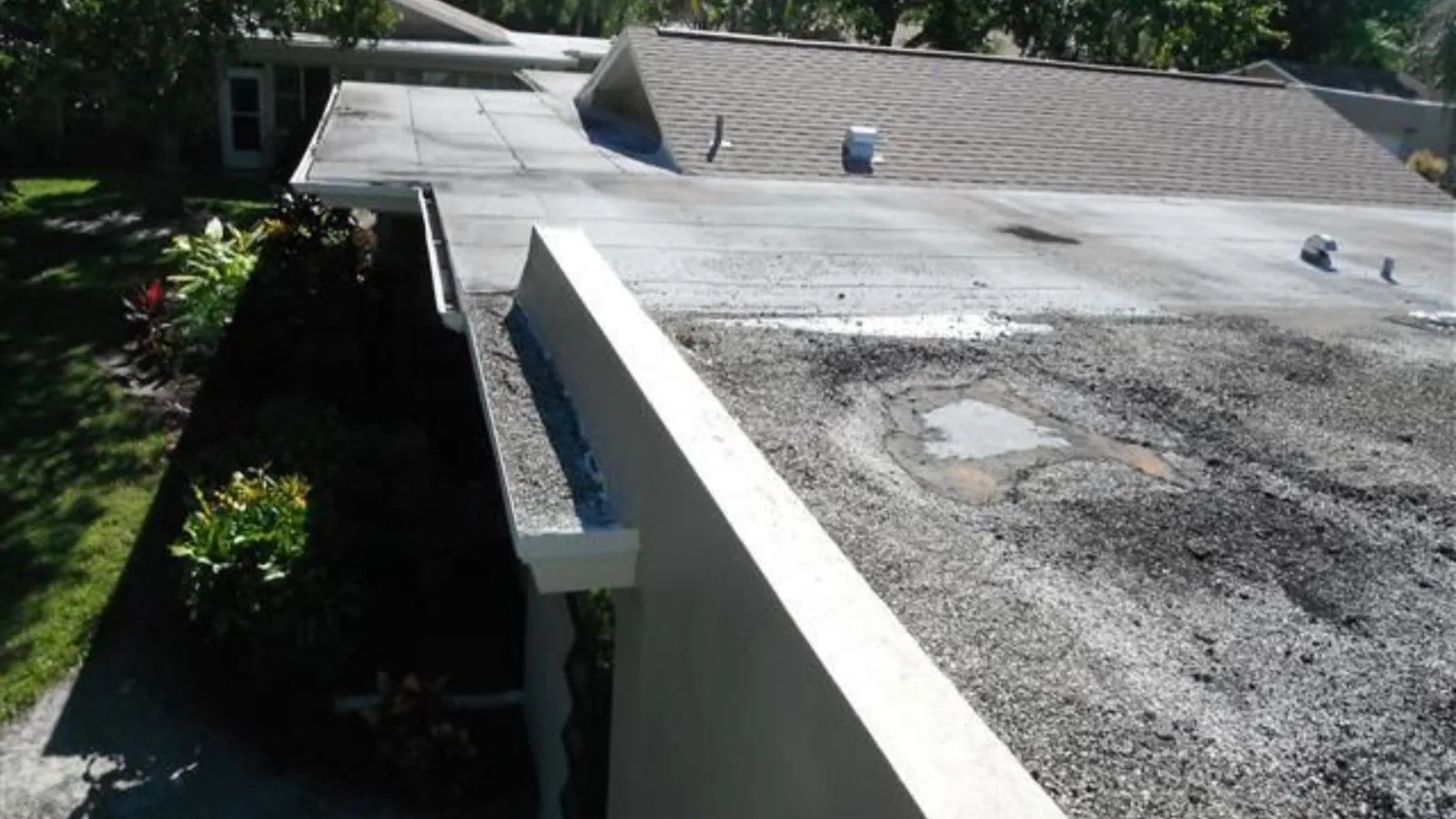
Map areas of chalking, cracking, exposed reinforcement, shrinkage, blistering, coating loss, open laps, or brittle flashing. Photograph broad roof zones and detail views with a consistent location reference. Record whether a surface is dry, wet, dirty, or recently coated; those conditions affect the usefulness of visual observations and some tests.
Inspect areas near rooftop units, exhaust, reflected heat, drains, and seams separately. A roof condition survey should identify what is verified and what remains unknown, including concealed layers. If water enters the building, a leak investigation follows the reported path rather than assigning it to UV exposure by default.
Where a coating is present, confirm its product and application history if records exist. A coating may hide the original roof condition, and a new layer should not be proposed before adhesion, moisture, and system compatibility are evaluated.
Inspect exposed fasteners, termination bars, metal laps, and sealant joints for a change in attachment or flexibility. Record whether each component is original or part of a later repair when the record set supports that distinction. If the roof is dry during the visit, note that a leak test was not performed; visible surface condition and water-tightness under rainfall are related but separate questions.
Differentiate weathering from functional failure
A faded membrane can remain watertight, while a small split at a transition can leak despite an otherwise uniform surface. Identify the observable condition and the evidence used to determine whether it affects the water-shedding layer. If a seam has separated, assess its extent through a seam failure review. A puncture or open penetration requires its own location and measured scope.
Heat can increase movement at perimeters and equipment details. Inspect terminations, edge metal, curb flashings, and sealant joints for displacement or loss of bond. Do not assume a single detail explains deterioration across a different roof section. Compare installation records and prior repairs when available.
Where insulation performance or interior temperature is a concern, distinguish that question from roof membrane condition. Energy, ventilation, and mechanical assessments may require a separate professional.
Look for whether cracking follows a seam, a bend, a fastener row, or a broad exposed field. A narrow split at an edge may call for a different repair than widespread surface embrittlement. Note the material thickness and any reinforcement visible at the break when it can be safely assessed. Avoid stretching a small sample into a roof-wide conclusion without a representative inspection plan.
When a roof has several elevations, compare sun-exposed and shaded sections without assuming that shade alone explains a difference. Rooftop exhaust, reflected surfaces, and standing water can create distinct conditions in one assembly. Mark observations by zone and use the same assessment criteria across those areas.
Select a compatible restoration method
A localized crack or transition defect may be repairable if the substrate and surrounding assembly are suitable. The work scope should include preparation, dimensions, compatible materials, seam treatment, and weather requirements. If the surface is brittle or deterioration is widespread, map the extent and evaluate whether a broader system plan is warranted.
Coating restoration requires verification of existing materials, adhesion, moisture, surface preparation, drainage, and manufacturer requirements. A coating assessment should identify test areas and define whether seams, penetrations, and edges are included. It should not simply cover an unknown leak or conceal wet insulation.
For replacement or recovery, measure roof areas and assess deck, attachment, drainage, edge height, code, and approvals. A replacement comparison should state concealed-condition assumptions and temporary dry-in requirements.
For coating work, define the test patch, cure period, adhesion check, and acceptance decision before applying product to a large area. Confirm whether existing coating layers are compatible with the proposed system and whether moisture remains trapped below them. The owner should approve test locations and understand that one successful sample represents only that area and preparation method.
At roof edges and penetrations, include details where surface treatment ends or meets a different material. A field coating that stops short of flashing can leave the original water path unchanged. Measure the transition and identify who is responsible for adjoining metal or wall work.
Use local weather and site facts with care
High Point's business districts include Piedmont Centre and Premier Center. Those City-mapped locations help route a site visit, but do not tell us the roof color, membrane, maintenance record, or exposure conditions. Confirm the actual facility and roof section.
Nearby airport normals provide a regional climate baseline. A rooftop surface can run hotter or cooler depending on color, insulation, shade, slope, and equipment discharge. Record observed weather at the inspection and avoid converting annual normals into a precise material-life prediction.
If a wind or hail event is also reported, keep those findings separate. A wind assessment can document edge movement, while a hail assessment considers impact evidence.
Track repair and future inspection intervals
Closeout includes a roof-zone plan, dated photographs, verified material, observed surface condition, repair method, work dimensions, and limitations. Note which tests were performed and what they establish. If a coating or membrane remains under evaluation, label that status and state the next review date rather than describing a preliminary result as a completed system renewal.
For maintenance planning, compare the same seams, edges, and penetrations during later inspections. Record new equipment or coating work that changes exposure. A repeated observation should prompt a fresh assessment of current condition and drainage instead of an automatic repeat application.
Arrange a review for cracking, exposed reinforcement, recurring leaks, or coating loss. We document the assembly and provide a scoped repair or test recommendation based on verified conditions.
Schedule follow-up based on the selected repair and manufacturer directions. Record any surface preparation or cleaning needed before the next visit, and note the areas where a coating makes the original membrane harder to inspect. Keep the prior report available so subsequent reviewers understand what was covered and what was tested.
Include current contact information for roof access and the person who can authorize a new test.
Keep the updated roof map with the maintenance record.
Related Roofing Work
Storm and Roof Damage Repair
Storms that reach the Triad can lift edges, open seams and crack flashing. Start here:
- Wind Damage Roof Inspection and RepairInspect High Point commercial roofs after high winds, document edge and flashing conditions, stabilize exposure, and define measured repair limits.See repair options
- Hail Damage Roof Inspection and RepairAssess High Point commercial roofs after hail, document impact evidence, select focused testing, and define measured repairs without assuming causation.See repair options
- Tornado Damage Roof Assessment and RepairAssess High Point commercial roofs after tornado damage with released access, roof-zone mapping, temporary stabilization, and staged repair records.See repair options
Roof Assessment
Inspect heat and UV roof weathering
Arrange a High Point roof assessment with material verification, mapped surface changes, and a repair or testing plan.
Questions About Heat and UV Roof Damage Assessment
Does sun fading mean a membrane has failed?
No. Fading is an observation, not proof of a leak or loss of function. Inspect seams, transitions, and the assembly before recommending work.
Can you apply a coating over an older roof?
Only after reviewing material compatibility, moisture, adhesion, preparation, drainage, and system requirements.
Do NOAA temperature normals predict this roof’s life?
No. They describe regional climate. Roof-specific materials, condition, maintenance, and exposure determine what inspection evidence supports.
Can heat-related surface cracks be patched?
Some localized conditions can be repaired. The material and extent should be verified, with preparation and compatible repair method stated in the scope.
More questions? Ask our roofing team or call 555-555-5555.
Request a Roof Assessment in High Point
Send the address, the roof concern and when the roof can be reached. We walk the roof, photograph what we find and explain the repair or replacement options.
Roof Assessment
Commercial Roofing in High Point
Call, email or send the building details. We set a time to walk the roof and look at the leak, the drains and the flashing.